
Truecaller Expands Beyond Caller ID to Fight Scams on the Open Web
TL;DR
- Truecaller is launching open-web scam intelligence tools that work without the app, letting anyone search numbers, UPI IDs, links and scam reports in a browser.
- The move comes as India's TRAI-backed CNAP caller name display, telco spam filters, and stricter regulation threaten Truecaller's core caller ID business in its largest market.
- It's part of a broader pivot from identification to AI-driven fraud prevention, opening new growth via web traffic, enterprise APIs and global scam data.
Beyond the App: Truecaller's High-Stakes Bet
For more than a decade, Truecaller has been synonymous with one thing: knowing who's calling. With over 400 million active users globally, including more than 300 million in India, the Swedish company built an empire on crowdsourced caller ID and spam blocking.
But that foundation is shaking. Truecaller is now taking its scam intelligence to the open web — a major strategic shift designed to reach people who never download the app and to reposition the company as a fraud-prevention platform, not just a dialer add-on.
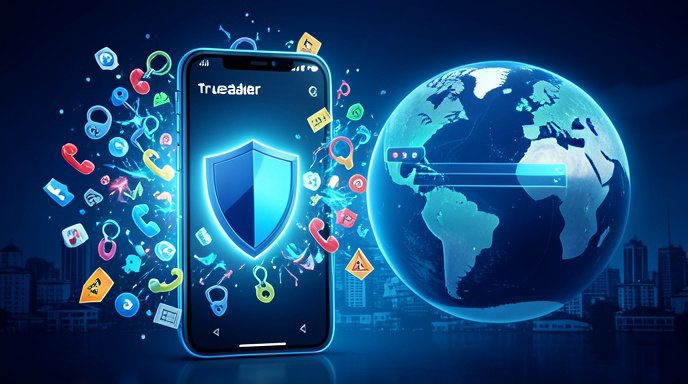
The centerpiece is a web-based hub, dubbed Scamfeed, that aggregates community reports, AI analysis and fraud signals into a searchable, shareable database accessible from any browser.
Why Caller ID Alone Is No Longer Enough
India is both Truecaller's superpower and its biggest vulnerability. The country accounts for the vast majority of its users and revenue, but regulatory and competitive pressure is mounting fast.
The Telecom Regulatory Authority of India (TRAI) has pushed forward with Calling Name Presentation (CNAP), which requires telecom operators to display verified caller names natively on the network. Reliance Jio and Bharti Airtel have begun rolling out CNAP support and their own AI spam filters, potentially replicating Truecaller's core feature for free at the carrier level.
At the same time, Apple and Google have tightened spam controls, improved on-device call screening and live voicemail, while Indian authorities have cracked down on unsolicited commercial communication, SIM verification, and telemarketing consent rules. For investors, the message is clear: Truecaller can no longer rely on caller ID alone.
How the New Web-Based Protection Works
Unlike the Truecaller app, which requires installation, permissions and contact-list access, the new web experience requires no login.
Anyone can visit the portal and search a phone number, UPI ID, WhatsApp contact, or suspicious URL to see a risk score, spam category, geographic trends, and AI-generated summaries of user reports. Listings include examples of scam scripts — from fake courier OTP frauds and KYC-bank scams to job offers, loan traps, and crypto investment cons.
Users can contribute without the app by filing reports, uploading screenshots of SMS and WhatsApp chats, and upvoting others. Truecaller's AI models then cluster related reports, detect surging campaigns, and flag newly weaponized numbers within hours rather than days.
The company says web reports will feed back into its app blocklists and its enterprise fraud APIs, creating a flywheel: more open reports mean smarter detection for app users and business clients.
From Spam Blocking to Scam Killing
Internally, Truecaller calls this a shift from identification to intelligence. Spam calls are annoying; scams are financially devastating.
India reported a surge in digital payment and UPI-related fraud in 2024 and 2025, with scammers increasingly moving off traditional voice calls to WhatsApp, Telegram, SMS smishing links, and fake websites. An app that only screens incoming calls misses most of that attack surface.
By going web-native, Truecaller can index scam content for Google Search, appear when victims search is this number fraud or is this UPI ID safe, and offer protection at the moment of doubt — even on desktops and iPhones where its app has limited access.
It also opens a new distribution channel. Web search traffic is global, brand-friendly, and doesn't depend on app store approvals or contact-book permissions that have drawn privacy scrutiny in India and Europe.
What It Means for Users and for Growth
For everyday users, the benefit is immediate: you don't need to be a Truecaller user to check if that job recruiter, marketplace seller, or bank agent is legit. Links are shareable, making it easier for families to warn each other and for cyber-police and consumer forums to cite live scam dossiers.
For Truecaller, the stakes are commercial. Web users can be monetized through ads and premium web verification tools, while the enriched scam graph strengthens its high-margin enterprise offerings — risk scoring APIs for banks, fintechs, e-commerce and logistics firms battling fraud.
Analysts see it as a necessary hedge. If CNAP commoditizes caller ID in India, Truecaller's future value lies in owning the richest, freshest layer of fraud context across calls, messages, UPI and URLs. The open web gives it far more data to train on, and far more places to show up.
Challenges remain, from moderating false reports and copycat listings to competing with Google, telcos, and government-run scam portals. But after years of defending its dialer turf, Truecaller is signaling it wants to fight scams wherever they live — not just inside its app.

Get All The Latest Updates Delivered Straight To Your Inbox For Free!