
Wabi Pivots From AI App Builder to Messaging-First Personal AI Agent
TL;DR
- Wabi is ditching its standalone prompt-to-app builder in favor of a messaging-first personal agent that builds custom mini-interfaces inside the chat when needed.
- The new experience unifies chat, generated apps, and persistent background tasks into a single thread that remembers context and keeps working over time.
- The pivot signals a broader shift away from static apps toward on-demand, conversational agents that do work instead of just answering questions.
From Prompt Boxes to Personal Agent
Wabi started as one of the breakout stars of the prompt-based app building wave, letting non-technical users describe an idea in plain language and get a working web app back in seconds. It was fast, visual, and very demo-friendly.
But according to the team, that model hit a ceiling. Users were creating dozens of single-purpose micro-apps — trackers, dashboards, planners, calculators — and then abandoning them. The apps worked, but they lived in isolation, required constant prompting to update, and didn't actually carry tasks forward.
The new Wabi, rolling out this fall, flips that logic. Instead of asking you to build an app, it asks you what you want done.
Why Wabi Made the Pivot
Co-founders have framed the move as a response to how people actually used the product. Most users didn't want to become app makers. They wanted outcomes: plan my trip, track my job applications, negotiate my bills, monitor prices, prep me for a meeting.
Static generated apps couldn't do that well. They had no memory across sessions, no ability to nudge you, and no way to act proactively in the background.
The team concluded the future wasn't a library of tiny apps you have to manage, but a single persistent agent that creates the right interface at the right moment — and then makes it disappear when you don't need it.
How the New Messaging-First Wabi Works
The redesigned Wabi looks far more like WhatsApp or iMessage than like Lovable, Bolt, or Replit. You land in a conversational thread. You can type, talk, send photos, forward emails, or drop in files.
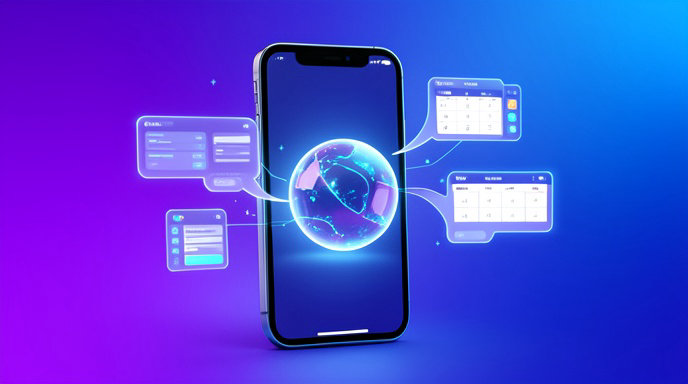
When text alone isn't enough, Wabi generates a custom interface on demand inline in the conversation. Ask it to help with a fitness plan and it might spin up an interactive workout card with checkboxes and progress bars. Ask it to plan a move to Austin and it creates a neighborhood comparison board, budget calculator, and checklist — all inside the same chat.
You never save, deploy, or name an app unless you want to. The UI is ephemeral and contextual, generated for that specific task and user.
Chat, Apps and Persistent Tasks Combine
The biggest change is persistence. Wabi now combines three layers that used to be separate:
1. Chat for intent and follow-up. The conversation is the operating system. You can interrupt, refine, change your mind, and Wabi keeps full context.
2. Generative UI for action. Instead of describing data in paragraphs, Wabi renders sliders, kanban boards, maps, forms, and visualizations when they make a task faster.
3. Background tasks for continuity. Wabi can run ongoing jobs without you watching — checking flights daily, summarizing your inbox every morning at 8am, tracking a competitor's pricing, or reminding you to follow up with a recruiter. Results land back in the same thread like messages from a super-capable assistant.
In demos, this feels less like using software and more like texting a chief of staff who can code a dashboard in real time.
What This Means for the Future of AI Agents
Wabi's pivot puts it in direct competition with a crowded new category: OpenAI's ChatGPT with memory and tasks, Anthropic's Claude, Microsoft Copilot, and a wave of agent startups like Rabbit, Humane's successors, and personal superintelligence plays from Meta.
But its bet is distinct. While others are adding apps to chatbots, Wabi is arguing chat should replace apps altogether for personal productivity. No app store, no home screen clutter — just one agent that builds the tool you need, uses it for you, and tells you when it's done.
If it works, it could mark the end of the first generation of AI app builders. Prompt-to-app was about creation. The next era, Wabi argues, is about delegation.
The risks are real: reliability, privacy, and trust. A messaging agent that runs persistent tasks needs deep access to email, calendar, browsing, and payments. Wabi says it is tackling this with granular permissions, transparent task logs, and on-device memory controls, but it will need to prove it can handle long-running work without hallucinations or missed steps.
For now, early access is rolling out to existing users, with a full public launch expected in the coming weeks. The message from Wabi is clear: stop building apps. Just tell me what you need.

Get All The Latest Updates Delivered Straight To Your Inbox For Free!