
What Happens When OpenAI Ships Your Roadmap? AI Survival Guide from TechCrunch Disrupt 2026
TL;DR
- TechCrunch Disrupt 2026 will host an interactive Builders Stage session on surviving foundation model shifts, focused on defending your roadmap when OpenAI, Anthropic, and Google ship features that overlap with startups.
- The core survival playbook centers on building value beyond the model with proprietary data, deep workflows, and distribution moats rather than thin wrappers.
- Founders will get tactical frameworks for platform risk, pivoting fast, and turning model commoditization into an advantage for resilient AI companies.
The Nightmare Every AI Founder Knows
Every AI founder has lived it. You spend six months perfecting a summarization tool, a coding assistant, or a voice agent, only to wake up to an OpenAI keynote that demos your exact feature as a native capability. In Silicon Valley slang, you've been Sherlocked.
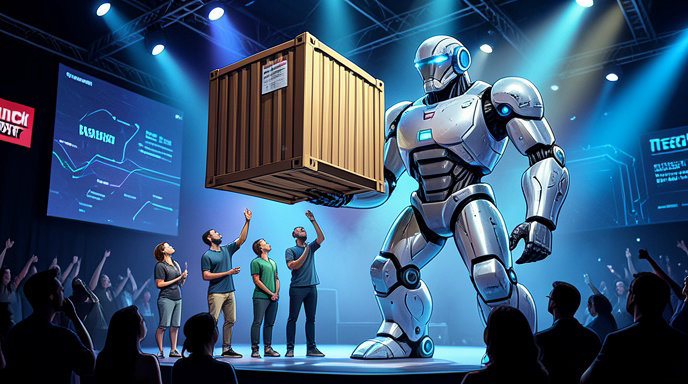
That's why one of the most anticipated sessions at TechCrunch Disrupt 2026 is an interactive Builders Stage deep-dive dedicated to that exact moment: What happens when OpenAI ships your roadmap?
Set for this fall in San Francisco, the session isn't another high-level AI hype panel. It's designed as a hands-on survival guide for early-stage founders navigating life on top of rapidly evolving foundation models.
Why This Session Matters Now
The timing couldn't be more urgent. Over the past year, GPT-5-class models, open-weight challengers, and multimodal agents have collapsed entire categories of startups while opening up entirely new ones. Context windows have exploded to millions of tokens, reasoning costs have plummeted, and agentic tool-use is now table stakes.
For startups, that means the ground is shifting monthly. What was a defensible moat in early 2025 is an API call in 2026. The Disrupt 2026 Builders Stage session will tackle how to anticipate where models are going next, and how to position your company so a new release is a tailwind, not a death sentence.
Defending Your Roadmap Without Delusion
A central theme of the preview is roadmap defense. Not by ignoring platform risk, but by mapping it explicitly.
Expect practical tactics on segmenting your roadmap into three zones: features the models will inevitably absorb, areas where you can co-exist by moving up the stack, and proprietary layers models can't or won't touch. Speakers will push founders to ask brutally honest questions: Are we a feature, a product, or a platform? How long until our core prompt becomes a system instruction?
The goal is to replace anxiety with a framework for deciding when to double down, when to abstract away from a single provider, and when to abandon a feature before OpenAI does it for you.
Creating Value Beyond The Model
The session's core message: the model is not the product.
Survivors in the age of OpenAI aren't winning on slightly better generation. They're winning on everything around it — proprietary data flywheels, deep integrations into enterprise workflows, evaluation harnesses, compliance, permissions, and user trust.
The Builders Stage discussion will highlight case studies of AI startups that survived being Sherlocked by pivoting from model-centric to workflow-centric. Think vertical AI agents that own the last mile of customer support, legal, healthcare, and sales, where domain data, human-in-the-loop design, and distribution matter far more than raw intelligence.
For builders, that means designing for swap-ability: model-agnostic architectures that let you plug in the best and cheapest model each month while your moat compounds elsewhere.
Building A Resilient AI Company
Resilience is the final pillar. The preview emphasizes building companies that get stronger as foundation models get better, not weaker.
That includes lessons on pricing when inference costs fall 90%, hiring when product cycles are weeks not years, and fundraising when VCs are terrified of platform risk. How do you tell a story to investors that you are OpenAI-proof? How do you build a team culture that treats a major model release as a sprint prompt, not a crisis?
The interactive format is key here. Unlike traditional panels, the Builders Stage session will invite audience participation, live Q&A, and real-world scenarios from founders in the room. Expect rapid-fire what-would-you-do exercises: OpenAI just launched your feature for free — what's your next 30-day plan?
What To Watch For At Disrupt 2026
TechCrunch Disrupt 2026 is leaning heavily into practical, founder-first programming, and this session fits that shift perfectly. The Builders Stage has become the place for tactical how-tos rather than future-gazing, covering everything from MVP building to growth and fundraising.
If you're building in AI right now, this is the can't-miss workshop. Bring your roadmap, your fears about GPT, Claude, and Gemini, and your toughest platform-risk questions. You'll leave with a clearer sense of how to survive — and maybe even thrive — the next time OpenAI ships your roadmap.

Get All The Latest Updates Delivered Straight To Your Inbox For Free!