
Flipkart vs Zomato vs Swiggy: Walmart-Backed Flipkart Preps Secret Food Delivery Launch in India
TL;DR
- Walmart-owned Flipkart has quietly expanded its employee-only food delivery beta in Bengaluru to thousands of staff, signaling a public launch is getting close.
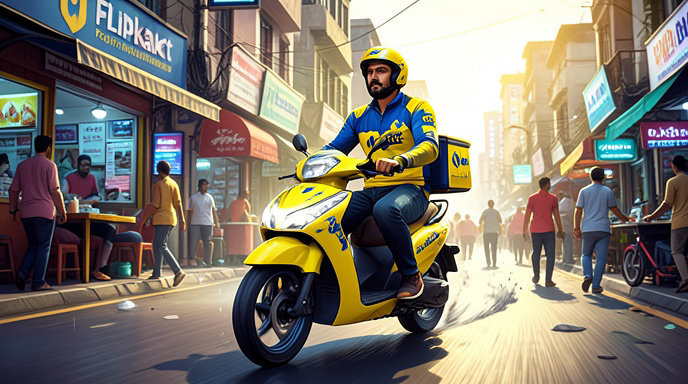
- The service, live inside the Flipkart app via Flipkart Minutes, offers meals with fast delivery and deep discounts as Flipkart tests logistics, pricing, and restaurant partnerships.
- If launched publicly, Flipkart would directly challenge the Zomato-Swiggy duopoly in India's $12 billion-plus online food delivery market.
The Quiet Pilot That's Getting Loud
Flipkart isn't talking publicly yet, but inside its Bengaluru campuses, food delivery is already a daily habit. The Walmart-owned e-commerce giant has expanded its closed food delivery pilot to thousands of employees, according to people familiar with the matter and internal communications circulating this month.
What started earlier this year as a small test with a few hundred staffers has now scaled into a full-fledged employee-only beta. Staff at Flipkart's headquarters and nearby offices can order biryani, burgers, coffee, thalis and more straight from the main Flipkart app, without needing Zomato or Swiggy.
The expansion is the clearest signal yet that Flipkart is serious about food. In India's startup world, scaling an internal beta to this size typically happens just weeks or months before a city-wide public launch.
How It Works Inside The Flipkart App
Employees describe the experience as surprisingly polished for a beta. A new food delivery icon has appeared inside the Flipkart and Flipkart Minutes storefront for whitelisted users, showing nearby restaurants with photos, ratings, delivery times, and launch offers.
Delivery is being promised in 30 to 45 minutes, powered by Flipkart Minutes' existing network of dark stores and two-wheeler riders. Sources say Flipkart is currently aggregating local Bengaluru favorites alongside large quick-service chains, with heavy subsidized pricing, free delivery thresholds, and Minutes-linked combo offers to test repeat behavior.
Flipkart has not officially commented on restaurant commission rates, but early partner chatter suggests it is pitching significantly lower commissions than incumbents to win over restaurants frustrated with high take-rates.
Why Flipkart Wants Food, And Why Now
On paper, groceries and smartphones seem far from hot dosas. In practice, food delivery is the ultimate high-frequency habit. Zomato and Swiggy get tens of millions of users opening their apps multiple times a week — exactly the kind of stickiness Flipkart wants as it fights Amazon India, Meesho, and quick-commerce rivals Blinkit, Zepto, and Swiggy Instamart.
Food also fits perfectly into Flipkart Minutes, Flipkart's 10-15 minute quick delivery service launched last year. Once you have hundreds of dark stores, thousands of riders, and dense city coverage in Bengaluru, Delhi, and Mumbai, adding hot food is a logical next step to boost basket size and rider utilization.
Timing matters too. With Zomato parent Eternal and Swiggy both pushing for profitability, raising platform fees, and cutting discounts, there is a window for a well-funded third player to undercut on price. Walmart's deep pockets give Flipkart room to burn cash that most startups can't match.
What This Means For Zomato And Swiggy
India's online food delivery market, estimated at over $12 billion annually and still growing fast, has essentially been a two-player game for years. Past challengers — from Uber Eats India to Amazon Food to ONDC-powered apps — have failed to crack it.
Flipkart could be different for three reasons: scale, logistics, and bundling. It already has over 500 million registered users, a massive logistics arm in Ekart, and the Flipkart Plus, Black, and Minutes ecosystem to bundle food with grocery and e-commerce perks.
Even a 5-10% share grab in metros like Bengaluru would pressure Zomato and Swiggy on discounts, commissions, and delivery fees. Restaurant associations, which have long complained about duopoly pricing, are likely to welcome a third large buyer.
That said, food delivery is brutally hard. Success needs hyperlocal operations, sub-30-minute consistency, and restaurant density street by street — not just national scale. Flipkart will have to prove it can handle peak lunch and dinner rushes, rain delays, and customer support at Zomato-level quality.
What Happens Next
All eyes are now on Bengaluru. People tracking the project expect Flipkart to move from employee-only to a limited public launch in select Bengaluru pin codes first, likely under the Flipkart Minutes branding, before expanding to other metros in 2026 if unit economics hold.
Key things to watch: official restaurant partner announcements, hiring for food operations roles, changes to the Flipkart app for general users, and whether Flipkart leans on ONDC or builds its own restaurant network.
Flipkart has tried food before and pulled back. This time, with quick commerce infrastructure already in place and an employee beta running at thousand-person scale, the test looks far more serious. If the beta feedback stays strong, India's food delivery war is about to get a powerful third contender.

Get All The Latest Updates Delivered Straight To Your Inbox For Free!