
GM Reverses Course: Hybrid SUVs Join Its Electric Future
TL;DR
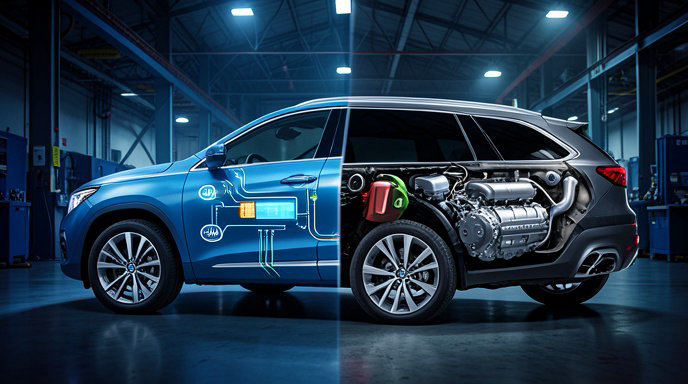
- General Motors is officially adding plug-in hybrids to its lineup, starting with the Chevy Equinox and Chevy Traverse SUVs in 2027, reversing its previous all-electric-only roadmap.
- The shift is driven by slower-than-expected EV adoption, strong hybrid sales from Toyota and Ford, and changing U.S. emissions regulations under the Trump administration.
- GM insists its long-term EV goals remain intact, positioning hybrids as a bridge technology to keep gas customers while it continues investing in Ultium-based EVs and affordable models like the new Chevy Bolt.
Why GM Changed Course
General Motors spent the last five years going all-in on electric. CEO Mary Barra pledged an all-electric light-duty lineup by 2035, killed off the popular Chevy Volt plug-in hybrid, and poured billions into its Ultium battery platform for vehicles like the Cadillac Lyriq, GMC Hummer EV, Chevy Silverado EV, and Equinox EV.
That plan has now been rewritten.
Starting in early 2024, Barra began signaling a major pivot: GM would bring plug-in hybrids back to North America. By 2025 and into 2026, the company confirmed the strategy is now official. The reason is simple: customers aren't switching to EVs as fast as GM expected.
EV sales are still growing, but hybrid sales are growing faster. Toyota has posted record hybrid sales with the RAV4 Hybrid, Highlander Hybrid, and Prius, while Ford has seen huge demand for the Maverick Hybrid, Escape Hybrid, and F-150 Hybrid. GM, with no hybrids in its U.S. lineup, was losing those buyers to competitors.
At the same time, the business case for EVs got tougher. High interest rates, range anxiety, lack of public charging, and the rollback of Biden-era EV tax credits and EPA tailpipe rules in 2025-2026 made pure EVs a harder sell. GM needed a middle ground.
What Models to Expect
GM hasn't released full specs yet, but executives and supplier reports have outlined the first wave of hybrid SUVs.
The Next-Gen Plug-In Hybrids
The first confirmed models are plug-in hybrid versions of two of GM's best-selling family SUVs: the Chevrolet Equinox and Chevrolet Traverse, expected for the 2027 model year arriving in late 2026 to early 2027. They will be built in North America and are expected to offer 40+ miles of electric-only range before switching to gas, allowing most daily commutes on electricity.
A GMC counterpart, likely the Terrain or Acadia, is widely expected to follow on the same platform. GM is developing a new U.S.-built plug-in hybrid system with two motors to deliver strong performance while maintaining SUV towing and cargo capability.
Trucks Are Next
Beyond SUVs, GM is also exploring plug-in hybrid versions of its full-size pickups, the Chevrolet Silverado and GMC Sierra. The company previously offered mild-hybrid trucks over a decade ago, but the new system would be a true plug-in with significant EV range to compete directly with the Ford F-150 PowerBoost Hybrid and Toyota Tundra i-FORCE MAX Hybrid.
What This Means For Its EV Goals
GM is careful not to call this a retreat from EVs. The official line is choice, not replacement.
The company still plans to expand its electric portfolio, including the return of the affordable Chevy Bolt EV in late 2026 as a 2027 model with LFP batteries, plus updated versions of the Equinox EV, Blazer EV, and Cadillac Optiq and Escalade IQ. It has also continued investing in U.S. battery plants in Ohio, Tennessee, and Michigan.
However, timelines have slipped. GM has delayed its Orion Assembly EV truck plant, slowed Ultium cell production targets, and dropped its interim goal of 1 million EVs in North America by 2025 and 400,000 EVs by mid-2024. Hybrids now give GM a way to meet looser federal fuel economy standards without relying solely on EVs.
In short: EVs are still the long-term future for GM, but hybrids are now the near-term bridge to get there profitably.
How GM Stacks Up Against Ford and Toyota
This move puts GM in a direct catch-up battle.
Toyota's Bet Pays Off
Toyota never abandoned hybrids, and that caution has paid off massively in 2024-2026. Nearly half of Toyota's U.S. sales are now hybrids, and models like the RAV4 Hybrid regularly outsell GM's gas-only Equinox in key months. GM's new plug-in Equinox is aimed squarely at winning back those buyers with the added benefit of a plug.
Ford's Balanced Playbook
Ford pursued a three-track strategy of gas, hybrid, and electric under its Ford+ plan. It scaled back some EV spending on large three-row EVs but doubled down on hybrids, announcing plans to hybridize its entire gas lineup including the Explorer and Expedition. GM is now forced to match that breadth.
For consumers, the competition is good news. By 2027-2028, buyers shopping for a mainstream 3-row or compact SUV will be able to choose between Toyota's proven self-charging hybrids, Ford's hybrids, and GM's new plug-in hybrids that offer more electric driving without full EV commitment.
The Bottom Line for Buyers
GM's reversal is less about abandoning electric and more about reading the market. American SUV buyers still want size, range, and affordability — and right now, plug-in hybrids deliver that better than a $60,000 EV.
Expect GM's first hybrid SUVs to hit dealerships in 2027 with competitive pricing in the mid-$30,000 to mid-$40,000 range, federal tax-credit eligibility still to be determined, and marketing focused on no-compromise flexibility: electric for the week, gas for the road trip.
The all-electric future is delayed, not canceled.

Get All The Latest Updates Delivered Straight To Your Inbox For Free!