
Tesla Cybercab Sales Launching by End of 2026 Despite Federal Safety Probe
TL;DR
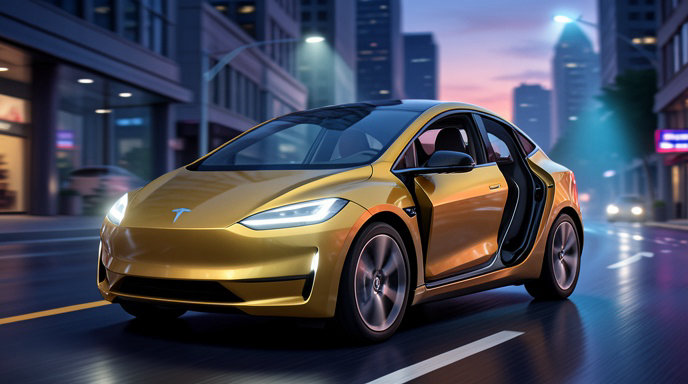
- Tesla plans to begin selling its gold-hued, steering-wheel-free Cybercab two-seater to customers by the end of 2026, according to VP of Vehicle Engineering Lars Moravy on the Q3 earnings call.
- The autonomous vehicle has no steering wheel, pedals, or traditional controls, relying entirely on Tesla's camera-based Full Self-Driving system for operation.
- The launch timeline comes as federal regulators investigate whether the purpose-built robotaxi can meet U.S. Federal Motor Vehicle Safety Standards that currently require manual controls.
Tesla's Robotaxi Bet Moves From Ride-Hailing to Your Driveway
Tesla is preparing to put its most radical vehicle yet into customers' hands. During Tesla's third-quarter earnings call on October 22, 2026, Lars Moravy, Tesla's Vice President of Vehicle Engineering, confirmed the company plans to start selling its autonomous Cybercab two-seater to customers by the end of the year.
The announcement marks a major expansion of Tesla's robotaxi strategy. Until now, the Cybercab has been framed primarily as the backbone of Tesla's autonomous ride-hailing network, which began limited operations in Austin, Texas earlier in 2026. Moravy's comments suggest Tesla will now offer the vehicle for direct consumer purchase, opening a new revenue stream beyond fares.
Moravy did not disclose pricing or initial delivery volumes on the call, but reiterated that production is ramping at Gigafactory Texas to support both the Tesla network fleet and private owners.
A Car With No Steering Wheel, No Pedals, No Mirrors
The Cybercab looks like nothing else on the road. Finished in a signature gold hue, the low-slung two-seater features butterfly doors, a expansive front light bar, and a minimalist cabin dominated by a large central touchscreen.
Most strikingly, it has no steering wheel, no accelerator or brake pedals, no rear-view mirrors, and no traditional instrument cluster. There is literally no way for a human to drive it.
Tesla says the vehicle is designed from the ground up for autonomy, relying solely on its camera-based Full Self-Driving (Unsupervised) software stack and AI4 computer. CEO Elon Musk has long argued that removing manual controls slashes cost and complexity, with a long-term target price under $30,000.
Inside, passengers get just two seats, wireless phone chargers, and no driver controls to get in the way — a lounge-like experience Tesla is betting commuters will embrace.
Federal Safety Probe Looms Over Launch
The ambitious sales timeline comes amid heightened federal scrutiny. The National Highway Traffic Safety Administration (NHTSA) is actively investigating whether the Cybercab can legally operate — let alone be sold — without meeting Federal Motor Vehicle Safety Standards (FMVSS).
Current U.S. regulations were written for human-driven cars and mandate features like steering wheels, brake pedals, mirrors, and windshield wipers with manual controls. Vehicles lacking those controls typically require a NHTSA exemption, which historically caps production at 2,500 vehicles per year per manufacturer unless new rulemaking is passed.
NHTSA has already opened multiple probes into Tesla's Full Self-Driving system related to crashes, traffic violations, and operation in low-visibility conditions. The agency confirmed in 2025 and 2026 that it is seeking detailed information from Tesla on the Cybercab's deployment plans, remote supervision, and compliance strategy.
Tesla has argued that camera-only autonomy is safer than human drivers and that regulations need to catch up. Musk has urged federal reform to allow nationwide autonomous deployment, while critics warn that selling a car with no manual fallback to private owners raises unprecedented liability and rescue questions.
What Happens Next
Despite the regulatory overhang, Tesla is pushing forward. Moravy said on the Q3 call that validation builds are already rolling off the line in Texas, with unsupervised testing expanding to additional cities before year-end.
If Tesla hits its end-of-2026 sales target, it would be the first mass-market car sold in the U.S. without manual driving controls — a milestone that could force a rewrite of federal vehicle safety rules.
Investors cheered the announcement, viewing direct-to-consumer Cybercab sales as a potential high-margin business alongside robotaxi fares. Safety advocates, meanwhile, say the next two months will be critical to watch as NHTSA decides whether gold Cybercabs belong in private garages or remain confined to tightly controlled fleets.

Get All The Latest Updates Delivered Straight To Your Inbox For Free!