
Google Opens Gemini and Search to Third-Party Apps in Major AI Agent Push
TL;DR
- Google is launching a new developer platform that lets third-party businesses plug their services directly into Gemini and Search for agentic discovery, booking, and shopping.
- The move shifts Gemini from answering questions to completing tasks, allowing AI agents to compare options, check availability, book, and buy without leaving Google.
- The push signals a major challenge to traditional apps and the open web, forcing businesses to decide whether to become agent-ready or risk losing direct customer traffic.
Google Wants Gemini to Stop Chatting and Start Doing
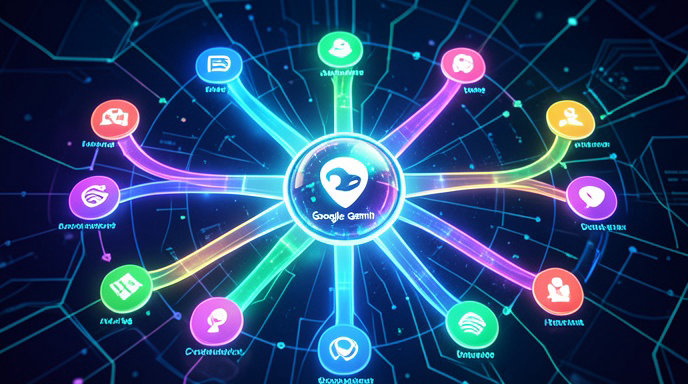
Google is making its biggest move yet to turn Gemini and Search from information engines into action engines. The company is opening both products to third-party developers through a new integration platform that allows businesses to embed their services, catalogs, and booking systems directly inside Google's AI experiences.
Instead of searching for a flight, clicking through five sites, and comparing prices in different tabs, a user will be able to ask Gemini to find options, filter them, and complete the booking. The same flow applies to restaurant reservations, local services, retail shopping, event tickets, and travel planning.
The strategy is central to Google's vision of agentic AI: assistants that don't just answer, but transact on your behalf.
From Links to Actions: How the Integrations Work
The new developer platform provides businesses with APIs and tools to make their content agent-readable and agent-bookable. Once integrated, a company's real-time inventory, pricing, availability, and services become accessible to Gemini and AI Mode in Search.
When a user makes a request like find me a dog-friendly hotel in Austin under $250 for this weekend with a late checkout, Gemini can pull live results from integrated partners, compare them, and present bookable cards inline. Users can refine, confirm, and pay without being pushed out to a separate website or app.
For developers, Google is positioning this as discovery at massive scale. Instead of fighting for ranking in blue links or paying for app installs, businesses can meet users at the moment of intent inside Gemini, Search, and eventually Android, Chrome, and Google Home.
A Direct Shot at OpenAI, Amazon, and the App Store Model
The launch puts Google in direct competition with OpenAI's GPT Store and operator-style agents, Amazon's Rufus and Buy For Me, and Microsoft Copilot's plug-in ecosystem. But Google has a distribution advantage none of them can match: billions of users already start their shopping and discovery journeys in Search.
Industry analysts see this as the beginning of an agentic commerce layer for the web. If agents can reliably handle research, comparison, booking, and checkout, the traditional funnel of search to website to app download could collapse into a single conversation.
That raises high stakes for brands. Participating gives them access to Google's AI traffic, but it also means ceding control over the customer interface, pricing presentation, and loyalty relationship to Google.
What It Means for Apps and the Open Web
The biggest question is what happens to apps and publishers if Gemini becomes the front door to everything.
For service businesses like airlines, delivery platforms, retailers, and booking sites, being agent-compatible may soon be as essential as being mobile-compatible was a decade ago. Early partners are expected to see higher conversion because friction is removed from checkout.
For the open web, however, the concern is familiar: even less click-through. If Gemini summarizes inventory and completes the transaction, fewer users will ever visit the original merchant site. Google says the integrations are designed to drive qualified bookings and purchases back to partners rather than scrape them, but publishers and smaller merchants worry about commoditization.
Developers will also need to adapt to new forms of optimization. Just as SEO defined the search era and ASO defined the mobile era, Agent Optimization - structuring data, pricing, reviews, and fulfillment so AI models can understand and recommend it - could define the next era.
What Comes Next
Google is expected to roll out the platform first to select partners in travel, retail, dining, and local services, before opening it more broadly to developers. Deeper integrations with Google Pay, Google Maps, Wallet, and Android are likely to follow, allowing agents to handle payments, identity verification, location handoffs, and post-purchase support.
The long-term bet is clear: Google doesn't want you to search and then go do something elsewhere. It wants Gemini and Search to be where the doing happens.
Whether businesses embrace that future - and whether users trust AI agents to spend their money - will determine if this becomes the next app store, or a cautionary tale about who really controls commerce on the AI web.

Get All The Latest Updates Delivered Straight To Your Inbox For Free!