
iPhone Duo vs. iPhone Pro Max: Why the Dual-Screen Experience Wins on Vacation
TL;DR
- Carrying an iPhone Duo alongside an iPhone Pro Max can make travel easier by separating everyday communication from reading, planning, photography, and entertainment.
- The Duo’s compromises—bulk, software quirks, battery demands, and awkward handling—are real, but less frustrating when it is treated as a vacation companion rather than a complete Pro Max replacement.
- After becoming accustomed to two screens, returning to a single large iPhone can feel surprisingly limiting, especially during navigation, travel research, and multitasking.
A vacation is supposed to simplify technology. Pack one phone, one charger, and perhaps a compact camera, then spend the rest of the trip looking at the destination instead of a collection of displays.
That logic usually points toward the iPhone Pro Max. It has the largest screen in Apple’s conventional iPhone lineup, strong battery life, capable cameras, and enough performance to handle everything from navigation to editing photos. It is the obvious travel phone.
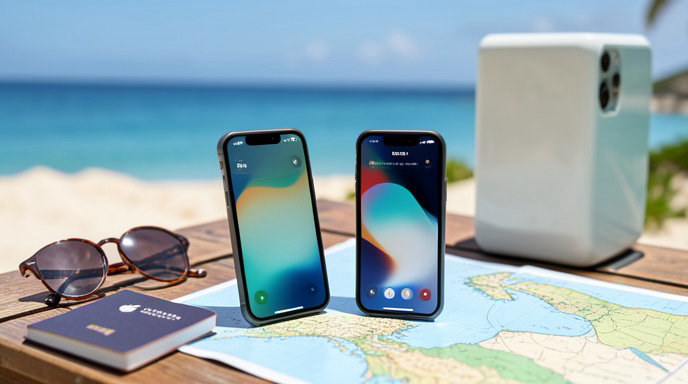
Yet carrying an iPhone Duo alongside an iPhone Pro Max can produce an unexpected result: the two-device setup may be more enjoyable than relying on the Pro Max alone.
The appeal is not simply having two phones. It is having two different kinds of screens, each assigned a separate role. One device can remain dedicated to communication, authentication, and photography, while the other handles maps, hotel reservations, translation, reading, and entertainment. That division turns a potentially excessive setup into a surprisingly practical vacation tool.
The Duo’s Frustrations Are Still Obvious
Any dual-screen or foldable-style iPhone concept has to overcome compromises that a conventional Pro Max largely avoids.
The first is physical design. A device with an additional display, hinge, or folding mechanism is likely to be thicker and heavier than a standard iPhone. Even when folded, it may occupy more space in a pocket or bag. Open it up, and the larger surface becomes more vulnerable to scratches, fingerprints, drops, and accidental damage.
That matters on vacation. Phones are used around beaches, swimming pools, crowded streets, restaurant tables, and unfamiliar surfaces. A Pro Max can be uncomfortable to hold, but its slab design is familiar and relatively predictable. A more complex Duo demands additional care.
Software can also make the experience feel unfinished. Apps may not always scale cleanly across a larger display, and switching between screens can create inconsistent layouts. Some applications may support two-panel multitasking, while others simply stretch into an oversized phone interface. The difference between those experiences can be striking.
There is also the question of battery life. A second display consumes power, particularly when used for navigation, video, photography, or bright outdoor viewing. Carrying two devices provides a kind of redundancy, but it also means charging two batteries and keeping track of two sets of notifications, cables, and accessories.
The Pro Max Remains the Better Single Phone
For travelers who want one device, the iPhone Pro Max is difficult to dismiss.
Its larger display is excellent for reading maps and reviewing photographs without the extra complexity of a folding or dual-screen design. Its camera system is immediately available, and its battery is designed for long days away from a charger. The familiar interface also reduces friction: there is no need to decide which screen should handle a task or whether an app will behave properly in an expanded layout.
The Pro Max is also better suited to spontaneous photography. It can be pulled from a pocket, used one-handed, and returned just as quickly. For street photography, short video clips, and quick snapshots, a conventional phone remains the simpler tool.
That simplicity is especially valuable when traveling with children, moving through airports, or navigating busy streets. A single device means fewer items to misplace and fewer opportunities for a critical notification or ticket to be stranded on the wrong screen.
But the Pro Max’s strengths become less decisive when it is not the only device being carried.
Two Screens Create a Useful Division of Labor
The most compelling part of the Duo-and-Pro-Max arrangement is task separation.
The Pro Max can remain the primary communication and camera device. It handles calls, messages, boarding passes, two-factor authentication, payments, and photographs. The Duo can then stay open to a map, a translation tool, a travel itinerary, or a long article.
That arrangement avoids one of the most common travel annoyances: constantly switching between apps. On a single phone, checking directions may mean closing a message, opening a browser, searching for a restaurant, returning to the map, and then reopening the original conversation. With two displays, those tasks can remain visible at the same time.
The benefit is not limited to productivity. A traveler can keep a reservation or museum ticket visible on the Duo while using the Pro Max to communicate with a hotel or take a photograph. A map can remain open while a second device is used to translate a menu or photograph a street sign.
This is the kind of convenience that seems unnecessary before a trip and indispensable after several days of using it.
The Duo Becomes a Vacation Companion
The Duo’s larger or more flexible screen is particularly valuable during downtime.
On a flight or train, it can become a compact reading device. In a hotel room, it can display a show, a digital magazine, or a travel guide without taking over the device used for messages and calls. When planning the next day, the larger workspace makes it easier to compare locations, opening hours, routes, and restaurant options.
The experience feels closer to carrying a small tablet, but without the burden of adding a full-size tablet to the luggage. That distinction matters for travelers trying to keep their bags light.
It also changes how the Pro Max is used. Rather than asking the Pro Max to do everything, the Duo absorbs the tasks that benefit most from extra screen space. The Pro Max can therefore stay focused on the functions where it is strongest: fast access, photography, communications, and secure transactions.
The result is not necessarily faster in every situation. It is simply less interruptive.
Why Switching Back Can Feel Disappointing
The surprising part of the setup emerges when the trip ends.
After several days of using a second display, going back to a single Pro Max can feel restrictive even though the Pro Max remains the more polished all-round device. The issue is not screen size alone. It is the loss of persistent context.
With one phone, every new task competes for the same screen. A map replaces a booking confirmation. A message replaces a translation page. A camera view replaces directions. Those transitions are minor, but they accumulate during a busy day of travel.
The Duo changes that rhythm. One screen can hold the current task while the other provides reference information. That arrangement reduces the mental overhead of remembering what was open, which page contained a detail, or where a confirmation code was stored.
It also encourages a more deliberate use of each device. The Pro Max becomes the phone that is picked up and put away repeatedly. The Duo becomes the screen that stays available, open on a table or held in both hands when more attention is required.
That distinction can make the single-device experience feel less capable than it did before the trip, even when no hardware has changed.
The Setup Is Not for Everyone
The dual-screen approach introduces its own form of friction.
There are two devices to charge, protect, update, and carry. Notifications can become duplicated or fragmented. A traveler may accidentally leave one phone in a hotel room, taxi, or restaurant. Some people may also find the arrangement distracting, particularly if the goal of a vacation is to reduce screen time.
There is a social consideration as well. Using two phones can appear excessive, and constantly consulting both may make it harder to remain present. The setup works best when the second screen is used as a quiet reference tool rather than another source of alerts.
Weight is another factor. The Pro Max is already a substantial phone. Adding a Duo may make the total kit heavier than carrying an iPhone and a compact tablet, depending on the device designs involved. The convenience of two displays has to justify that additional load.
For photographers, the decision may also be less clear. Carrying two phones does not automatically produce better images. If the Duo has weaker cameras or a less convenient shooting experience, the Pro Max will remain the natural choice for important moments.
The Appeal Is About Context, Not Specifications
The vacation case for the Duo is therefore less about raw specifications than about context.
A phone that seems awkward during an ordinary commute can become useful when a day involves unfamiliar streets, multiple reservations, language barriers, public transport schedules, and long stretches of waiting. Travel creates more situations in which information needs to remain visible while another task is completed.
That is where a dual-screen device offers something a larger single phone cannot fully reproduce. The Pro Max may provide an excellent large display, but it still presents one active view at a time. The Duo changes the relationship between those views by allowing them to coexist.
It is also why the arrangement can feel more engaging than expected. The traveler is not merely carrying a backup phone. They are carrying a second window into the trip—one for exploring and one for documenting, one for planning and one for communicating.
A Compromise That Makes More Sense on Holiday
The iPhone Duo may not be the best replacement for an iPhone Pro Max. Its hardware compromises, potential software limitations, and additional maintenance keep the conventional flagship attractive. For everyday use, the Pro Max is likely to remain the cleaner and more dependable choice.
Vacation changes the calculation.
When a traveler needs maps, tickets, translations, messages, reservations, entertainment, and a camera throughout the same day, two complementary screens can reduce friction in ways that a single phone cannot. The Duo handles the sustained, information-heavy tasks, while the Pro Max remains the reliable personal and photographic device.
That arrangement is heavier and more complicated, but it can also be more flexible and enjoyable. Once the trip is over, the desire to return to a single phone may be weaker—not because the Pro Max has become worse, but because the traveler has experienced the convenience of keeping two parts of the journey visible at once.
The dual-screen vacation setup ultimately succeeds by making an impractical idea feel practical in the right environment. It is not a universal argument for carrying two iPhones. It is a reminder that the best device configuration depends on how a phone is used—and few situations demand more from a phone than a full day somewhere unfamiliar.

Get All The Latest Updates Delivered Straight To Your Inbox For Free!