
Rivian R2 Becomes Best-Selling EV as Company Raises 2026 Guidance
TL;DR
- Rivian’s R2 is reportedly outselling the company’s existing models, making it a potentially important catalyst for demand and production growth.
- Improved 2026 guidance would signal greater confidence in R2 deliveries, manufacturing efficiency, and the company’s path toward profitability.
- The SUV’s reception could strengthen Rivian’s position in the expanding electric-vehicle market, although production execution and pricing remain key risks.
Market Momentum Builds Around Rivian’s R2
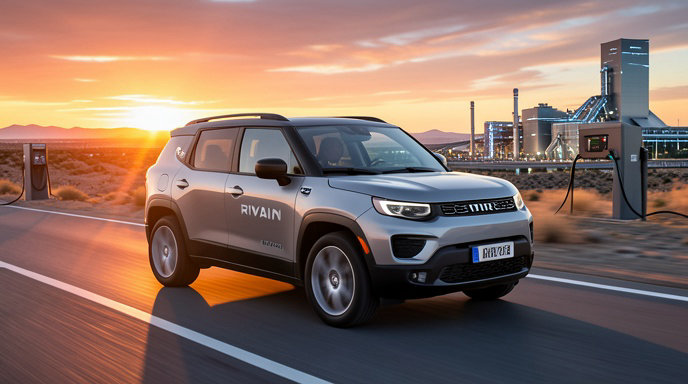
Rivian’s new R2 electric SUV is quickly emerging as the company’s most important vehicle. Early demand has reportedly pushed the R2 ahead of Rivian’s larger R1S SUV and R1T pickup, giving the automaker a much-needed sales catalyst as it works to broaden its customer base and improve its financial performance.
The reported momentum comes as Rivian raises its Wall Street guidance for 2026. The company’s updated outlook suggests that management sees stronger-than-expected demand, improved manufacturing performance, or both. It also reflects the strategic importance of the R2, which is designed to bring Rivian’s adventure-focused electric vehicles to a much wider audience at a lower price than its existing models.
The precise delivery, revenue, and production figures behind the revised guidance should be checked against Rivian’s latest earnings release and regulatory filings. Nevertheless, the broader message is significant: the R2 could become the vehicle that transforms Rivian from a premium EV startup into a higher-volume automaker.
Why the R2 Matters
Rivian’s first-generation vehicles established the brand but have occupied relatively expensive segments. The R1T and R1S offer strong performance, distinctive styling, and off-road capability, but their pricing limits the number of consumers who can afford them.
The R2 is intended to address that problem. Its smaller dimensions, lower expected price, and SUV format place it in one of the most competitive and fastest-growing sections of the vehicle market. Unlike the R1T, which targets pickup buyers, or the R1S, which competes in the premium electric SUV segment, the R2 can appeal to families, commuters, and buyers moving up from conventional compact and midsize SUVs.
That broader positioning may explain why the vehicle has become Rivian’s best-selling model so quickly. Electric SUVs remain among the most popular battery-powered vehicles, and the R2 gives consumers a more accessible entry point into Rivian’s design, software, and brand ecosystem.
A More Favorable Financial Outlook
Raising guidance is an important signal for a manufacturer still operating under intense financial pressure. EV companies must manage large investments in factories, battery technology, software, supply chains, and distribution before reaching sustainable profitability.
A stronger 2026 outlook could indicate that Rivian expects higher vehicle deliveries, improved average production costs, better gross margins, or a combination of those factors. Greater production volume would allow the company to spread fixed costs across more vehicles and improve its purchasing leverage with suppliers.
The R2 is central to that equation. A vehicle that attracts substantially more customers than Rivian’s existing lineup can help increase factory utilization and create a more predictable revenue base. However, higher sales alone will not guarantee financial success. Rivian must also control warranty expenses, manufacturing costs, inventory levels, and the cost of launching the model at scale.
Demand Beyond the Early-Adopter Market
Rivian’s early customers have generally been attracted to the company’s distinctive styling, outdoor-oriented branding, and premium driving experience. The R2’s significance is that it may extend that appeal beyond the early-adopter market.
Consumers considering an electric SUV often weigh range, charging access, cargo space, software quality, safety, and total ownership cost. Rivian’s brand can benefit from its reputation for capable vehicles and polished technology, but the R2 will need to deliver a competitive ownership experience in everyday conditions.
Price will be especially important. The vehicle’s success depends partly on whether Rivian can keep it meaningfully more affordable than the R1S while maintaining acceptable margins. If the R2 is priced too close to larger premium EVs, it could lose its mass-market appeal. If Rivian prices it aggressively, the company may generate demand but sacrifice profitability.
Production Is the Next Test
Strong reservations and early sales interest are only the beginning. The most difficult stage for Rivian may be converting demand into consistent, profitable production.
Automakers have repeatedly struggled to scale new EV programs because of battery supply constraints, software problems, component shortages, and manufacturing bottlenecks. Rivian will need to demonstrate that it can produce the R2 at high volume without compromising quality or delivery timelines.
The company’s manufacturing strategy and factory footprint will therefore be closely watched. Efficient production could help Rivian lower the R2’s cost structure and improve its competitive position. Delays, quality issues, or rapidly rising launch expenses could weaken the financial benefits of strong demand.
The R2 also gives Rivian an opportunity to apply lessons learned from the R1 platform. Improvements in vehicle design, component commonality, software architecture, and battery integration could reduce complexity and make the newer model easier to build.
A Stronger Position in the EV Market
The R2’s reported performance arrives at a critical time for the electric-vehicle industry. EV growth continues, but the market has become more competitive as established automakers, Chinese manufacturers, and newer startups introduce additional models.
Rivian’s advantage is its clear identity. The company is not trying to compete solely on low price. Instead, it combines rugged styling, outdoor capability, software features, and a premium ownership experience. If the R2 delivers those qualities at a more accessible price, it could occupy a differentiated position between mainstream electric SUVs and luxury models.
The vehicle may also help Rivian compete more effectively with electric SUVs from Tesla, Hyundai, Kia, Ford, General Motors, and other manufacturers. Its success would not necessarily depend on dominating the market. Establishing a loyal customer base and achieving predictable volume could be enough to give Rivian a stronger foundation for future models.
Risks Still Cloud the Outlook
Despite the encouraging sales momentum, Rivian faces several risks. The EV market remains sensitive to interest rates, economic conditions, charging availability, and government incentives. A slowdown in consumer demand could affect even well-received vehicles.
Competition is another challenge. Buyers will have more electric SUVs to choose from, and established automakers often possess greater manufacturing scale, supplier leverage, and dealership coverage. Rivian must continue improving its service network and customer support as its fleet expands.
The company also needs to maintain financial discipline. Launching a high-volume vehicle requires significant capital, and weaker-than-expected margins could force Rivian to raise additional funds or reduce spending elsewhere. Any guidance increase will be judged not only by delivery numbers but also by cash usage and progress toward profitability.
What the R2 Could Mean for Rivian
If Rivian can sustain the R2’s demand and execute its production ramp, the vehicle could become the company’s foundation for long-term growth. Higher volumes would create opportunities to reduce costs, expand the brand, and fund additional products.
The R2 could also improve Rivian’s credibility with investors. For much of its history as a public company, Rivian has been evaluated on future potential rather than current scale. A strong-selling, more affordable model would provide clearer evidence that the company can move beyond the premium startup phase.
The revised 2026 guidance is therefore more than a routine financial update. It is a test of whether Rivian can turn product enthusiasm into repeatable business performance.
For now, the R2’s rise is an encouraging sign. But the vehicle’s ultimate impact will depend on what happens next: whether Rivian can manufacture it efficiently, deliver it on schedule, protect its margins, and maintain demand after the initial launch excitement fades. If it succeeds on those fronts, the R2 could become not only Rivian’s best-selling EV, but also the model that determines the automaker’s place in the next stage of the electric-vehicle market.

Get All The Latest Updates Delivered Straight To Your Inbox For Free!