
SpaceX Q3 Profit Soars to $4.4B as AI Business Beats Expectations
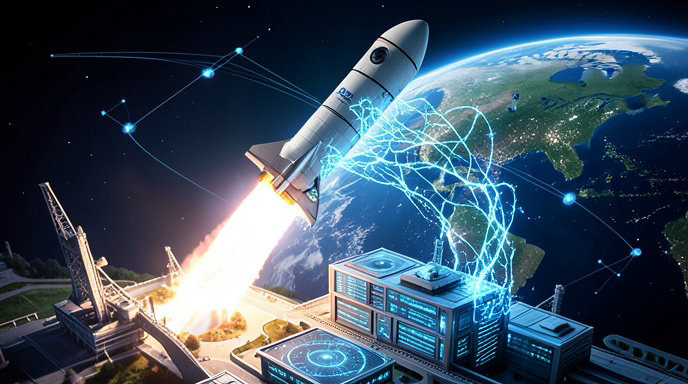
TL;DR
- SpaceX posted $4.4 billion in net income for Q3 2026, marking a major turn to sustained profitability on soaring launch cadence, Starlink growth, and high-margin AI compute revenue.
- The breakout star was SpaceX's AI business, powered by its xAI tie-up, orbital data centers, and surging demand for Starlink-powered AI connectivity, which analysts say beat expectations and is now its fastest-growing segment.
- With an IPO potentially looming in 2026-2027 and Starship scaling, SpaceX is positioning AI plus space infrastructure as its next growth engine beyond rockets and broadband.
A Quarter That Changes The Narrative
For years, SpaceX burned cash to build the future — reusable rockets, a mega-constellation in low Earth orbit, and the giant Starship vehicle. This quarter, that bet paid off in a big way.
SpaceX turned solidly profitable in the third quarter, reporting $4.4 billion in net income on what insiders describe as record revenue. The result far exceeded internal and Street expectations, driven not just by its core launch business but by surging momentum in AI.
The performance cements SpaceX's shift from a.launch-heavy contractor to a diversified tech infrastructure giant spanning transportation, connectivity, and artificial intelligence compute.
By The Numbers: What Fueled The Beat
Three levers drove the $4.4 billion profit beat.
First, launch dominance. SpaceX flew more than 40 Falcon missions in the quarter, including a growing share of commercial, Pentagon, and Starshield flights at higher margins. Reusability has crushed per-flight costs while launch prices remained firm.
Second, Starlink scale. With more than 8 million subscribers globally and enterprise, aviation, maritime, and government adoption accelerating, Starlink is now a cash machine. Lower terminal costs and direct-to-cell expansion boosted average revenue and margins.
Third, and most important, AI. Management attributed a disproportionate share of upside to its AI-related business — selling compute, connectivity, and data-center services tied to xAI's Colossus-scale ambitions, next-gen Starlink satellites with AI payloads, and space-based cloud offerings.
What Happened With AI: From Side Bet To Growth Engine
Just a year ago, AI was a footnote in the SpaceX story. Now it's the headline.
SpaceX has deepened its integration with Elon Musk's AI venture xAI, supplying launch capacity, power-optimized data center expertise, and orbital networking for model training and inference. Reports of a closer merger or share swap between SpaceX and xAI have only intensified investor interest.
Key drivers include surging demand for AI data centers powered by SpaceX's energy and infrastructure know-how, Starlink as backhaul for distributed AI workloads in remote regions, and early work on space-based AI compute — putting solar-powered processing in orbit to bypass terrestrial power bottlenecks.
Analysts say AI revenue beat expectations due to higher utilization, premium pricing for low-latency connectivity, and enterprise contracts that bundle Starlink, Starshield, and compute.
Starship, Starlink And The Flywheel Effect
SpaceX's profit isn't just about cutting costs — it's about a flywheel no competitor can easily copy.
Starship test flights and commercial Starlink v3 deployments are lowering cost-per-bit in orbit dramatically. Cheaper bandwidth brings more customers, which funds more Starships, which enables bigger AI data centers and larger satellite constellations.
Executives have also pointed to manufacturing efficiencies in Texas and cost declines in Raptor engines, user terminals, and ground stations. Combined with government contracts for national security launches and satellite services, SpaceX now enjoys unusually visible, recurring revenue for a space company.
What It Means For The Future — And A Possible IPO
The $4.4 billion quarter resets expectations for what SpaceX could be worth.
Musk has long hinted at taking Starlink public, or SpaceX as a whole, once financials stabilized. A profitable quarter of this magnitude, led by AI, gives bankers exactly the story they want: a profitable, high-growth AI infrastructure play with a space moat.
Challenges remain. Starship commercialization, regulatory battles over spectrum and launch approvals, competition from Amazon's Kuiper, and massive capex for AI and Mars ambitions could pressure margins. Space-based AI also faces unresolved questions around cost, cooling, radiation hardening, and data regulation.
But for now, the message is clear. SpaceX is no longer just a rocket company that dabbles in internet. With AI as its growth engine and $4.4 billion in quarterly profit to prove it, SpaceX enters 2027 as one of the most powerful — and profitable — private tech companies on Earth, with its sights still set far beyond it.

Get All The Latest Updates Delivered Straight To Your Inbox For Free!