
Tesla Optimus Production Starts in California as Profit Plunges 43%
TL;DR
- Tesla has officially started early production of its Optimus humanoid robot in Fremont, California, moving from prototype to limited factory-built units.
- Tesla's Q3 2026 results show profit plunged 43% year-over-year on essentially flat auto revenue, as operating expenses surged on AI, robotics, and robotaxi investments.
- CEO Elon Musk is framing Optimus, AI, and autonomous driving as Tesla's future growth engine, betting short-term financial pain will pay off in a robotics-led transformation.
Tesla's Big Bet: Robots Over Near-Term Profit
Tesla is at a turning point. Even as its core electric vehicle business faces slowing growth and shrinking margins, the company has kicked off production of its most ambitious product yet — the Optimus humanoid robot — at its Fremont factory in California.
The move confirms what CEO Elon Musk has been telegraphing for months: Tesla no longer sees itself primarily as a car company. It's positioning itself as an AI and robotics company, with Optimus, Full Self-Driving, and the Robotaxi network as the pillars of its next decade.
But that pivot is coming at a steep cost.
Profit Plunges 43% As Expenses Soar
Tesla's third-quarter 2026 earnings paint a stark picture of financial pressure. Net income fell roughly 43% compared to a year ago, despite total revenue holding flat. Automotive sales remained stagnant amid intensifying EV competition from China, higher interest rates, and an aging lineup.
Meanwhile, operating expenses soared. Tesla ramped up spending on AI infrastructure, Dojo supercomputer expansion, neural-net training, Optimus development, and robotaxi testing. Research and development costs hit record levels as the company hired thousands of AI and robotics engineers.
Musk told investors the margin squeeze was intentional, arguing Tesla is choosing to invest aggressively through a downturn rather than cut its way to short-term profitability.
Optimus Production Starts in Fremont, California
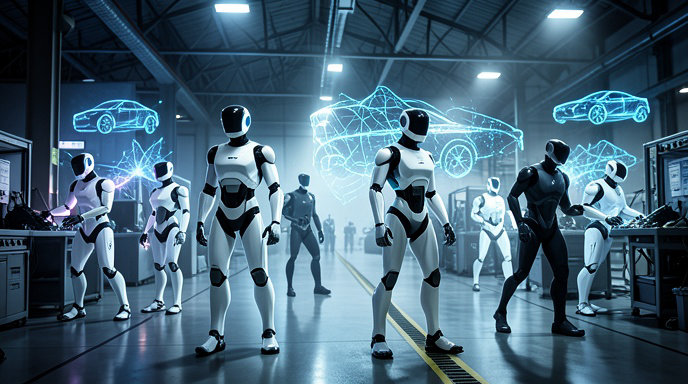
The headline breakthrough is Optimus. Tesla has begun early, limited production of Optimus Gen 2 units on a pilot line inside its Fremont, California plant — the same complex where Model 3, Model Y, Model S and Model X are built.
Unlike previous hand-built prototypes shown at AI Day events, these are the first Optimus robots assembled using semi-automated manufacturing processes. Tesla plans to deploy the first batch internally for material handling, parts sorting, and repetitive factory tasks before selling to external customers.
Musk has claimed Tesla could eventually produce millions of Optimus robots per year at a cost under $20,000 per unit, selling them for $25,000 to $30,000. If achieved, that would create a business larger than its automotive division.
Why Tesla Is Betting Everything on Robots and AI
Tesla's logic is simple: cars have become a low-margin, highly competitive commodity. Robots and autonomy offer software-like margins.
Optimus is designed to leverage the same core technology as Tesla's vehicles — vision-based neural networks, custom AI chips, actuators, and battery packs. Breakthroughs in Full Self-Driving directly improve Optimus's ability to navigate the real world, creating a flywheel effect.
Alongside Optimus, Tesla is pushing its unsupervised Full Self-Driving software and Cybercab robotaxi service, now testing in Austin and the Bay Area. Musk says autonomy plus humanoid labor could unlock trillions in value and solve global labor shortages.
What This Means for the Future
In the near term, investors face more volatility. Tesla warned expenses will remain elevated through 2027 as it scales Optimus production, builds new robot-focused factory capacity, and expands its AI compute clusters.
Regulatory and technical hurdles remain massive. Optimus still needs to prove it can work reliably for hours without human intervention, and robotaxi services face strict safety scrutiny in California and other states.
But if Tesla succeeds, October 2026 could be remembered as the moment Tesla stopped being an automaker and started becoming the world's first mass-market robotics giant.

Get All The Latest Updates Delivered Straight To Your Inbox For Free!