
Tesla Partners With Turo to Expand Full Self-Driving Supervised Adoption
TL;DR
- Tesla and Turo are offering eligible Turo hosts a one-month complimentary trial of Tesla’s Full Self-Driving (Supervised) software.
- The arrangement could put more Tesla vehicles equipped with the driver-assistance system in front of renters who have never experienced it.
- The trial may help Tesla demonstrate FSD’s capabilities and support adoption, while drivers remain responsible for supervising the vehicle at all times.
Tesla Partners With Turo to Expand Full Self-Driving Supervised Adoption
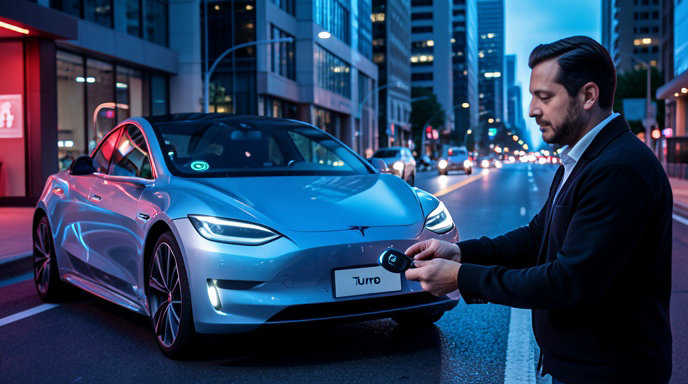
A new partnership between Tesla and car-sharing marketplace Turo is giving eligible hosts a temporary way to try Full Self-Driving (Supervised), Tesla’s most advanced driver-assistance package.
Under the offer, qualifying Turo hosts can receive one month of access to the software at no cost. The initiative is designed to increase exposure to Tesla’s supervised-driving technology by placing more equipped vehicles in a marketplace used by drivers who may not own a Tesla themselves.
The partnership links Tesla’s effort to expand FSD adoption with Turo’s peer-to-peer rental model, creating a potential channel for firsthand product demonstrations. Rather than encountering the system through a showroom ride or promotional event, renters could experience it during a regular vehicle booking.
A Trial Built Around Turo Hosts
The offer is aimed at eligible hosts who list Tesla vehicles on Turo. Specific eligibility, activation and availability conditions may depend on the vehicle, host account and applicable Tesla or Turo terms.
For participating hosts, the one-month trial provides an opportunity to make FSD (Supervised) available during vehicle bookings without immediately committing to a longer-term subscription or purchase. Hosts may also use the period to evaluate whether the feature makes their listing more attractive to prospective renters.
Turo’s marketplace includes privately owned vehicles that are rented for periods ranging from short trips to longer stays. That structure gives Tesla access to a broad audience, including drivers who are curious about FSD but have limited opportunities to use it.
The program does not mean every Tesla listed on Turo will offer the software. Access depends on whether the vehicle supports the feature, whether the host qualifies and whether the system is enabled in the relevant market.
A Potential Product Demonstration at Scale
Tesla has long relied on customer experience and word of mouth to promote its driver-assistance technology. A Turo partnership could broaden that strategy by allowing renters to encounter FSD in real-world travel situations.
A renter might use the system on local roads, highways or during routine navigation, depending on the vehicle’s capabilities, regional restrictions and the host’s settings. That experience could help potential buyers form a more concrete view of the software than an online video or short demonstration drive.
For Tesla, the arrangement also creates a path to reach people who are not yet ready to purchase a vehicle. Some renters may be considering an electric vehicle, while others may simply want to compare Tesla’s assistance features with competing systems.
The model could be particularly useful in areas where Tesla has a large installed vehicle base but where FSD adoption remains limited. If renters respond positively, they may later subscribe to the software, seek out a Tesla when buying their next vehicle or encourage current Tesla owners to activate it.
FSD Remains a Supervised Driver-Assistance System
Despite its name, Full Self-Driving (Supervised) is not an autonomous driving service. Tesla requires drivers to remain attentive and ready to take control at all times.
The system can perform a range of driving tasks, including steering, acceleration, braking and route-based maneuvers, depending on the software version and local availability. However, it can make mistakes, misinterpret road conditions or respond inappropriately to unusual situations.
Tesla’s terminology has generated continuing debate because the phrase “Full Self-Driving” can suggest a capability beyond what the product currently provides. The “Supervised” designation is intended to emphasize that the driver remains responsible for the vehicle.
That distinction is especially important in a car-sharing environment. A renter may be unfamiliar with Tesla’s controls, the vehicle’s limitations or the exact behavior of the software. Hosts and renters will need to understand that the trial offers access to a driver-assistance feature, not permission to remove attention from the road.
Why Turo Is a Strategic Fit
Turo gives Tesla a way to reach drivers at a moment when they are actively using a vehicle. Unlike a traditional advertisement, a rental places the customer behind the wheel for an extended period and allows them to judge the technology in a practical setting.
The arrangement may also benefit hosts. Features such as FSD could help distinguish a Tesla listing from other vehicles on the platform, particularly in markets where renters are interested in electric cars or advanced technology.
Hosts could use the trial as a test of whether FSD improves booking interest, rental rates or customer reviews. At the same time, they must consider operational issues such as explaining the system to renters, responding to questions and ensuring that the vehicle’s driver-assistance features are used appropriately.
Turo has previously positioned itself as a way for consumers to access vehicles they may not otherwise experience. Tesla’s technology gives that proposition an additional software-focused dimension: renters are not only trying a different car, but also a feature that can influence how the vehicle is driven.
The Limits of the Adoption Strategy
The trial could increase awareness, but firsthand access will not automatically translate into paid subscriptions or vehicle purchases.
FSD’s usefulness can vary depending on road markings, traffic conditions, weather, construction and the driver’s comfort with the system. Some renters may find it valuable, while others may prefer to control the vehicle themselves or may not use the feature extensively during a short booking.
There are also practical concerns for hosts. Software access may affect how a vehicle is marketed, but it does not eliminate the need to maintain the car, monitor its condition or communicate clear usage expectations. A host may decide that the feature is a selling point, while another may choose not to emphasize it.
Tesla will also need to manage expectations carefully. If a renter interprets “Full Self-Driving” as a promise of autonomous operation, a confusing or uncomfortable experience could undermine rather than strengthen interest in the technology.
A New Route for Tesla’s Software Business
Tesla has increasingly treated software as a major part of its vehicle business. The company has offered FSD through purchases and subscriptions, giving owners different ways to access the package.
A Turo-based trial supports the subscription model by allowing more people to sample the feature before paying for continued access. It also turns vehicles already operating on the road into potential demonstrations of Tesla’s software.
If the program proves effective, Tesla could explore additional partnerships with rental companies, fleet operators or mobility services. Such agreements could increase the number of drivers who encounter FSD without requiring Tesla to sell a new vehicle to each user.
The approach also reflects a broader change in how automakers distribute advanced features. Driver-assistance systems are increasingly delivered through software updates and paid services, making temporary access and usage-based promotion more practical than they were when vehicle features were fixed at the time of purchase.
What to Watch Next
The key measure of the partnership will be whether it produces sustained adoption after the free month ends. Important indicators could include the number of participating hosts, renter engagement, subscription conversions and demand for Tesla vehicles equipped with the system.
It will also be worth watching how Tesla and Turo communicate safety responsibilities. Clear explanations for hosts and renters will be essential, particularly because users may have different levels of experience with driver-assistance technology.
For Tesla, the Turo offer is a relatively low-friction way to put FSD in front of more potential customers. For Turo hosts, it is a short-term opportunity to test whether an advanced software feature can improve the appeal of a listing. And for renters, it offers a chance to experience Tesla’s supervised-driving technology outside a showroom.
The partnership will not make FSD autonomous, nor will it resolve the continuing debate over Tesla’s branding and capabilities. But by expanding access through a mainstream car-sharing marketplace, it could give more drivers a direct look at the technology—and potentially help Tesla turn curiosity into broader adoption.

Get All The Latest Updates Delivered Straight To Your Inbox For Free!