
Waymo and Toyota Partner to Bring Electric Robotaxis to Japan and the UK
TL;DR
- Waymo and Toyota are working together to test autonomous electric Toyota bZ4X vehicles in Japan, with trials planned to begin in 2026.
- The partnership combines Waymo’s self-driving system with Toyota’s vehicles and Woven by Toyota’s mobility and mapping expertise.
- Japan could become a launchpad for Waymo’s international robotaxi ambitions, while the UK represents another potential market—but neither country has yet been promised a commercial Toyota-based robotaxi service.
A new partnership between Waymo and Toyota could take the Alphabet-backed autonomous-driving company beyond its established U.S. markets and into Japan, with the United Kingdom also emerging as a possible future destination for its robotaxi technology.
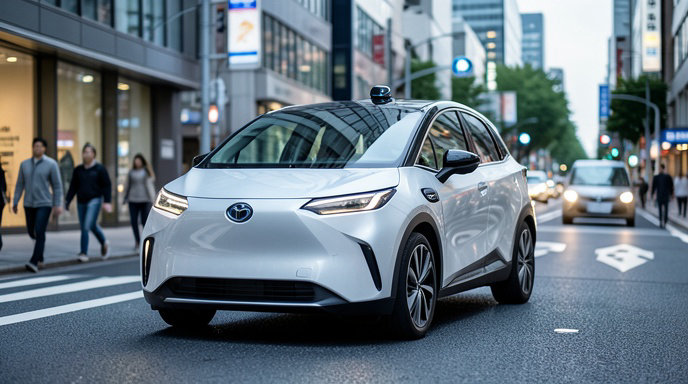
The companies plan to explore autonomous versions of Toyota’s battery-electric bZ4X SUV, beginning with vehicle testing in Japan. The initiative is expected to involve Toyota, Waymo and Woven by Toyota, the automaker’s technology and mobility subsidiary.
The agreement is not yet a commitment to launch a fully commercial robotaxi service. Instead, it establishes a framework for evaluating vehicles, software, operations and regulatory requirements in markets where autonomous driving is still developing.
Testing the bZ4X as an Autonomous Platform
The Toyota bZ4X is the first model in Toyota’s bZ battery-electric lineup and is already sold in Japan, North America, Europe and other markets. Its electric architecture provides several characteristics that are attractive for autonomous ride-hailing: a relatively quiet cabin, electronic vehicle systems and a flat battery-floor layout that can support flexible interior packaging.
For Waymo, using a production Toyota platform could provide an alternative to the purpose-built or heavily modified vehicles used in its existing U.S. operations. Waymo’s current commercial service has relied heavily on the Jaguar I-PACE, while the company has also worked with other automakers on future autonomous vehicle designs.
The bZ4X testing program is expected to examine how Waymo’s Driver technology can be integrated with Toyota hardware and adapted to Japanese roads, traffic patterns and operating conditions. The work will likely include sensor placement, computer integration, redundancy, remote assistance, passenger interfaces and systems for safely managing a vehicle when it encounters a situation outside its automated-driving capabilities.
The companies have not announced a final production design, service name, launch city or passenger pricing.
Why Japan Matters to Waymo
Japan would be a significant step in Waymo’s international expansion. The company has spent years refining autonomous ride-hailing in the United States, particularly in Phoenix, San Francisco, Los Angeles and Austin. Expanding overseas would require much more than transferring software from one city to another.
Japanese roads present a different combination of challenges. Dense urban areas, narrow streets, complex intersections, cyclists, pedestrians, road markings and changing weather conditions would all require extensive testing. Japan also has a large and aging population, along with persistent concerns about mobility access in rural and underserved communities.
Those demographic trends could strengthen the case for autonomous transportation. Robotaxis may eventually supplement public transit, provide first- and last-mile connections, and offer mobility for people who cannot drive. In rural areas, autonomous vehicles could also help address driver shortages and limited transportation options.
However, Japan’s transportation environment is highly regulated, and public acceptance will be as important as technical performance. A commercially viable service would require approvals from national and local authorities, clear rules for liability and remote supervision, insurance arrangements and evidence that autonomous vehicles can operate safely alongside human drivers.
Woven by Toyota’s Role
Woven by Toyota is central to the partnership. The subsidiary has been created to develop software, connected-vehicle services and broader mobility infrastructure for the Toyota Group.
Its work includes Arene, Toyota’s vehicle software platform, as well as mobility initiatives linked to Woven City, the experimental community being developed near Mount Fuji. Woven by Toyota can potentially help bridge Waymo’s autonomous-driving system with Toyota’s vehicle software, manufacturing processes and local operating knowledge.
The company may also assist with mapping, fleet management and integration into Japan’s transportation ecosystem. That local expertise could be valuable for Waymo, which would otherwise face the challenge of building market knowledge and operational infrastructure from scratch.
For Toyota, the arrangement offers access to Waymo’s experience operating a commercial autonomous ride-hailing service. Toyota has invested heavily in advanced driver-assistance systems and automated-driving research, but Waymo has accumulated practical experience carrying passengers without a human driver in the vehicle.
A Possible Route Into the UK
The partnership’s implications may extend beyond Japan. Waymo has identified the United Kingdom as an important international market and has been preparing for future autonomous ride-hailing operations in the country, including plans associated with London.
The UK could offer Waymo a high-profile test of its technology in a market with left-hand traffic, dense urban streets and a mature regulatory system. London, in particular, would present a demanding environment, with buses, cyclists, pedestrians, narrow roads and complex junctions.
The Toyota partnership could eventually help Waymo develop vehicles suited to British conditions, but the companies have not said that the bZ4X will be the vehicle used for a UK robotaxi service. Waymo’s international plans and the Toyota agreement should therefore be treated as related strategic developments, not as confirmation that Toyota-branded autonomous bZ4X vehicles are headed directly to British roads.
Any UK deployment would also depend on regulatory approvals and the country’s evolving legal framework for automated vehicles. The UK has been developing rules intended to establish clearer responsibilities for self-driving systems, manufacturers and operators, but the practical requirements for large-scale public robotaxi services are still taking shape.
The Technology Challenge
Waymo’s Driver system combines cameras, lidar, radar, onboard computing, high-definition maps and machine-learning software. The system must identify road users and obstacles, predict their movements, plan a safe route and control the vehicle continuously.
Adapting that technology to a new vehicle platform is a substantial engineering task. Autonomous systems depend on precise calibration between sensors, computing hardware, steering, braking and other vehicle controls. The vehicle must also maintain safe operation if a component fails.
The bZ4X program will likely focus on how the Waymo system can be integrated with Toyota’s electronic architecture while preserving the reliability and redundancy required for driverless operation. Battery-electric vehicles can simplify some aspects of integration, but they introduce their own operational considerations, including charging logistics, range management and battery performance in different climates.
A robotaxi fleet also needs more than autonomous-driving software. Operators must manage charging, cleaning, maintenance, software updates, customer support, incident response and remote assistance. Building that complete service will be essential if Waymo is to move from pilot testing to a sustainable international business.
From U.S. Robotaxis to a Global Service
Waymo’s commercial experience in the United States gives it an advantage over companies that have only conducted demonstrations. Its robotaxis have carried passengers in multiple U.S. cities, allowing the company to collect operational data and refine procedures for customer support, fleet management and unusual road situations.
International expansion will test whether that experience can be transferred effectively. Every market brings different road designs, signage, driving behavior, weather, regulations and expectations. Waymo will need to develop systems that are adaptable without requiring years of local engineering for every city.
Toyota’s global manufacturing footprint could help address one of Waymo’s biggest long-term challenges: scaling the hardware side of the business. A robotaxi network requires vehicles that can be produced in meaningful numbers, serviced locally and kept on the road for long operating hours.
The partnership could also reduce the distance between prototype autonomy and a mass-market automotive platform. Instead of treating robotaxis as experimental vehicles, the companies are exploring whether a mainstream electric SUV can be transformed into part of an autonomous mobility fleet.
What the Partnership Means for Toyota
Toyota has pursued several approaches to automated driving, including advanced driver assistance, autonomous vehicle research and investments in mobility technology. Working with Waymo gives the company a way to participate in driverless ride-hailing without relying solely on its internal development programs.
The arrangement may help Toyota learn how autonomous vehicles are operated as a service rather than simply sold to private owners. Fleet utilization, passenger behavior, remote support and vehicle lifecycle management all differ from conventional car ownership.
It could also support Toyota’s broader shift toward software-defined vehicles. As automakers increasingly compete over digital services, automated driving and connected mobility, partnerships with specialized technology firms may become more important.
At the same time, Toyota will need to balance collaboration with control over safety, branding, data and customer relationships. The ultimate commercial structure—whether vehicles are owned by Toyota, Waymo, local operators or a joint venture—has not been disclosed.
Commercialization Is Still Several Steps Away
The planned tests should not be interpreted as an immediate robotaxi launch. Testing in Japan will need to establish whether the bZ4X can support Waymo’s hardware and software safely and efficiently. The companies will then need to determine where and how a service could operate.
Regulatory approval is only one part of that process. Waymo and Toyota will also need to demonstrate that autonomous vehicles can coexist with existing transit services, emergency responders, delivery vehicles and human-driven cars.
Public confidence will be another major factor. Even highly capable autonomous vehicles may face resistance after a serious incident or when people are uncertain about who is responsible for a vehicle’s decisions. Transparent safety reporting and effective passenger support will be critical to winning trust.
Cost could prove equally important. Robotaxis need high utilization to offset expensive sensors, computing systems, maintenance and fleet operations. Electric powertrains can reduce fuel and some maintenance costs, but charging infrastructure and battery downtime remain practical challenges.
A Broader Mobility Test
The Waymo-Toyota collaboration reflects a broader change in the automotive industry. The contest is no longer limited to building better cars; companies are also competing to provide transportation as a software-managed service.
If the bZ4X trials succeed, Japan could become a valuable proving ground for autonomous mobility outside the United States. A successful program could eventually connect robotaxis with public transportation, train stations, airports and Toyota’s wider mobility ecosystem.
The UK could offer a separate test of Waymo’s ability to operate in a left-driving, highly regulated European market. Success there would give the company a stronger foundation for pursuing additional cities across Europe and other regions.
For now, the partnership remains an exploration rather than a finished product. But by combining Waymo’s autonomous-driving system, Toyota’s vehicle manufacturing expertise and Woven by Toyota’s software and mobility capabilities, the companies are addressing one of the central questions facing the robotaxi industry: can driverless transportation scale beyond a handful of U.S. cities and become a global service?

Get All The Latest Updates Delivered Straight To Your Inbox For Free!