
Waymo and Toyota Team Up to Bring Autonomous Robotaxis to Japan and the U.K.
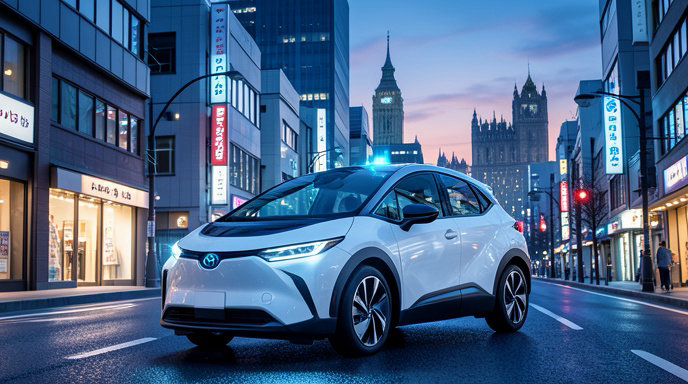
TL;DR
- Waymo and Toyota are exploring a partnership to develop autonomous versions of Toyota’s electric bZ4X for testing in Japan.
- Toyota is expected to supply vehicles and contribute manufacturing and market expertise, while Waymo provides its autonomous-driving technology.
- The collaboration could become a foundation for Waymo’s planned expansion beyond North America, including future robotaxi services in Japan and the U.K.
Waymo and Toyota Set Their Sights on International Robotaxis
Waymo and Toyota are moving closer to an international alliance that could bring autonomous electric robotaxis to Japan and eventually the U.K.
The companies are exploring a joint effort centered on Toyota’s battery-electric bZ4X crossover. Under the proposed arrangement, Toyota would provide the vehicle platform and manufacturing expertise, while Waymo would integrate its autonomous-driving system and operating technology.
The partnership is still being developed, and neither company has announced a commercial launch date for a fully autonomous Toyota-based robotaxi. Initial work is expected to focus on testing, vehicle adaptation, regulatory requirements and the practical challenges of operating driverless vehicles in new markets.
A Partnership Built Around the bZ4X
The bZ4X is Toyota’s global electric crossover and is sold in both left-hand-drive and right-hand-drive markets. That makes it a potentially useful starting point for Waymo’s international expansion.
Waymo’s current robotaxi fleet in the United States relies largely on modified Jaguar I-PACE electric vehicles. Using the bZ4X would give the company a different vehicle platform and could help it develop a fleet more closely aligned with Toyota’s global production and service network.
Autonomous vehicles require extensive hardware beyond the standard equipment found in consumer cars. Waymo’s system uses cameras, radar, lidar and onboard computing to perceive surroundings, predict the behavior of other road users and plan driving actions. Integrating those systems into a production vehicle requires structural changes, software development and extensive safety validation.
Toyota’s role would likely extend beyond supplying finished vehicles. The automaker could contribute expertise in vehicle engineering, quality control, manufacturing, maintenance and local distribution—areas that are particularly important when operating a large commercial robotaxi fleet.
Testing in Japan Presents a Major Challenge
Japan is an attractive but demanding market for autonomous-driving developers. Its dense urban areas, narrow streets, complex road layouts and mix of pedestrians, bicycles and vehicles create a challenging environment for automated systems.
Japan also presents driving conditions that differ substantially from those in Waymo’s existing U.S. operations. Vehicles drive on the left side of the road, road signs and markings follow local standards, and urban traffic patterns can vary dramatically between cities.
Testing the bZ4X in Japan would allow Waymo to collect local driving data and assess how its system performs in conditions that cannot be fully replicated in the United States. The companies would also need to work with Japanese regulators, local authorities and transportation operators before any public-facing service could begin.
The initial test program would not necessarily mean that passengers will immediately be able to hail a driverless Toyota robotaxi. Early deployments could involve vehicles with safety operators, restricted routes, remote support and carefully defined operating conditions.
Why Toyota Is an Important Partner
Waymo has deep experience developing autonomous-driving software and operating commercial robotaxi services, but it does not produce vehicles at the scale of a global automaker.
Toyota offers manufacturing capacity, an established supplier base and a broad international service network. Those capabilities could help Waymo address one of the industry’s central problems: turning a successful pilot program into a dependable, high-volume transportation service.
Toyota also has extensive experience with hybrid and electric vehicles, fleet operations and safety engineering. The company has invested heavily in automated-driving research through Toyota Research Institute and other technology initiatives, although its approach has generally emphasized driver assistance and systems designed to support human drivers.
A Waymo partnership would allow Toyota to participate in fully autonomous mobility without having to develop every component of a robotaxi platform independently. For Waymo, Toyota could provide a path to vehicles designed specifically for overseas markets.
The U.K. Could Become a Second Expansion Front
Japan is not the only international market in view. Waymo has also identified the U.K. as a potential destination for its autonomous ride-hailing technology.
The U.K. offers several advantages, including a large urban population, strong technology and automotive sectors, and a regulatory framework that is increasingly being shaped around automated vehicles. London and other major cities could eventually represent significant markets for autonomous ride services.
At the same time, the U.K. has its own operational complications. Like Japan, it uses left-hand traffic. British roads include narrow lanes, roundabouts, dense pedestrian activity and varied weather conditions. A vehicle and software system validated in the United States would need substantial localization before it could operate safely and legally in British cities.
Toyota’s global presence could be especially valuable in both countries. The automaker already sells vehicles, maintains service operations and works with regulators and commercial partners across Japan and the U.K. That infrastructure could make it easier to support an autonomous fleet once the technology is ready for broader deployment.
Waymo’s Push Beyond the United States
Waymo has spent years building its robotaxi operations in the United States, with service available in parts of Arizona, California and other markets through its ride-hailing platform. Its expansion strategy has increasingly focused on adapting the Waymo Driver to different cities rather than limiting the technology to one vehicle or region.
International expansion would be the next major test of that strategy. Autonomous-driving systems must be trained and validated for local road designs, traffic laws, weather patterns, emergency procedures and driving behavior. They also need commercial partnerships capable of providing charging, maintenance, cleaning, insurance and customer support.
The Toyota relationship could help address those requirements. Instead of treating international expansion as a series of isolated experiments, Waymo could build a repeatable model around a global vehicle partner.
Still, the collaboration is not expected to replace Waymo’s existing fleet immediately. The bZ4X program appears to be an exploration of a new platform and a possible foundation for future services, rather than a confirmed commitment to convert Toyota’s entire electric-vehicle lineup into autonomous taxis.
Regulation Will Determine the Pace
Technology is only one part of the robotaxi equation. Japan and the U.K. must also determine how autonomous vehicles will be approved, monitored and held accountable when something goes wrong.
Regulators will need to evaluate the safety of the vehicle, the autonomous-driving software, remote assistance systems and operational procedures. They may also require detailed reporting, cybersecurity protections, data-handling rules and mechanisms for human intervention.
Public acceptance will be equally important. Surveys in many countries show interest in autonomous mobility, but passengers can remain wary of vehicles without a human driver. A highly visible incident could slow deployment, while a long record of safe operation could help build confidence.
Waymo’s experience operating paid autonomous rides in the United States gives it a head start, but international regulators will make their own assessments. A system approved in one country will not automatically qualify for operation elsewhere.
A Potential Shift in Toyota’s Mobility Strategy
For Toyota, the partnership could expand the company’s role in the emerging mobility market. Rather than treating autonomous driving solely as a feature in privately owned vehicles, Toyota could become a supplier of purpose-adapted vehicles for commercial transportation networks.
Robotaxis could also create new demand for electric vehicles, particularly if fleet operators favor cars with low running costs and predictable maintenance schedules. The bZ4X’s electric powertrain makes it a logical candidate for urban ride-hailing, where vehicles may travel many hours per day and return regularly to charging facilities.
However, fleet use places different demands on a vehicle than private ownership. Durability, fast charging, passenger cleaning, interior wear and battery longevity will all affect the economics of a robotaxi. The companies will need to demonstrate that the bZ4X can handle intensive commercial service while maintaining acceptable operating costs.
What Comes Next
The next phase is likely to involve technical integration, controlled road testing and discussions with regulators and local transportation authorities. The companies will also need to determine which cities and routes are suitable for early deployment.
Success will depend on more than the ability to make a bZ4X drive itself. Waymo and Toyota must show that the complete service—including vehicle availability, charging, maintenance, customer support and emergency response—can operate reliably at scale.
If the testing program progresses as planned, Japan could become one of Waymo’s most important international proving grounds. The U.K. could then offer another opportunity to demonstrate that the technology can adapt to a different regulatory and urban environment.
For now, the partnership remains a roadmap rather than a confirmed robotaxi launch. But combining Waymo’s autonomous-driving platform with Toyota’s manufacturing reach could give both companies a stronger position in the global race to commercialize driverless transportation.

Get All The Latest Updates Delivered Straight To Your Inbox For Free!