
Apple TV Introduces Built-In Sign Language Interpretation for Supported Titles
TL;DR
- Apple TV is introducing built-in sign language interpretation for select supported titles, bringing interpreter video into the viewing experience.
- Availability, language support and presentation may vary by title, region and device; viewers should look for accessibility information on each program’s details page.
- The feature expands Apple’s broader accessibility work across captions, audio descriptions, transcripts, VoiceOver and more.
A more seamless way to watch
Apple is adding built-in sign language interpretation to Apple TV, giving viewers who use sign language a more integrated way to follow supported films and television programs.
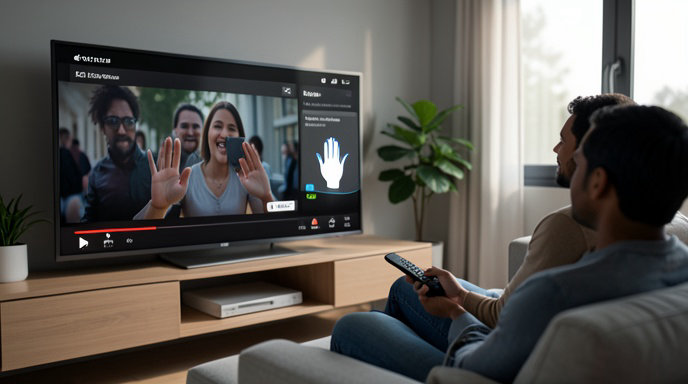
Rather than requiring viewers to find a separate interpreted version or rely on an external video source, the feature is designed to make sign language interpretation part of the Apple TV viewing experience. When available, an interpreter can be presented alongside the program, allowing users to watch the main content and interpretation together.
The rollout is focused on supported titles rather than the entire Apple TV catalog. Availability is expected to depend on the program, language, country or region and the device being used.
How the feature works
For titles that include sign language interpretation, viewers can check the program’s information page or playback accessibility controls. A supported title may identify the available sign language and provide an option to turn interpretation on during playback.
The interpreter is presented within the video experience, typically in a dedicated area of the screen. This approach is intended to preserve the original program while ensuring that interpretation remains visible and easy to follow.
The exact presentation may differ between Apple TV devices and operating systems. Users may also see different options depending on whether they are watching through the Apple TV app on an Apple device, a smart television, a streaming device or the web.
Apple has not indicated that every program will receive an interpreted version. Instead, the feature is tied to titles for which Apple or a content partner has created and supplied sign language interpretation.
Which titles support it?
The most important limitation is that sign language interpretation will not automatically be available across all Apple TV content. Support is determined on a title-by-title basis.
Viewers should check a program’s details page and playback menu for accessibility labels before starting a movie or episode. Catalog availability can also vary by market because licensing arrangements, localization practices and sign-language standards differ from one country to another.
The first supported titles are expected to come from Apple’s own programming and other content distributed through the Apple TV app, although the feature’s long-term reach will depend on participation from studios and other rights holders. Apple’s catalog can change over time, so a title that lacks interpretation today may gain support later.
Language and regional differences matter
“Sign language” is not a single universal language. American Sign Language, British Sign Language, Australian Sign Language and other national sign languages have distinct vocabulary and grammar.
That means a program interpreted in ASL will not necessarily meet the needs of viewers who use another sign language. Apple’s support for individual languages is therefore likely to vary by region and by title.
The availability of interpretation may also be affected by local content rights. A program could offer the feature in one country while showing different accessibility options elsewhere.
A broader accessibility strategy
The new capability builds on Apple’s existing accessibility features across its hardware, software and services.
The Apple TV app supports tools such as closed captions and subtitles, audio descriptions and accessibility labels where provided by content owners. On Apple devices, viewers can also use system-level features including VoiceOver, larger text, increased contrast and other visual or auditory accommodations.
Apple has increasingly emphasized accessibility during product announcements and software updates. Its efforts have included features for users with vision, hearing, mobility and cognitive disabilities, as well as tools intended to make communication and device control more flexible.
Sign language interpretation is significant because it addresses more than dialogue transcription. Captions can identify spoken words and important sounds, but they do not reproduce the grammar, emphasis, facial expression or cultural context conveyed through a signed language. A qualified interpreter can provide information that traditional subtitles cannot fully capture.
Why the feature matters
For many viewers, accessibility depends not only on whether an option exists but also on how easily it can be found and used. A built-in feature reduces the need to search for alternate uploads, connect a second screen or depend on unofficial interpreted versions.
It can also make shared viewing more practical. Families and friends can watch the same program on one screen, while viewers who use sign language receive interpretation through the same service and playback controls as everyone else.
The change may benefit content creators and distributors as well. A consistent accessibility framework gives studios a clearer way to offer interpreted versions and makes those versions more discoverable to the people who need them.
Important limitations remain
Built-in interpretation does not guarantee complete accessibility for every viewer. Support may be limited to certain titles, languages, territories and platforms. Interpreter placement, video quality and the size of the interpretation window can also affect the viewing experience.
Some viewers may prefer an interpreter displayed in a different position or at a different size. Others may need a specific national sign language rather than the one offered with a particular title. Apple’s implementation and future updates will determine how much customization is available.
The feature also depends on content providers producing high-quality interpretation. Apple can provide the distribution and playback tools, but the accuracy and cultural appropriateness of the interpretation ultimately depend on the people and organizations creating it.
What viewers should do
Viewers who want to use the feature should update the Apple TV app and the operating system on their compatible device when updates become available. They can then open a title’s information page and look for accessibility details before playback.
During viewing, accessibility controls may provide additional options for turning interpretation on or off. If no sign language option appears, the program may not currently support the feature in that region or on that device.
Because Apple’s catalog and accessibility support can change, checking the title page remains the most reliable way to determine whether interpretation is available.
A meaningful step toward inclusive streaming
Apple’s built-in sign language interpretation will not solve every accessibility gap in streaming, but it represents a practical step toward making inclusive entertainment easier to access. By placing interpretation inside the Apple TV experience, the company is moving sign-language support closer to the standard features viewers already use for captions and audio descriptions.
The success of the initiative will depend on how quickly Apple expands the catalog, supports additional sign languages and works with content partners to deliver consistent, high-quality interpretation. For viewers who use sign language, however, the arrival of a dedicated, integrated option signals a welcome shift: accessibility is becoming less of an add-on and more of a core part of the way television is delivered.

Get All The Latest Updates Delivered Straight To Your Inbox For Free!