
Europe Hit by Second Wave of Cyberattacks Disrupting Supermarket Refrigerators
TL;DR
- No publicly verified evidence currently establishes a coordinated “second wave” of cyberattacks specifically targeting supermarket refrigeration systems across Europe.
- Recent European retail cyber incidents have disrupted operations, but public reporting has generally linked them to IT, payment, logistics and corporate systems rather than confirmed attacks on cooling equipment.
- Connected refrigeration remains a credible food-supply-chain risk, requiring network segmentation, stronger vendor access controls, offline recovery plans and continuous monitoring of operational technology.
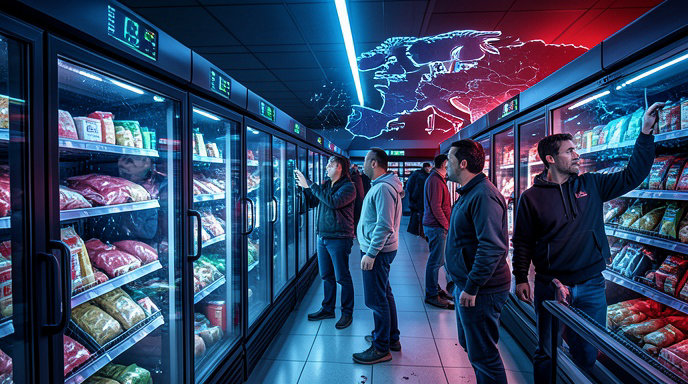
A dramatic claim that a second wave of cyberattacks is disrupting supermarket refrigeration systems across Europe deserves scrutiny. Refrigeration is unquestionably becoming a cybersecurity concern as retailers connect chillers, freezers, energy-management platforms and remote maintenance tools to corporate networks. However, publicly available reporting does not currently establish a Europe-wide campaign in which attackers have systematically taken control of supermarket cooling systems and caused widespread food spoilage.
The distinction matters. Cyberattacks against retailers are increasing, and operational technology is becoming more exposed. But confirmed evidence of an attack on a retailer’s information-technology systems is not the same as proof that refrigeration controllers were compromised.
The Known European Retail Disruption
Recent cyber incidents affecting major European retailers have demonstrated how quickly a digital attack can create physical and commercial consequences. Attacks against retailers in the United Kingdom and elsewhere have disrupted websites, payment services, stock systems, communications, ordering platforms and distribution operations.
In several high-profile cases, retailers reported outages lasting days or weeks. Customers faced unavailable online services, delayed orders and payment problems, while employees were forced to use manual processes. Public investigations and company statements have often focused on ransomware, data theft, compromised credentials and third-party access.
Those incidents provide an important warning for supermarket operators, but they should not be presented as confirmed refrigeration attacks unless forensic findings support that conclusion. At present, reports of spoiled food caused specifically by attackers manipulating supermarket refrigeration controls remain limited, unverified or anecdotal.
Why Refrigeration Is an Attractive Target
Modern supermarket cooling systems are no longer isolated mechanical installations. Large stores may use internet-connected sensors, programmable logic controllers, building-management systems, cloud dashboards and remote service portals to regulate temperature, energy use, alarms and maintenance schedules.
These systems are attractive to attackers for several reasons:
- They are essential to daily operations and cannot easily be switched off.
- A disruption can create immediate financial pressure through spoiled food and store closures.
- Remote-access tools may connect equipment vendors, contractors and retailers.
- Older controllers can remain in service for years without modern security capabilities.
- Operational technology is often managed separately from mainstream cybersecurity teams.
An attacker does not necessarily need to seize direct control of every freezer. Disabling temperature alerts, blocking monitoring dashboards, corrupting sensor data or cutting remote access could delay a response. Even a short interruption may become serious if staff do not know which cabinets are warming or if replacement equipment cannot be dispatched quickly.
From Digital Intrusion to Food Spoilage
The consequences of a refrigeration incident would depend on the attacker’s access, the store’s backup procedures and the duration of the outage. Perishable products such as meat, seafood, dairy goods and prepared foods can become unsellable when temperatures exceed safe limits.
A successful attack could also affect:
- Temperature logging and regulatory records
- Automatic alarm notifications
- Maintenance scheduling
- Energy-management systems
- Distribution-centre cold storage
- Refrigerated transport coordination
- Stock visibility and product replenishment
The most damaging scenario would involve simultaneous disruption across multiple stores or a distribution network. Retailers might be forced to discard stock, close affected departments or temporarily shut stores. Suppliers could face rejected deliveries, while consumers would encounter shortages and higher prices.
Yet food-safety decisions cannot be based solely on whether a dashboard is available. Retailers need independent temperature checks, documented escalation procedures and clear rules for isolating products when monitoring data is unreliable.
The “Second Wave” Claim Needs Evidence
The idea of a second wave suggests that an earlier, documented campaign targeted supermarket refrigeration systems. That claim should be tested against incident reports, regulatory notifications, vendor advisories and technical forensic evidence.
A credible account would normally identify at least some of the following:
- The affected retailers or facilities
- The dates and duration of the disruptions
- The specific refrigeration platforms or controllers involved
- Evidence of unauthorized access or malicious commands
- The number of stores or distribution centres affected
- Independent confirmation from investigators or authorities
- The quantity of food discarded and the operational impact
Without those details, a report may be conflating conventional retail ransomware with the broader risk posed by connected refrigeration. It may also be describing an isolated technical failure, a supplier outage or a precautionary shutdown rather than a confirmed cyberattack.
That does not make the threat hypothetical. It means the public record should distinguish between verified incidents and plausible scenarios.
The Weak Links Are Often Outside the Store
Supermarket refrigeration is rarely operated as a completely standalone system. Equipment manufacturers, facilities-management companies, energy providers and maintenance contractors may all require some form of remote access.
Third-party connections can introduce risks that retailers do not directly control. A vendor account with excessive privileges, weak multifactor authentication or an outdated remote-access appliance could provide a path into building-management or refrigeration networks.
Supply-chain software is another concern. A compromise of a centralized monitoring platform could affect many stores at once, while a ransomware incident at a service provider could prevent technicians from receiving alarms or accessing maintenance records.
Retailers therefore need a detailed inventory of every connection to cooling infrastructure, including systems that are managed by external companies. Temporary access should expire automatically, and vendor sessions should be logged and monitored.
How Retailers Can Protect Cold-Chain Systems
The most important defense is segmentation. Refrigeration controls should not share unrestricted network access with email, point-of-sale systems, office applications or general-purpose user devices.
Effective safeguards include:
- Separating refrigeration and building-management networks from corporate IT
- Requiring multifactor authentication for all remote access
- Removing unused accounts and disabling dormant vendor connections
- Applying security updates after testing them in a controlled environment
- Monitoring unusual commands, logins and configuration changes
- Maintaining offline backups of critical configurations
- Installing independent temperature sensors and alarms
- Testing manual operating procedures during simulated outages
- Limiting control privileges according to job responsibilities
- Recording and reviewing all changes to set points and alarm thresholds
Segmentation alone is not enough. Operators must also know how the equipment behaves when communications fail. Cooling systems should be configured to maintain safe local operation even if cloud services, corporate networks or remote-management platforms become unavailable.
Independent monitoring is especially important. If the same compromised system both controls refrigeration and reports its temperature, staff may receive false reassurance. Separate sensors and alerting paths can help identify discrepancies.
Incident Response Must Include Food-Safety Teams
Traditional cybersecurity response plans often focus on restoring servers, investigating data theft and notifying affected users. A refrigeration incident requires a broader approach involving facilities managers, food-safety specialists, store operators, legal teams and supply-chain personnel.
Retailers should define in advance:
- Who can authorize a store closure
- How affected products are quarantined
- How temperatures are verified manually
- When regulators and suppliers must be notified
- How replacement stock is sourced
- How technicians regain safe local control
- Which systems can be disconnected without damaging equipment
Exercises should include scenarios in which monitoring data is unavailable or unreliable. A store may still have functioning freezers while its central dashboard is offline, or it may show normal readings even though sensors have been manipulated. Staff need practical procedures for both situations.
Regulators and Vendors Face Pressure
The growing connection between information technology and operational technology is forcing regulators to reconsider how food retailers report cyber incidents. Existing rules may require notification of a data breach or prolonged service outage but provide less clarity when a cyber event threatens food safety without exposing customer information.
Equipment manufacturers also have a role. New refrigeration controllers should support secure authentication, encrypted communications, signed updates, detailed audit logs and safe recovery modes. Vendors should publish vulnerability information promptly and provide security support for systems expected to operate for many years.
Retailers, meanwhile, should include cybersecurity requirements in procurement contracts. The lowest-cost cooling installation can become expensive if it depends on unsupported software or unrestricted remote access.
A Warning, Not Yet a Verified Europe-Wide Campaign
The prospect of attackers manipulating supermarket refrigerators is serious, but the available evidence should not be overstated. Current public reporting supports a clear conclusion: European retailers face escalating cyber risks, and connected cooling infrastructure could magnify the consequences of an intrusion.
It does not, on its own, confirm a coordinated second wave of attacks across Europe or prove that recent retail disruptions were caused by compromised refrigeration systems.
For consumers, the immediate lesson is not to expect continent-wide food shortages based on unverified claims. For retailers, the lesson is more urgent: refrigeration should be treated as critical operational technology, not as ordinary building equipment.
If attackers eventually turn that weakness into a large-scale campaign, the organizations best positioned to limit the damage will be those that have already separated their networks, secured vendor access, installed independent temperature monitoring and rehearsed how to keep food safe when digital systems fail.

Get All The Latest Updates Delivered Straight To Your Inbox For Free!