
Germany Warns Lawmakers’ iPhones May Have Been Hacked by Spyware
TL;DR
- Apple warned several German lawmakers and a filmmaker that their iPhones may have been targeted by sophisticated mercenary spyware.
- The alerts indicate a high-confidence risk assessment, but do not by themselves prove that a device was successfully infected.
- The episode highlights the growing security threat facing politicians, journalists and filmmakers—and the difficulty of holding spyware operators accountable.
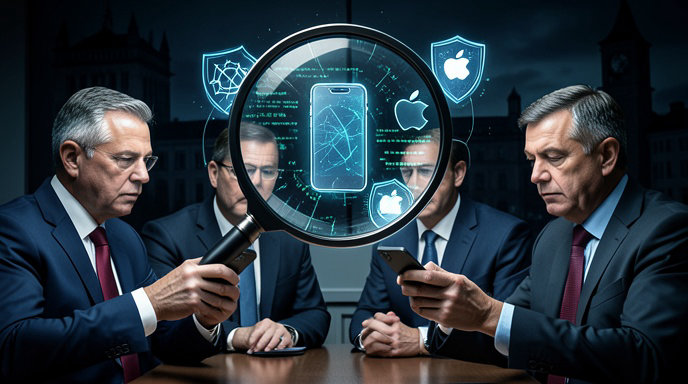
Apple’s threat notifications to several German lawmakers and a filmmaker have raised fresh concerns about the use of commercial spyware against public figures, journalists and other people handling sensitive information.
The warnings said the recipients’ iPhones may have been targeted by spyware capable of covertly accessing messages, files, microphones, cameras and location data. Apple’s notifications are considered among the most serious security alerts the company sends, although they are not conclusive proof that an attack succeeded.
The case adds Germany to a growing list of countries where Apple users have been warned about possible attacks involving highly sophisticated surveillance tools. It also renews questions about who is deploying commercial spyware, why the targets were selected and whether national authorities can effectively investigate such operations.
What Apple’s warning means
Apple sends threat notifications when it detects activity consistent with a targeted spyware campaign. The company has said these alerts are based on its own threat intelligence and investigations, rather than on a simple automated scan of an individual phone.
Recipients are generally told that they may have been targeted because of their identity or activities. Such attacks are typically associated with mercenary spyware—surveillance software sold by private companies to governments or government-linked customers.
The alerts do not necessarily mean that an iPhone has been compromised. They indicate that Apple has a high degree of confidence that the user may have been targeted. In some cases, an attacker may have attempted an intrusion but failed because of security protections, software updates or other defensive measures.
Apple advises recipients to take the warning seriously, update their devices, seek expert assistance and enable Lockdown Mode. The company also recommends reviewing account security and contacting organizations that support people at high risk, including journalists and human-rights defenders.
Lawmakers and filmmaker among those warned
The recipients in Germany reportedly include several members of parliament and a filmmaker. Their work can involve confidential political discussions, sensitive sources, unpublished footage and communication with people who may be at risk.
For lawmakers, a successful spyware infection could expose parliamentary communications, constituency records, travel plans and discussions involving national security or foreign policy. Even metadata—such as contact lists, locations and communication patterns—could provide valuable intelligence to an attacker.
A filmmaker may also hold sensitive material, including interviews, source identities and footage recorded in politically unstable or repressive environments. The targeting of people outside government underscores how spyware campaigns can extend beyond traditional intelligence targets.
The identities of all recipients and the precise technical indicators behind the warnings have not necessarily been made public. That limits independent verification and makes it difficult to determine whether the alerts are connected to a single campaign or to separate attempts by different operators.
Spyware can turn an iPhone into a surveillance device
Modern mercenary spyware is designed to operate quietly. Depending on the tool and the vulnerabilities it exploits, it may collect messages, emails, photographs, documents, passwords and location data. Some spyware can activate a device’s microphone or camera, monitor encrypted communications before they are encrypted, and search cloud-linked information.
The most advanced attacks may use so-called zero-click exploits, which do not require the victim to tap a malicious link or install an application. A specially crafted message or network interaction can sometimes trigger an exploit without obvious signs on the device.
These attacks are difficult to detect because the software may attempt to minimize traces, avoid draining the battery and remove components after completing its task. Security researchers often need specialized forensic tools to determine whether an infection occurred.
That is why an Apple warning is important even when no compromise has been confirmed. It can give a potential target an opportunity to isolate accounts, protect sources and preserve evidence before an attacker can continue operating.
The warning is serious—but not a complete forensic finding
Apple’s notifications should not be interpreted as a definitive forensic report. They are an alert that a user may have been selected for a highly targeted attack.
A device can generate signs of targeting even if an exploit was blocked or never completed. Conversely, the absence of a warning does not guarantee that an iPhone is safe. Apple’s detection systems may not identify every attack, particularly when operators use new tools, previously unknown vulnerabilities or techniques designed to evade detection.
Potential victims should therefore avoid drawing conclusions from the alert alone. A forensic examination by an experienced security organization can help determine whether a device shows evidence of compromise, though even specialist analysis may not produce a definitive answer.
Why politicians and journalists are attractive targets
Lawmakers and journalists often sit close to sensitive information without necessarily having the same security resources as intelligence agencies or large corporations.
A politician’s phone may contain confidential contacts, draft legislation, coalition negotiations and communications with government officials. A journalist’s device may reveal the identities of sources, research notes and unpublished investigations. For a filmmaker, seized or copied material could expose people who agreed to speak on camera under conditions of confidentiality.
Targeting one person can also provide access to wider networks. Attackers may use a compromised phone to map relationships among political parties, civil-society groups, media organizations and government departments.
The risk is not limited to espionage. Surveillance can enable intimidation, source exposure, political pressure and attempts to disrupt reporting. In democratic societies, the mere possibility of covert monitoring can have a chilling effect on speech and investigative work.
Germany faces a broader spyware debate
The alerts arrive amid continuing European scrutiny of commercial spyware. Governments and private surveillance firms have faced criticism over the sale and use of tools capable of penetrating modern smartphones.
European institutions have investigated allegations that spyware was used against politicians, activists and journalists in several member states. Those inquiries have repeatedly exposed gaps in oversight, export controls and legal accountability.
Germany has its own complicated relationship with surveillance technology. Security agencies have sought powers to monitor encrypted communications and use state-developed or commercially acquired tools in criminal and national-security investigations. Civil-liberties groups have warned that expanding such capabilities can weaken protections for private communications and create opportunities for abuse.
The German cases are not, by themselves, evidence that a German government agency was responsible. Determining the operator would require technical analysis, intelligence work and potentially a criminal investigation. Spyware infrastructure can be routed through multiple countries, while vendors and customers may deny involvement or claim that their products were misused.
What recipients should do
People who receive an Apple threat notification should treat it as a high-priority security incident.
They should update the iPhone and all associated devices, enable Lockdown Mode, secure Apple and email accounts with strong unique passwords, and activate two-factor authentication. They should also review trusted devices, account-recovery settings and installed applications.
Potential targets should preserve the notification and related emails rather than deleting them. They should avoid resetting or replacing a device before consulting a qualified forensic investigator if there is a possibility of legal action or a public-interest investigation.
Sensitive conversations should be moved to devices and accounts that have been assessed as secure. Contacts who may also be at risk should be informed carefully, since communicating about the suspected attack can itself reveal investigative activity.
Lockdown Mode can reduce the attack surface by restricting certain message attachments, web technologies, invitation features and other functions commonly abused in targeted attacks. It can make an iPhone less convenient to use, but that trade-off may be justified for people facing an elevated threat.
Security companies and governments under pressure
The German alerts are likely to intensify calls for greater transparency from spyware vendors and their government customers.
Commercial surveillance companies typically argue that their tools are sold only to authorized agencies for investigating serious crimes and national-security threats. Critics counter that contractual promises and internal safeguards are insufficient when products can be redirected against journalists, opposition figures or political rivals.
Governments face pressure to disclose who can authorize spyware use, how targets are selected and what independent oversight exists. They may also be urged to notify people who were unlawfully targeted and to establish remedies for victims.
Technology companies, meanwhile, must balance public warnings with the risk of revealing detection methods. Apple’s alerts can help potential victims protect themselves, but the company generally provides limited technical detail about how it identified a suspected campaign.
A warning about mobile-device security
The episode also demonstrates that smartphone security is no longer only a matter of avoiding suspicious links or installing reputable applications. The most capable attackers may exploit software flaws that users cannot reasonably identify or prevent on their own.
Keeping devices updated remains essential, but it is not a complete defense against zero-day exploits and well-funded operators. High-risk users need layered protections, including secure communications practices, account separation, hardware-security keys, regular device reviews and professional support.
For lawmakers and journalists, mobile-device security is now closely tied to democratic accountability. A compromised phone can expose not only one individual but also confidential sources, political negotiations and public-interest reporting.
Apple’s warnings offer an important early signal. The larger challenge is determining what happened next: whether the attacks succeeded, who ordered them, which spyware was involved and whether authorities can impose meaningful consequences. Until those questions are answered, the alerts stand as both a direct warning to the recipients and a reminder that even closely guarded smartphones remain targets in the global surveillance market.

Get All The Latest Updates Delivered Straight To Your Inbox For Free!