
Instagram Edits Launches on Desktop to Challenge CapCut in Video Editing
TL;DR
- Instagram’s Edits is expanding beyond mobile with a desktop editing experience aimed at creators who need more precise, multi-track production tools.
- Meta is positioning Edits as a direct alternative to ByteDance’s CapCut, combining advanced editing with Instagram distribution and creator analytics.
- The competition will increasingly depend on workflow depth, artificial-intelligence features, templates, collaboration and how easily each app converts edits into short-form video reach.
Instagram Edits Launches on Desktop to Challenge CapCut in Video Editing
Instagram is taking its fight for the short-form video creator market to the desktop.
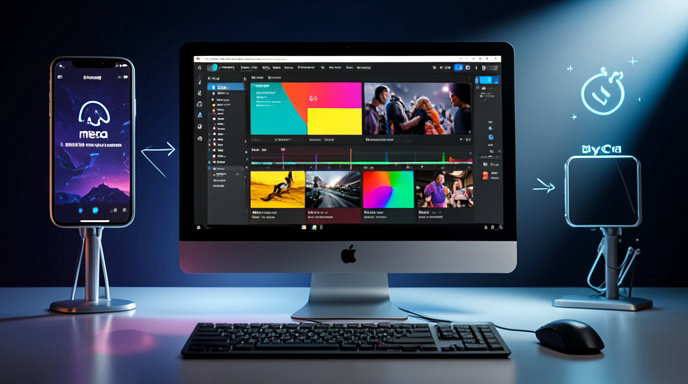
Meta’s Edits video-editing app, initially introduced as a mobile-first tool for Instagram and Facebook creators, is expanding to larger screens with a desktop editing experience. The move brings Edits into more direct competition with CapCut, ByteDance’s widely used editing platform, which has built a substantial audience among TikTok creators and users producing videos for multiple social networks.
The desktop expansion reflects a broader shift in short-form video production. What began as a phone-based workflow built around quick templates and automated effects is evolving into a more capable form of editing, with creators demanding detailed timelines, layered media, more accurate audio control and tools that can support professional publishing workflows.
A Bigger Screen for More Serious Editing
Edits was designed to help creators produce short-form videos without leaving Meta’s ecosystem. Its mobile version includes tools such as frame-accurate editing, clip-level adjustments, transitions, captions, green-screen effects and audio controls. It also supports exports without an added watermark, allowing creators to publish finished videos on other platforms.
The desktop version extends that approach by giving users more room to organize footage and refine edits. A larger interface is particularly useful for projects involving multiple video tracks, longer source clips, extensive text overlays or detailed sound synchronization.
For casual users, the difference may be modest. For frequent creators, however, desktop access can remove several of the friction points associated with editing on a phone. Reviewing footage, trimming multiple clips, managing music and arranging visual layers are generally faster with a full-size display, keyboard shortcuts and a mouse or trackpad.
Meta has not positioned Edits solely as a conventional desktop video editor. Its broader objective is to create a production and publishing workflow closely connected to Instagram’s creator ecosystem.
Meta’s Creator Strategy
The expansion is part of Meta’s effort to make Instagram more attractive to creators who increasingly treat short-form video as a business. Creators want efficient editing tools, but they also want access to audience insights, recommendations, monetization opportunities and distribution.
Edits can support that strategy by connecting the editing process with Instagram’s publishing and analytics infrastructure. Creators can produce a video, publish it to Instagram and review performance indicators such as views, watch time and engagement without moving between unrelated services.
That integration gives Meta a potential advantage over independent editing apps. CapCut can serve creators across TikTok, YouTube Shorts, Instagram Reels and other platforms, while Edits can be tailored more closely to Instagram’s formats, recommendation systems and creator tools.
Meta also benefits when creators spend more time producing content for its services. A capable editor can encourage more frequent posting, help users experiment with Reels and reduce dependence on third-party software.
Edits Versus CapCut
CapCut remains one of the strongest competitors in the category because it combines a relatively accessible interface with a deep collection of templates, effects, transitions, sounds and artificial-intelligence features. Its connection to TikTok has helped it become part of the standard workflow for many short-form creators, although it is also used for content published elsewhere.
Edits takes a different route. Rather than relying primarily on a vast template culture, Meta has emphasized direct editing control and tighter integration with Instagram. Its strengths include an Instagram-oriented workflow, watermark-free exports, creator insights and tools designed specifically for vertical video.
CapCut’s advantages include its broad cross-platform appeal, mature desktop presence and extensive library of ready-made effects. It has also invested heavily in automated features that can remove backgrounds, generate captions, synchronize edits to music and simplify the creation of polished videos.
The practical choice will depend on the creator. Someone producing highly stylized, trend-driven clips may prefer CapCut’s templates and effects. A creator who publishes mainly to Instagram and wants a more direct path from editing to distribution may find Edits more convenient.
Neither app is limited to a single social network. Edits can be used to create videos for other services, while CapCut projects can be exported to Instagram. The competition is therefore less about technical exclusivity than about which platform offers the fastest and most reliable end-to-end workflow.
Artificial Intelligence Becomes a Key Battleground
Artificial intelligence is central to the next stage of competition between editing platforms.
Creators increasingly expect tools that can identify subjects, remove backgrounds, generate captions, improve speech, reformat videos for different screens and automatically find compelling moments in longer footage. These features can save time and make advanced production techniques available to users without formal editing experience.
Meta has been adding AI-powered creative features across its services, and Edits gives the company another place to apply that technology. The company’s challenge will be balancing automation with user control. Creators may welcome faster editing, but they also want predictable results and the ability to adjust every automated decision.
CapCut has already established a strong reputation for fast, accessible AI-assisted editing. Meta will need to match that convenience while differentiating Edits through Instagram-specific features, audience data and publishing tools.
The quality of these features may matter more than the number of effects included in either app. If Edits can help creators turn raw footage into a publishable Reel with fewer steps, its integration with Instagram could become a meaningful advantage.
Desktop Access Raises the Stakes
The move to desktop also changes how Edits fits into the broader creator software market. A mobile app can attract casual users, but a desktop editor is more likely to be evaluated alongside established tools such as CapCut Desktop, Adobe Premiere, DaVinci Resolve and other professional applications.
Edits is not necessarily trying to replace high-end editing software. Its likely target is the large middle ground between basic mobile editing and professional post-production: creators who want more control than a phone offers but do not need the complexity of a full studio workflow.
That audience includes influencers, small businesses, social-media teams, educators, marketers and independent publishers. These users often need to produce several videos quickly, adapt the same material for multiple platforms and maintain a consistent visual style.
A successful desktop version could make Edits more useful for teams as well as individuals. Larger screens and more structured project management can make it easier to review content, make revisions and prepare a batch of posts.
The Challenges Ahead
Edits faces several obstacles despite Meta’s distribution advantage.
First, creators may be reluctant to move established projects from CapCut or other editors unless Edits offers comparable templates, effects and file-handling capabilities. Editing tools are deeply tied to user habits, and even small workflow differences can discourage switching.
Second, Meta must demonstrate that Edits will receive consistent updates. Creators depend on editing apps for active projects and may avoid platforms that appear experimental or whose feature road map is unclear.
Third, Edits must navigate Meta’s wider privacy and platform concerns. As the company connects more creative tools with Instagram data and recommendation systems, creators may want transparency about how content and performance information are used.
Availability may also vary by operating system, region and account type as the desktop experience expands. That could affect adoption during the early stages and make it harder for users to compare the product with fully established competitors.
What the Expansion Means for Creators
For creators, the arrival of Edits on desktop is good news even if they never switch platforms. Competition can push editing companies to improve performance, add useful features and make advanced tools easier to access.
It also gives creators more flexibility in how they work. A mobile device remains convenient for quick edits and on-the-go publishing, while a desktop can be better suited to organizing large amounts of footage and making precise revisions.
The most effective workflow may involve both types of tools. A creator could use Edits for Instagram-focused projects, CapCut for template-driven videos and a professional editor for more demanding productions.
The Future of Short-Form Production
The contest between Edits and CapCut reflects a larger struggle over the creator workflow. Social platforms no longer want to be only places where videos are published. They want to control more of the process, from recording and editing to discovery, analytics and monetization.
Meta’s desktop expansion gives Instagram a stronger answer to CapCut and may help the company appeal to creators who have outgrown mobile-only editing. But Edits will need to offer more than a convenient connection to Instagram. It must deliver a reliable, fast and genuinely capable editing experience.
CapCut, meanwhile, has the advantage of momentum and a broad cross-platform identity. Its challenge will be maintaining that lead as competing platforms build their own editing suites and use their distribution networks to keep creators inside their ecosystems.
The result is likely to be a more crowded but more capable market. As Edits becomes available on larger screens, the dividing line between a social-media app and a video-production platform will continue to disappear.

Get All The Latest Updates Delivered Straight To Your Inbox For Free!