
Physicl Raises $10M to Bridge the Sim-to-Real Gap for Robots
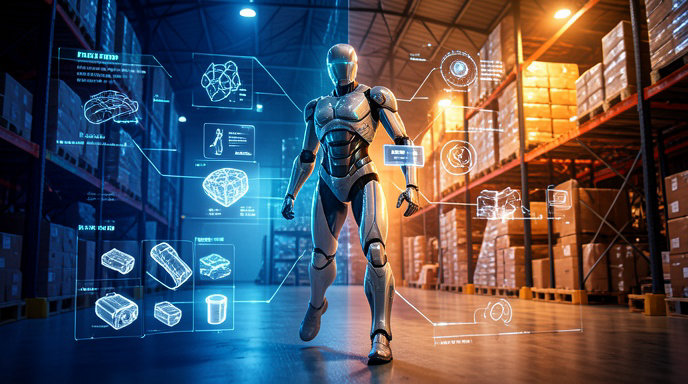
TL;DR
- Physicl has raised $10 million to build realistic, interactive digital environments that help robots learn before operating in the real world.
- The company is adapting a content pipeline developed for online product marketing to generate scalable simulation data for robotics.
- Physicl’s approach targets the sim-to-real gap by combining visual realism with the physical behavior and interaction robots need to understand.
Physicl Raises $10M to Bridge the Sim-to-Real Gap for Robots
A new robotics startup is betting that the tools used to create compelling online shopping experiences can also help machines learn how to navigate the physical world.
Physicl has raised $10 million to develop digital environments designed for robot training and testing. The company’s core idea is to repurpose a production pipeline originally built for online product marketing—where businesses need realistic images and interactive presentations of products—and apply it to robotics simulation.
The result is intended to be more than a collection of visually convincing 3D scenes. Physicl wants to create environments in which robots can perceive objects, interact with them and learn how actions affect the world around them.
Building Better Training Grounds for Robots
Robots increasingly rely on machine-learning models to interpret scenes and choose actions. Training those models directly in the physical world, however, is expensive, slow and potentially dangerous.
A robot learning to pick up objects may damage equipment. A mobile machine practicing navigation can collide with people or property. Gathering enough real-world examples to cover every possible combination of lighting, layouts, objects and obstacles is also extremely difficult.
Simulation offers a way around many of those constraints. Developers can generate large amounts of training data, alter environments quickly and allow robots to repeat tasks without physical wear and tear. But simulated environments have historically struggled to reflect the complexity of real-world settings.
That mismatch is commonly known as the sim-to-real gap. A robot may perform well in a carefully constructed virtual environment yet fail when confronted with small differences in texture, lighting, object placement, friction or geometry.
Physicl’s strategy is focused on making simulated environments both more realistic and easier to produce at scale.
From Product Marketing to Robotics
The company’s unusual advantage comes from its background in digital content creation. Online retailers and brands increasingly use three-dimensional assets, product renders and interactive visual experiences to market goods without photographing every configuration in a physical studio.
Those workflows require software that can turn product information into polished, realistic digital representations. They also require systems for handling large libraries of objects and adapting them to different scenes, viewpoints and customer experiences.
Physicl is applying a similar production philosophy to robotics. Instead of generating a single marketing image or product demonstration, its pipeline can be used to assemble virtual environments containing objects, surfaces and spaces that a robot can observe and manipulate.
That distinction is important. Robotics simulation needs more than visual fidelity. Objects must have meaningful properties such as shape, size, pose and location, while the environment must support interactions that resemble what happens in the real world.
A cup, for example, should not merely look like a cup. A robot may need to estimate where to grasp it, determine whether it is obstructed, predict how it will move and understand how its position changes after contact. The simulation must therefore connect appearance with behavior.
Why Realism Matters
Modern robotic systems are increasingly trained with large datasets, including video, demonstrations and synthetic examples. The quality and diversity of that data can determine how well a robot generalizes beyond the situations it has already seen.
Synthetic environments can provide advantages that are difficult to obtain through physical data collection. Developers can produce rare scenarios, vary the appearance of objects and change the design of a room without rebuilding a test facility. They can also label every element in a scene automatically, giving machine-learning systems precise information about object boundaries, depth and motion.
But synthetic data is only useful if it captures the characteristics that matter for the task. Highly polished graphics are not enough if an object behaves unrealistically or if the simulated physics fail to match the robot’s real operating environment.
Physicl’s opportunity lies in combining the content-generation capabilities of commercial 3D production with the requirements of robotics. The company is seeking to make the creation of useful training environments faster and less dependent on specialized simulation teams.
The $10 Million Funding Round
The $10 million financing gives Physicl capital to expand its technology, hire additional talent and develop relationships with robotics companies and other organizations building physical AI systems.
The round also reflects growing investor interest in the infrastructure surrounding robotics. Much of the attention in the sector has focused on robot hardware and foundation models, but training data, simulation tools and evaluation systems are becoming equally important.
Robotics companies need ways to test models before deploying them. Manufacturers need to evaluate how machines will behave in changing environments. Developers working on warehouse, industrial, retail and home robots need large volumes of representative data. A scalable simulation platform could serve each of those needs.
The funding arrives as companies across the industry look for alternatives to relying solely on manually collected demonstrations. Physical data remains essential, particularly for validating real-world performance, but synthetic data can help broaden coverage and reduce the cost of early-stage experimentation.
The Challenge of Closing the Sim-to-Real Gap
Even advanced simulation systems face significant limitations. Real environments contain unpredictable details: objects are imperfect, surfaces vary, sensors produce noise and people behave in ways that are difficult to model.
Robots must also deal with the consequences of their actions. A grasp can slip. A box can deform. A surface can be wet or uneven. Small errors in perception can compound as a robot plans and executes a task.
To address those challenges, simulation platforms typically need to support domain randomization, sensor modeling and increasingly accurate representations of physical interactions. They must also make it easy to compare simulated results with real-world performance and identify where a model fails.
Physicl’s approach appears designed to address the data and environment-production side of that problem. By making it easier to create varied, realistic scenes, the company can help developers expose robots to more conditions before testing them on hardware.
That does not eliminate the need for real-world training and validation. Instead, the goal is to make physical testing more targeted, allowing teams to focus their time and resources on the cases that simulation cannot adequately reproduce.
A Broader Market for Physical AI Infrastructure
The rise of so-called physical AI is creating demand for tools that sit between software development and robotics operations. These include simulation engines, synthetic-data generators, robot-learning platforms, digital twins and systems for evaluating autonomous behavior.
Physicl is entering that market with a proposition rooted in content production rather than traditional robotics alone. Its background could help it address one of the industry’s persistent bottlenecks: producing enough varied, high-quality environments for increasingly capable models.
The company will nevertheless face competition from established simulation providers, robotics software companies and large technology firms with their own 3D and generative-AI infrastructure.
Its success will depend on whether its environments improve measurable robot performance, not simply whether they look realistic. Customers will want to know whether models trained with Physicl’s data can transfer reliably to physical machines, reduce deployment time and perform across unfamiliar settings.
What Comes Next
The next stage for Physicl will likely involve expanding its library of environments and objects, supporting more types of robots and demonstrating results on practical tasks.
Those demonstrations could include manipulation, navigation, warehouse operations or other applications where a robot must understand both the appearance and the physical consequences of its surroundings. Strong results will require clear comparisons between simulation-trained systems and models trained primarily with real-world data.
The company’s $10 million raise gives it room to pursue that work as the robotics industry moves toward larger models and more general-purpose machines. If Physicl can turn a marketing-oriented digital production pipeline into a dependable source of robotics training environments, it may help make simulation a more central part of the robot-development process.
For the broader field, the bet is straightforward: the more accurately robots can rehearse in virtual worlds, the less they need to learn through costly trial and error in the physical one.

Get All The Latest Updates Delivered Straight To Your Inbox For Free!