
Rivian Spinout Also Abandons Kenya E-Moto Project to Focus on Autonomous Vehicles
TL;DR
- Also, a Rivian-linked mobility spinout, has ended work on an electric-motorcycle project in Kenya, co-founder and president Chris Yu said.
- The company is redirecting its attention toward autonomous-vehicle technology and related software.
- The retreat highlights the difficult economics of deploying electric mobility in emerging markets, even as demand for cleaner two-wheelers remains strong.
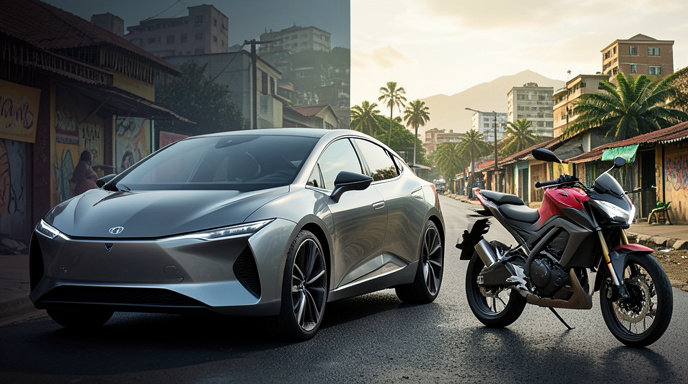
A promising electric-motorcycle effort in Kenya is no longer part of Also’s roadmap. The company, a mobility startup founded by former Rivian executives, has walked away from the project as it concentrates its resources on autonomous vehicles, according to co-founder and president Chris Yu.
The decision marks a notable change in direction for a company that had positioned itself at the intersection of electric transportation, emerging-market mobility and advanced vehicle technology. It also underscores how difficult it can be to turn a compelling clean-transportation idea into a scalable commercial business.
From Electric Motorcycles to Autonomy
Also’s Kenya initiative focused on electric motorcycles, a potentially important market in a country where motorcycle taxis—often known as boda bodas—are a major part of urban and regional transportation.
Electric motorcycles can offer lower operating costs than gasoline-powered alternatives, particularly where fuel prices are high and vehicles accumulate significant daily mileage. They can also reduce urban air pollution and noise. Kenya’s motorcycle-taxi sector has therefore attracted interest from battery-swapping companies, vehicle manufacturers, charging providers and climate-focused investors.
But Yu said Also has now abandoned the electric-motorcycle project. The company’s strategic emphasis has shifted toward autonomous vehicles, a field that demands substantial investment in artificial intelligence, sensors, vehicle systems and real-world testing.
The move suggests that Also no longer sees operating or developing an electric two-wheeler program in Kenya as the best use of its capital and engineering resources.
Why Kenya Was an Attractive Test Market
Kenya has been viewed as one of Africa’s most promising markets for electric motorcycles. Motorcycles are widely used for passenger transport and deliveries, and many commercial riders travel enough each day for fuel savings to become a meaningful economic benefit.
The country also has relatively favorable conditions for electrification. Kenya’s electricity system includes a large share of renewable generation, particularly geothermal, hydroelectric, wind and solar power. That gives electric transport a potentially stronger climate case than in markets where electricity is produced mainly from coal or oil.
However, favorable demand fundamentals do not eliminate the practical obstacles. Electric-motorcycle companies must manage vehicle affordability, financing, battery durability, charging or swapping infrastructure, maintenance networks and resale values. They must also persuade riders—many of whom depend on their motorcycles for their daily income—that a new vehicle will be reliable under demanding operating conditions.
Those challenges can make the sector capital-intensive before companies achieve sufficient scale.
The Economics Behind the Retreat
Electric motorcycles are often promoted as cheaper to operate than gasoline motorcycles, but the initial purchase price can remain a major barrier. Commercial riders may need loans or lease-to-own arrangements, while operators and fleet owners need confidence that batteries, motors and electronics will remain dependable over years of heavy use.
Battery swapping can reduce downtime for riders, but it requires a network of standardized batteries and swap stations. Conventional charging is simpler in some circumstances, yet it may be impractical for riders who cannot afford to leave their vehicles plugged in for long periods.
Companies must also determine who owns and maintains the battery, how depleted packs are valued and what happens when battery performance declines. These questions can complicate both the customer proposition and the business model.
For a startup, building the vehicle, financing system, energy infrastructure and service network simultaneously can be an especially demanding undertaking. Also’s withdrawal appears to reflect those realities, although the company has not indicated that electric motorcycles are inherently unviable in Kenya.
A Broader Strategic Shift
Also’s decision is best understood as a change in priorities rather than a rejection of electric mobility as a whole. Autonomous vehicles also require electrified platforms in many expected applications, and expertise in vehicle software, energy management and advanced driver-assistance systems can overlap with broader electric-vehicle development.
Still, autonomy is a substantially different business. An electric-motorcycle program in Kenya would have centered on vehicle deployment, local operations and customer economics. An autonomous-vehicle strategy is more likely to emphasize artificial intelligence, perception systems, robotics, simulation and partnerships with vehicle manufacturers or fleet operators.
The change may allow Also to pursue a business with greater potential software leverage. Rather than earning revenue primarily from selling or financing individual vehicles, the company could seek to provide autonomy technology to fleets, mobility platforms or other transportation businesses.
That approach is not without its own risks. Autonomous driving remains technically difficult, heavily regulated and expensive to validate. Systems must operate safely across changing weather, road layouts, traffic behavior and edge cases. In emerging markets, inconsistent road markings, mixed traffic and limited mapping data can make deployment particularly challenging.
What the Decision Means for Emerging-Market Mobility
The end of Also’s Kenya project does not erase the case for electric motorcycles. Kenya and other African markets continue to face high fuel costs, air-quality problems and the need for affordable transportation. Two-wheelers remain among the most practical vehicles for navigating congested cities and serving areas with limited public transit.
But the episode highlights a gap between market need and startup economics. A country can have strong demand for cleaner vehicles without providing an easy environment for venture-backed companies to scale. Operators still need access to affordable credit, dependable electricity, replacement parts and policy support.
The retreat may also encourage investors to scrutinize business models more closely. Hardware companies serving emerging markets often require local teams and long-term commitments, while their customers may have limited purchasing power. The resulting tension can make rapid growth difficult, especially when investors are simultaneously demanding a clear path to profitability.
For the sector, the most durable models may involve partnerships among manufacturers, banks, energy providers, governments and fleet operators rather than standalone vehicle startups attempting to build every part of the ecosystem themselves.
Rivian’s Connection to Also
Also’s origins in the Rivian orbit have helped draw attention to the company. Its founders brought experience from one of the electric-vehicle industry’s most prominent newcomers, while Also pursued a broader mobility vision that included markets and vehicle categories beyond conventional passenger cars.
That background gave the company credibility in engineering and transportation technology. It also raised expectations that the startup could combine automotive development discipline with a willingness to experiment in less-served markets.
The Kenya withdrawal shows the limits of pedigree alone. Market execution, financing conditions and operational complexity can determine outcomes just as decisively as technical expertise.
The Road Ahead
Yu’s comments indicate that autonomous vehicles are now central to Also’s plans. The company’s next phase will likely be judged by the clarity of its autonomy strategy: which vehicles it intends to automate, where those vehicles will operate, who will buy the technology and how it will gather the data needed to improve performance.
A narrower focus could help Also avoid spreading its resources across multiple vehicle programs. It may also make it easier to recruit specialized talent and develop a consistent technical platform.
At the same time, leaving Kenya means giving up a chance to participate in one of the world’s most visible electric-motorcycle markets. Other companies will continue trying to fill that space, particularly those with stronger local partnerships or business models built around battery financing and swapping.
Also’s change of direction is therefore both a company-level strategy reset and a reminder about the transportation transition underway in emerging markets. The demand for electric mobility remains real, but meeting it requires more than a promising vehicle. It requires patient capital, local infrastructure, affordable financing and sustained operational support.
For now, Also is betting that autonomous technology offers a more compelling path than electric motorcycles. Whether that bet pays off will depend on its ability to turn advanced vehicle software into a commercially deployable product—without losing sight of the affordability and practical needs that define transportation in markets such as Kenya.

Get All The Latest Updates Delivered Straight To Your Inbox For Free!