
Tesla Cybercab Pre-Orders Open for Personal Use at $299 Monthly
TL;DR
- Tesla is reportedly taking $299 monthly pre-orders for personal Cybercab use, but access is limited to eligible geographic markets.
- The rollout appears constrained by regulatory approval, vehicle availability, and Tesla’s still-developing autonomous-driving infrastructure.
- Elon Musk has acknowledged that the subscription price could be too high for some customers, raising questions about demand and long-term pricing.
Tesla Cybercab Pre-Orders Open for Personal Use at $299 Monthly
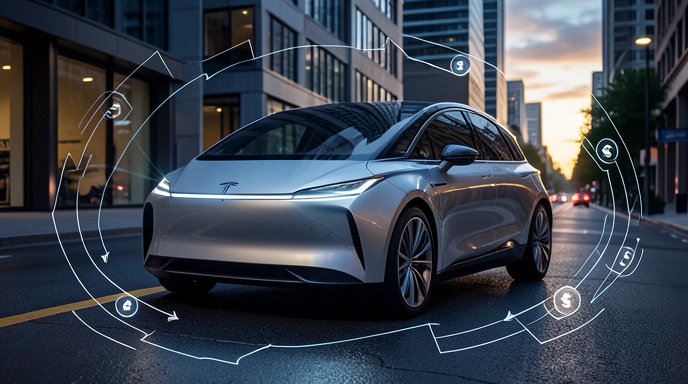
Tesla has reportedly opened pre-orders for personal use of its Cybercab autonomous vehicle, offering customers access through a $299 monthly subscription. The move would represent a significant expansion beyond Tesla’s robotaxi ambitions, positioning the Cybercab as a vehicle that individuals could use privately rather than solely as part of a commercial ride-hailing fleet.
The launch is not yet broadly available. Geographic restrictions, regulatory requirements, and limited production capacity mean that only customers in selected markets may be able to place an order or join the initial program.
A Subscription Rather Than a Traditional Purchase
The reported $299 monthly fee suggests that Tesla is testing a service-based ownership model for the Cybercab. Instead of paying the full purchase price upfront, customers would make recurring payments for access to the vehicle and its autonomous-driving capabilities.
The exact contents of the subscription are central to the value proposition. Potential customers will want to know whether the fee covers the vehicle itself, insurance, maintenance, software updates, charging, roadside assistance, and access to Tesla’s autonomous-driving system. If several of those services are billed separately, the effective cost could be substantially higher than the advertised monthly price.
Tesla has not established that the subscription will function identically in every market. Local taxes, insurance rules, financing arrangements, and regulatory conditions could all affect the final price and contract terms.
Availability Remains Geographically Limited
The Cybercab pre-order program is reportedly restricted to specific geographic areas rather than being available nationwide or globally. That limitation reflects the practical and legal challenges involved in deploying a vehicle designed to operate without conventional driver control.
Autonomous vehicles must be evaluated under local traffic laws and safety standards. Regulators may also require permits, safety-driver testing, detailed reporting, or approval for specific operating zones. Tesla’s ability to offer personal Cybercab use will therefore depend not only on manufacturing but also on whether authorities permit the system to operate in residential neighborhoods, on highways, and in changing weather conditions.
Even within an eligible region, availability could vary by city or service area. Tesla may initially limit orders to locations where its mapping, connectivity, charging, customer-support, and emergency-response systems are sufficiently developed.
Autonomy Is the Central Question
The Cybercab’s appeal depends on Tesla delivering a level of autonomous driving that is meaningfully different from today’s driver-assistance systems. Customers are likely to expect the vehicle to handle routine trips without requiring continuous supervision, while regulators and safety experts will continue to scrutinize how the system performs in unusual or dangerous situations.
Tesla has promoted its autonomous-driving ambitions for years, but the company’s existing driver-assistance features have generally required an attentive human driver. That distinction matters. A personal Cybercab program would need to communicate precisely what the vehicle can do, where it can operate, and when a passenger may need to intervene.
The rollout may therefore begin with operational limits, such as approved routes, designated cities, restricted weather conditions, or remote assistance. Those restrictions could be eased over time as Tesla gathers more data and secures additional regulatory approvals.
Musk Questions Whether the Price Is Too High
Elon Musk has reportedly acknowledged that the $299 monthly charge may be too expensive for some customers. His comment highlights a potential challenge for Tesla: the company must price the Cybercab high enough to cover manufacturing, support, insurance, software development, and regulatory costs, while keeping the service attractive compared with conventional car ownership and ride-hailing.
For some drivers, $299 per month could appear competitive if it includes a vehicle, maintenance, insurance, and autonomous-driving access. For others, it may be difficult to justify, particularly if charging, insurance, taxes, or other fees are excluded.
The comparison with ride-hailing is also complicated. A customer who uses a Cybercab occasionally may spend less by paying for individual trips. A subscription becomes more compelling for people who commute frequently, want a car available at all times, or place a high value on avoiding driving themselves.
Tesla could ultimately experiment with multiple pricing tiers. A lower-cost plan might impose mileage or geographic limits, while premium subscriptions could include broader coverage, higher usage allowances, or additional services.
A New Test for Tesla’s Business Model
The Cybercab subscription would allow Tesla to test whether consumers are willing to pay for autonomous transportation as an ongoing service. That model could produce recurring revenue and give Tesla a closer relationship with customers than a one-time vehicle sale.
It could also create new operational responsibilities. Tesla would need to manage repairs, software reliability, customer support, charging access, accident claims, and vehicles that may spend long periods in autonomous operation. Those demands could make the Cybercab more similar to a technology platform or transportation network than a conventional car.
The financial outcome will depend heavily on utilization and operating costs. If customers use the vehicles frequently while maintenance and support expenses remain manageable, subscriptions could become an important revenue stream. If autonomous systems require expensive intervention or vehicles experience high wear, the economics could prove more difficult.
Manufacturing and Delivery Questions
Tesla’s ability to fulfill Cybercab pre-orders is another major uncertainty. A limited rollout may reflect cautious regulatory planning, but it could also signal that production volumes remain small. Customers may face long waits, phased deliveries, or invitations to order only after Tesla confirms capacity in their region.
The company must also determine how Cybercabs will be configured for private use. A vehicle optimized for robotaxi service may not offer the same interior layout, storage capacity, controls, or comfort features expected by individual owners. Tesla will need to balance the minimalist design associated with the Cybercab concept against the practical needs of families and daily commuters.
Software updates could be especially important. Because autonomous capabilities are likely to evolve after delivery, customers may receive frequent changes to vehicle behavior, permitted operating areas, and available functions. That creates the possibility that the product improves over time, but also that the experience differs from what customers initially expected.
What Customers Should Watch
Prospective buyers should look beyond the headline subscription price and examine the complete contract. Important questions include whether the monthly payment includes insurance, maintenance, charging, vehicle registration, mileage, and access to Tesla’s autonomous system.
Customers should also determine what happens if autonomous operation is unavailable in their area, temporarily disabled, or restricted by weather and road conditions. A Cybercab that cannot operate independently for significant portions of the year could deliver less value than the subscription implies.
Cancellation terms, delivery estimates, damage liability, data collection, and software-service requirements will also be important. As with other connected vehicles, customers may need to accept that Tesla collects substantial driving and vehicle-performance data to maintain and improve the system.
The Road Ahead
Tesla’s reported Cybercab pre-orders mark an ambitious attempt to bring autonomous vehicles into the personal transportation market. The $299 monthly fee gives consumers a clear entry point, but the real cost and usefulness will depend on what the subscription includes and where the vehicle can legally operate.
Geographic restrictions and limited availability suggest that the program is likely to expand gradually rather than arrive as an immediate mass-market launch. Musk’s acknowledgment that the price may be too high also indicates that Tesla could adjust its pricing as it learns more about demand.
For now, the Cybercab remains both a vehicle and a test of consumer confidence in autonomous transportation. If Tesla can deliver reliable driverless operation at a predictable monthly cost, the program could help redefine how people access cars. If availability remains narrow or the total cost rises beyond expectations, the $299 subscription may appeal only to a limited group of early adopters.

Get All The Latest Updates Delivered Straight To Your Inbox For Free!