
Tesla Cybertruck Production Ends: Musk Defends Decision and Refunds Deposits
TL;DR
- Reports that Tesla will end Cybertruck production within roughly eight months and refund customer deposits could not be independently verified from the information available here.
- Tesla has faced questions about Cybertruck demand, pricing, manufacturing complexity and its broader shift toward more affordable electric vehicles.
- If confirmed, a production halt would affect reservation holders and signal a major change in Tesla’s electric-truck strategy.
A dramatic production decision
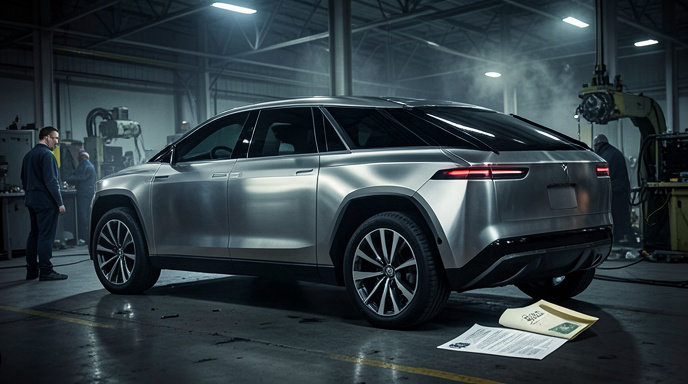
Tesla is reportedly preparing to end Cybertruck production in roughly eight months, while refunding deposits paid by some customers awaiting delivery. Elon Musk is said to be defending the move as part of a broader effort to align production with demand and focus company resources on higher-volume electric vehicles.
However, the claim requires caution: no independently verified announcement from Tesla confirming an eight-month production wind-down or a companywide refund program is available in the material provided for this article. Tesla also does not operate a conventional public-relations department that routinely clarifies such reports, making outside confirmation especially important.
If the report proves accurate, it would represent one of the most significant reversals in Tesla’s product strategy since the Cybertruck entered production.
Why Tesla might be ending production
The Cybertruck was designed as a high-profile expansion into the lucrative electric pickup market. Its angular stainless-steel body, steer-by-wire system and unusual design were intended to differentiate it from conventional pickups such as the Ford F-150 Lightning and Rivian R1T.
That distinctiveness also created challenges. The truck’s stainless-steel exterior requires specialized manufacturing processes, while its unconventional shape limits the use of established automotive components and production methods. Tesla spent years developing the vehicle, and its launch was delayed well beyond the original timetable.
Manufacturing complexity can be particularly damaging when a model does not reach the sales volume needed to spread development and factory costs across a large number of vehicles. Tesla may therefore conclude that additional Cybertruck investment would produce weaker returns than spending on lower-priced models, battery production or software.
Demand is another potential factor. Early reservation numbers generated substantial enthusiasm, but reservations do not necessarily translate into completed purchases. The Cybertruck’s high starting price, limited configuration choices, insurance costs and size may have narrowed its addressable market.
Pricing and customer hesitation
The Cybertruck was originally presented as an affordable electric alternative to mainstream pickups. Production versions launched at substantially higher prices than the figures discussed when the vehicle was first unveiled.
Tesla later introduced lower-priced configurations, but affordability remained a concern. The truck’s pricing placed it closer to premium electric vehicles and full-size performance pickups than to the mass-market vehicles that helped drive Tesla’s growth.
Some customers may also have been discouraged by practical considerations, including charging access, range under heavy loads, repair costs and the vehicle’s large footprint. Pickup buyers often prioritize towing, payload capacity, durability and service availability, areas where established manufacturers have decades of experience.
A refund program would acknowledge that some reservations may no longer be viable or that Tesla cannot deliver vehicles within the expected timeframe. It could also reduce legal and customer-service pressure if production were being wound down rather than merely paused.
What refunds could mean for reservation holders
Customer deposits are not the same as completed vehicle payments. A deposit generally secures a place in a reservation queue, but the exact refund rules depend on the terms provided when the order was placed and on the customer’s location.
If Tesla formally cancels reservations, affected buyers would likely expect direct communication explaining the cancellation, the refund process and any deadlines for providing payment information. Customers should be cautious about unsolicited messages requesting bank details or fees, since a widely reported refund program could create opportunities for scams.
The most important unanswered questions would include whether every reservation holder qualifies for a refund, whether deposits are returned automatically and whether Tesla offers alternative vehicles or incentives to customers who still want an electric vehicle.
A setback for Tesla’s electric-truck ambitions
Ending Cybertruck production would weaken Tesla’s position in the electric pickup market. The company used the truck as a technological showcase and as evidence that it could challenge established automakers in one of North America’s most commercially important vehicle segments.
A premature end would also raise questions about Tesla’s ability to manage product launches outside its core sedan and crossover categories. The Cybertruck’s development consumed significant engineering and manufacturing resources, and a short production run could make it difficult to recover those costs.
At the same time, Tesla could argue that abandoning a low-volume product is financially disciplined rather than strategically damaging. Automakers routinely discontinue vehicles that fail to achieve sustainable demand. Redirecting capacity toward more affordable models could help Tesla compete in a much larger market.
The decision would therefore depend on whether Tesla views the Cybertruck as a long-term brand vehicle or as a niche product that has already served its purpose.
Implications for Tesla’s broader strategy
Tesla has increasingly faced pressure to expand beyond its existing lineup. Its Model 3 and Model Y remain central to the business, but competition has intensified as traditional automakers and newer electric-vehicle companies introduce more models.
A Cybertruck shutdown could indicate that Tesla is prioritizing scale over experimentation. Resources could be redirected toward lower-cost vehicles, refreshed versions of existing models, energy-storage products, autonomous-driving systems or manufacturing improvements.
That strategy may appeal to investors seeking stronger volume growth, but it could also disappoint customers who see Tesla as an industry innovator. The Cybertruck represented a willingness to pursue a bold, unconventional design. Ending the program would suggest that the company is becoming more selective about which ambitious projects receive long-term support.
Musk’s defense of the decision
Musk has historically defended Tesla’s unconventional choices by emphasizing engineering difficulty, manufacturing efficiency and long-term strategic value. If he is defending a Cybertruck wind-down, his argument is likely to focus on economics: demand must justify production, factory capacity should be allocated to higher-return vehicles and Tesla cannot treat every product as a permanent part of its lineup.
That argument may resonate with shareholders if the company demonstrates that the freed capacity will produce stronger growth elsewhere. It could be less convincing to customers who placed deposits years ago and expected Tesla to fulfill its promises.
The credibility of the explanation will depend on specific evidence, including production targets, delivery figures, factory utilization and Tesla’s plans for the facilities and employees involved in Cybertruck manufacturing.
What happens next
The most important next step is an official Tesla announcement. A confirmed production-ending date, written refund policy and explanation of future vehicle plans would clarify whether the company is executing a permanent shutdown, a temporary pause or a restructuring of Cybertruck production.
Until then, customers should rely on Tesla’s official account pages, order documents and published company communications rather than social-media posts or unverified emails. Investors will also be watching Tesla’s quarterly reports for changes in vehicle deliveries, production allocation and capital spending.
If the reports are confirmed, the Cybertruck’s short production life would become a cautionary case in the electric-vehicle industry: a product can generate enormous attention and still struggle to achieve sustainable commercial scale. For Tesla, the decision could mark a retreat from a high-profile experiment—or a calculated step toward a more affordable and higher-volume future.

Get All The Latest Updates Delivered Straight To Your Inbox For Free!