
Uber Data Breach Exposes Nearly 150,000 Driver’s Licenses Stored by Fireworks AI
TL;DR
- Uber says information tied to nearly 150,000 driver’s licenses was stolen from data stored by AI cloud provider Fireworks AI.
- The exposed material could create risks including identity theft, targeted scams and driver impersonation, although the full scope of misuse remains unclear.
- Uber and Fireworks AI are investigating the incident and are expected to notify affected individuals and regulators as more facts emerge.
What Happened
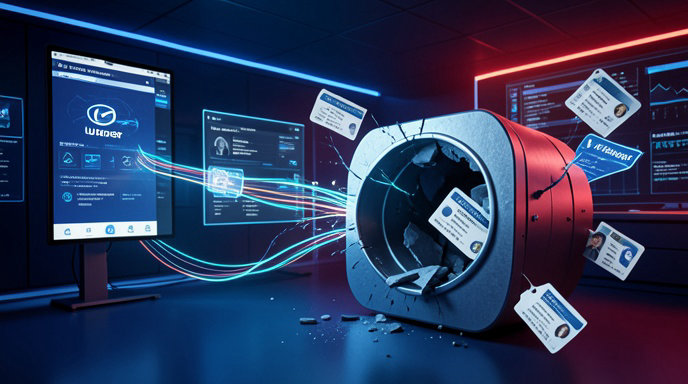
Uber has disclosed that information associated with nearly 150,000 driver’s licenses was stolen in a security incident involving data stored by Fireworks AI, an artificial-intelligence cloud company used to process or host data for applications.
The disclosure adds another major data-security concern for Uber drivers, whose licensing documents can contain highly sensitive personal information. Driver’s licenses commonly include a person’s full name, photograph, date of birth, address, license number and expiration date. Depending on the files involved, additional information may also have been present.
The available disclosure does not establish that every element printed on every affected license was taken, nor does it indicate that all affected drivers have experienced fraud. It does, however, confirm that a substantial number of records were involved and that the incident originated in an environment operated or maintained by a third-party technology provider.
How Fireworks AI Became Involved
Fireworks AI provides cloud infrastructure and services used to develop and run generative-AI applications. Like many companies building AI-powered products, it may handle large volumes of customer-provided information for tasks such as document processing, classification, extraction and model operations.
The Uber incident highlights the security challenges created when sensitive information is transferred to specialized AI vendors. Data can move through multiple systems, including customer applications, cloud storage, model-serving infrastructure, logging systems and backup environments. Each additional system introduces another potential access point.
In this case, Uber’s disclosure links the stolen information to data stored by Fireworks AI. The precise method used by the attacker, the duration of unauthorized access and the security control that failed have not been fully detailed publicly.
The breach also raises questions about how long driver-license information was retained, which Fireworks AI systems contained it and whether the data was encrypted or otherwise protected against unauthorized use.
What Information May Be at Risk
Driver’s-license records are valuable to criminals because they can support several types of fraud. A stolen license image may be used in attempted account takeovers, fraudulent applications, social-engineering attacks or the creation of convincing fake identification documents.
Potential risks include:
- Identity theft and impersonation
- Fraudulent account openings or applications
- Targeted phishing messages aimed at Uber drivers
- Attempts to bypass identity-verification checks
- Driver-account takeovers
- Creation or alteration of counterfeit identity documents
- Harassment or physical-safety concerns if address information was exposed
The severity of the risk depends on exactly what information was taken. A license number and name may present a different threat from a complete, high-resolution image containing a photograph, address and date of birth.
There is also a difference between exposure and confirmed misuse. Uber’s disclosure indicates that records were stolen, but that does not necessarily mean attackers have already used them for fraud. Companies often need additional time to determine whether stolen information was downloaded, copied, sold or combined with data from other breaches.
Uber’s Response
Uber has acknowledged the incident and is investigating the circumstances surrounding the theft. The company’s response is expected to include identifying affected records, determining what information each record contained and contacting drivers whose data may have been involved.
Affected individuals should receive specific guidance from Uber about the categories of data exposed and any protective services being offered. Depending on the findings, those measures could include identity-monitoring services, fraud-resolution assistance, account-security steps or instructions for replacing compromised credentials and identification documents.
Uber may also need to notify regulators and comply with data-breach laws in the jurisdictions where affected drivers live. Notification requirements vary by location and depend on the type of information exposed.
Drivers should be cautious of messages claiming to come from Uber, Fireworks AI, government agencies or identity-protection providers. Attackers frequently use breach notifications as an opportunity to launch follow-up phishing campaigns. Suspicious links should not be opened, and requests for passwords, one-time verification codes or payment information should be treated as potential fraud.
Fireworks AI’s Role and Investigation
Fireworks AI is investigating the incident involving the data stored on its systems. The company’s findings will be important in determining whether the breach resulted from a compromised account, a software vulnerability, a misconfigured storage environment, stolen credentials or another form of unauthorized access.
The investigation should also clarify whether the incident was limited to Uber-related information or whether other customers’ data was affected. Fireworks AI will likely need to review access logs, storage permissions, authentication records and data-retention practices to establish what happened.
A central question is whether the stolen information was encrypted. Encryption can reduce the value of stolen files, although it does not eliminate risk if attackers also obtained decryption keys or if the data was accessible in readable form within the provider’s environment.
The incident may also prompt scrutiny of vendor-management practices. Companies that outsource data processing generally remain responsible for understanding how suppliers protect sensitive information. Contracts, security audits and compliance attestations can help, but they do not replace continuous monitoring and strict controls over access to personal data.
Why the Breach Matters
The incident is significant because it combines two growing trends: the large-scale collection of identity documents and the rapid adoption of AI cloud services.
Businesses are increasingly sending documents containing personal information to AI providers for automated review and processing. Those services can improve efficiency, but they also create a need for stronger limits on what data is collected, how long it is retained and which systems can access it.
Driver’s-license information is especially sensitive because it is difficult for individuals to change. A password can be reset after a breach. A license number, date of birth or physical identity cannot be replaced as easily. That makes identity-document exposures potentially useful to criminals long after the original incident.
The event also demonstrates that a company’s security perimeter extends beyond its own applications and data centers. A breach at a cloud provider, software supplier or AI platform can expose information belonging to the provider’s customers and their users.
What Affected Drivers Should Do
Drivers who receive a notification should read it carefully and verify it through Uber’s official app or website rather than relying solely on links in an email or text message.
They should also:
- Watch bank, credit-card and payment accounts for unfamiliar activity.
- Review credit reports for unauthorized accounts or inquiries.
- Consider placing a fraud alert or credit freeze with the relevant credit bureaus.
- Change reused passwords, particularly those associated with Uber or email accounts.
- Enable multifactor authentication wherever it is available.
- Be wary of calls or messages requesting verification codes or identity documents.
- Report suspected identity theft to the appropriate authorities and financial institutions.
- Follow Uber’s instructions for replacing a license if the issuing authority recommends doing so.
Drivers should preserve breach notifications and records of suspicious activity. Documentation can help with fraud investigations, disputes and requests for reimbursement or assistance.
Important Questions Remain Unanswered
Several details will determine the ultimate impact of the incident. Public reporting and company disclosures will need to clarify when unauthorized access occurred, when Uber learned of it and how quickly the affected storage environment was secured.
Other unresolved issues include:
- Whether complete license images were stolen
- Whether addresses, dates of birth and license numbers were included
- Whether any biometric or verification-related information was involved
- Whether attackers accessed data belonging to other customers
- Whether the stolen information has appeared online or in criminal marketplaces
- Whether Uber or Fireworks AI will provide credit-monitoring services
- Whether regulators will take enforcement action
Until those questions are answered, the number of affected records provides only a partial picture of the breach’s significance. The real impact will depend on the sensitivity of the files, the ability of attackers to use them and the quality of support provided to affected drivers.
A Broader Warning for AI Data Handling
The Uber incident is likely to intensify debate over how companies use AI vendors to handle personal information. Organizations adopting these tools must evaluate not only a model’s performance but also its data-governance architecture.
That includes minimizing the personal information sent to an AI provider, removing unnecessary fields, enforcing short retention periods, restricting employee and service access, monitoring unusual downloads and ensuring that vendors can quickly detect and report security incidents.
For Uber drivers, the immediate priority is protecting against identity fraud and social engineering. For businesses, the larger lesson is that outsourcing sensitive data to an AI cloud provider does not outsource responsibility for protecting it.

Get All The Latest Updates Delivered Straight To Your Inbox For Free!