
Apple iPhone Duo Gets Limited Face Unlock in iOS 27.3 Beta
TL;DR
- Reports claiming iOS 27.3 adds limited face unlocking for an “iPhone Duo” remain unverified and should be treated as rumor.
- The alleged feature would reportedly offer basic device unlocking rather than the secure, full-featured authentication provided by Face ID.
- No confirmed release notes or Apple announcement currently establish the feature’s operation, availability, or other iOS 27.3 improvements.
A report alleging that Apple’s iOS 27.3 developer beta introduces a limited face-unlock feature for an “iPhone Duo” has drawn attention, but the claim currently lacks confirmation from Apple or other authoritative sources.
The story appears to describe a distinction between a basic facial-unlock function and Apple’s established Face ID system. However, details about the device, the software build, and the feature’s technical operation remain unclear. Until Apple publishes official release notes or the feature is independently documented by credible testers, the report should be regarded as unconfirmed.
What the Reportedly Limited Unlock Feature Would Do
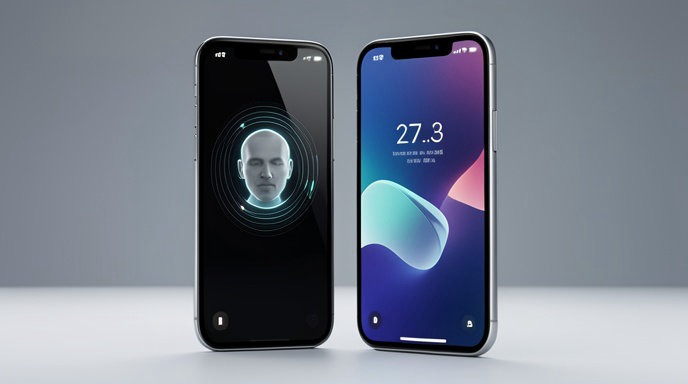
According to the claim, the feature would use facial recognition to unlock the iPhone in restricted circumstances. It would not replace Face ID, nor would it provide the complete set of authentication capabilities associated with Apple’s TrueDepth camera system.
A limited implementation could theoretically be intended for convenience rather than high-security authentication. For example, it might allow a device to open directly to the lock screen or display basic information after recognizing its owner, while still requiring a passcode for sensitive actions.
Apple’s existing security model generally requires stronger authentication for tasks such as authorizing payments, accessing passwords, changing account settings, or enrolling biometric data. A lower-security facial feature would therefore need clear limitations to prevent it from being treated as equivalent to Face ID.
How It Would Differ From Face ID
Face ID uses Apple’s TrueDepth camera system to create and compare a detailed three-dimensional representation of a user’s face. It is integrated with iOS authentication, Apple Pay, password autofill, app sign-ins, and other protected functions.
The alleged iPhone Duo feature is described as something separate and more limited. If the report is accurate, it could rely on a conventional front-facing camera or a less sophisticated recognition process. That would make it potentially cheaper and easier to include in hardware that lacks the components required for full Face ID.
A system built this way would likely have lower security and could be more affected by lighting, viewing angle, facial coverings, or changes in appearance. It might also be restricted to unlocking the phone without supporting payments, password access, or other secure operations.
The “iPhone Duo” Question
Apple has not publicly confirmed a product called the iPhone Duo. The name may refer to a rumored future iPhone design, a shorthand used by a source, or an unofficial description of a device with two displays or a folding form factor.
Because the hardware itself has not been established through an Apple announcement, it is impossible to determine whether the reported feature is intended for a shipping product, an internal prototype, or a software experiment. References to an iPhone Duo should therefore be treated cautiously until supported by Apple documentation or consistent reporting from established Apple analysts and testers.
What iOS 27.3 Could Include
No independently confirmed feature list for iOS 27.3 is established by the report alone. Developer betas commonly contain bug fixes, performance changes, security updates, and small interface adjustments that may not appear in early coverage.
Possible beta changes could include refinements to existing Apple applications, improvements to notifications, accessibility updates, developer APIs, battery-management changes, and fixes for problems introduced in earlier releases. These possibilities should not be presented as confirmed features without release notes, hands-on testing, or direct documentation.
Developer beta software can also contain unfinished code that is removed before the public release. A feature visible in an internal build or early beta may be disabled, restricted to specific hardware, or never made available to consumers.
Security and Privacy Will Be Central
Any facial-unlock system would face scrutiny over biometric security and privacy. Apple’s Face ID data is designed to be processed on the device, with facial representations protected by the Secure Enclave rather than uploaded as ordinary cloud data.
A limited facial feature would need comparable safeguards if it were to gain user trust. Apple would also need to explain how recognition data is stored, whether it is used only for local authentication, and what protections apply when someone attempts to unlock a device using a photograph or video.
The distinction between convenience unlocking and secure authentication would be particularly important. Users would need to know exactly which actions require a passcode or Face ID and when the limited feature is disabled.
What Users Should Expect
At present, there is not enough verified information to conclude that iOS 27.3 includes limited face unlock for an iPhone Duo. Users should be wary of headlines that present the claim as an established Apple feature, especially if they do not link to official release notes or reproducible testing.
Those installing developer betas should also remember that pre-release software can cause crashes, battery drain, compatibility problems, and data loss. It is intended for testing on secondary devices, not as a dependable preview of the final consumer release.
Until Apple confirms the product and feature, the most accurate interpretation is that the alleged limited face-unlock system remains a report rather than a demonstrated iOS capability.

Get All The Latest Updates Delivered Straight To Your Inbox For Free!