
United Airlines Blocks AI Agents from Booking Flights Over Cybersecurity Concerns
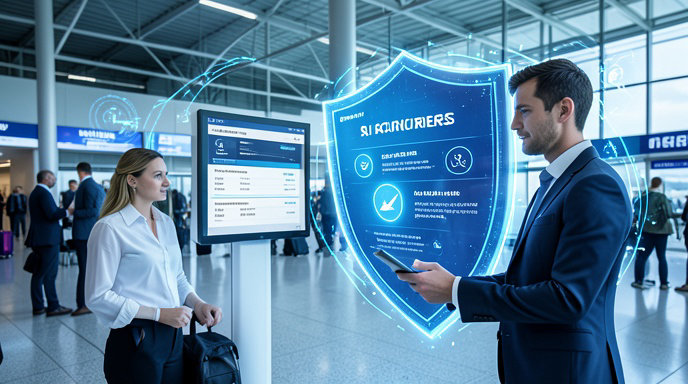
TL;DR
- United Airlines is blocking autonomous AI agents from booking flights or managing reservations because of cybersecurity, fraud and accountability risks.
- The policy reflects the difficulty of giving software agents access to airline systems built around identity checks, payments, ticket rules and customer data.
- The decision could slow AI-powered travel planning while airlines, technology companies and regulators work out safer standards for agentic transactions.
United Airlines is drawing a line between using artificial intelligence as a travel assistant and allowing an AI agent to act directly on a customer’s behalf.
The airline’s policy prevents autonomous software agents from booking flights, changing reservations or otherwise interacting with United’s systems as if they were human customers. The decision highlights a growing tension in the travel industry: consumers and technology companies want AI tools that can search, compare and purchase trips automatically, while airlines remain wary of giving third-party software access to systems handling payments, identity data and complex ticket rules.
The move comes as AI agents evolve beyond chatbots. Instead of merely recommending an itinerary, newer systems can browse websites, fill out forms, make purchasing decisions and complete transactions. For airlines, that raises questions about whether the person authorizing an action is a genuine customer, whether an agent is operating within approved limits and who is responsible when something goes wrong.
Cybersecurity Concerns Drive the Policy
Airline reservation platforms are attractive targets for criminals because they contain valuable personal and financial information. An autonomous agent with access to those systems could potentially expose account details, misuse stored payment methods or make unauthorized changes to a traveler’s itinerary.
United’s position reflects concern that an AI agent may not behave like a conventional customer using an approved app or website. Software can make requests at high speed, operate across multiple accounts and repeat actions at a scale that is difficult to distinguish from automated abuse. Poorly secured agents could also be manipulated through prompt injection, stolen credentials or malicious instructions embedded in webpages and booking data.
The risks are not limited to a single fraudulent ticket purchase. An improperly controlled agent could cancel a reservation, select an unwanted fare, reveal sensitive information or make a change that triggers expensive fees. Because the software may be supplied by a separate technology company, determining responsibility could be difficult.
Airline Systems Are More Complicated Than They Look
Booking a flight is not simply a matter of choosing a destination and entering a credit-card number. Airline transactions involve passenger identity, fare restrictions, seat inventory, loyalty accounts, baggage rules, payment authorization, travel documents and sometimes government-mandated information.
A human traveler can often recognize an ambiguous question or notice that a fare is nonrefundable. An autonomous agent may make the wrong choice while technically following its instructions. It could select a cheaper ticket that excludes a needed connection, misunderstand a change fee or continue with a purchase after a website displays a warning.
Airline reservation systems also have to synchronize information across multiple services. A booking may involve the airline’s website, global distribution systems, payment processors, airport systems and partner carriers. Giving an AI agent broad authority to operate across those systems could create new failure points.
The result is a higher standard for authorization. Airlines would need to verify not only the customer’s identity but also the identity and permissions of the software acting for that customer.
The Difference Between AI Assistance and AI Agency
United’s policy does not necessarily prevent travelers from using AI to research flights, compare schedules or receive help understanding fare conditions. The key distinction is whether the AI is providing information or taking control of a customer account and transaction.
A conventional travel search tool may send a limited query and return available options. An autonomous agent, by contrast, might search several sites, decide which itinerary best matches a user’s preferences, enter passenger information, authorize payment and monitor the reservation afterward.
That second model requires what security professionals call delegated authority. The agent must be allowed to perform specific actions, for a defined customer, for a limited period and within clear financial and operational boundaries.
Without those controls, an instruction such as “find me the best flight to Chicago next week” could be interpreted in many ways. The agent might prioritize price over schedule, book a basic fare with restrictive conditions or purchase a ticket without obtaining sufficiently explicit approval.
Fraud and Platform Abuse Are Additional Challenges
Airlines have spent years defending their websites and booking channels against scraping, credential attacks, automated account creation and payment fraud. Widespread use of general-purpose AI agents could make those problems harder to manage.
An agent can rapidly test options, create booking attempts and interact with different services. Even if it is acting for a legitimate traveler, its behavior may resemble automated abuse. High volumes of requests can also strain airline websites and make fares or seat availability appear unstable.
There is a further concern that criminals could use AI agents to automate stolen-account activity. A compromised travel account could potentially be used to redeem loyalty points, alter passenger information or obtain access to stored payment details. Blocking unauthorized agents gives the airline a simpler security boundary while it evaluates more controlled alternatives.
Why the Decision Matters for AI Travel Startups
Travel companies have been among the most enthusiastic adopters of generative AI. Startups and major technology firms are developing tools that promise to build complete itineraries, track price changes, recommend hotels and manage reservations from a single conversation.
Those services depend on reliable access to airline inventory and booking functions. If airlines broadly prevent autonomous agents from interacting with their websites, travel platforms may have to rely on formal partnerships, approved application programming interfaces or traditional booking intermediaries.
That could slow innovation but may also push the industry toward safer technical standards. Instead of allowing an agent to imitate a person in a web browser, airlines could issue narrowly scoped digital permissions. An approved system might be authorized to search flights but not purchase them, or to prepare a booking that requires a customer’s final confirmation.
Such systems could also include spending limits, expiration times, transaction logs and clear consent records. Those safeguards would make it easier to determine what an agent was allowed to do and to reverse or investigate an unauthorized action.
The Problem of Accountability
One of the most difficult questions is who bears responsibility when an AI agent makes a mistake.
If an agent books the wrong fare, exposes personal information or changes a reservation without permission, liability could be disputed among the traveler, the AI provider, the airline, a payment processor and any travel agency involved. Traditional airline policies are designed around a human customer or an identifiable travel intermediary. Autonomous software complicates that model.
Airlines are also likely to demand transparency about how agents handle customer data. An agent may need access to passport details, birth dates, loyalty numbers, travel preferences and payment information. Customers will want to know where that data is stored, whether it is used to train models and which companies can access it.
Until those questions are addressed, refusing direct access may be the least risky option for an airline.
A Potential Turning Point for Agentic Commerce
United’s stance illustrates a broader shift in the development of AI agents. The industry is moving from systems that generate text to systems that can perform real-world actions. That transition requires stronger safeguards than ordinary chatbot interactions.
The same debate is emerging in banking, online retail, healthcare and government services. In each sector, companies must decide whether an AI agent can be treated as an authorized user, and what evidence is needed to prove that an action was approved.
Travel may become an important test case because transactions are frequent, time-sensitive and dependent on many interconnected systems. A successful framework could allow an agent to search, recommend and transact without giving it unrestricted control.
For now, United’s policy signals caution. The airline is prioritizing control over convenience while the industry works through the security, identity and liability issues created by autonomous software.
The long-term outcome may not be a choice between human-only booking and unrestricted AI access. More likely, airlines will develop tightly controlled channels in which verified agents can perform specific tasks under explicit permissions. Until those systems are widely available, travelers may continue to use AI for planning—but will need to complete the final booking and reservation changes themselves.

Get All The Latest Updates Delivered Straight To Your Inbox For Free!