
X-energy Wins NRC Green Light to Build Four Small Modular Reactors in Texas
TL;DR
- X-energy has reportedly received a U.S. Nuclear Regulatory Commission construction permit for four Xe-100 advanced reactors planned for Dow’s Seadrift site in Texas.
- The high-temperature gas reactors are designed to provide roughly 320 megawatts of low-carbon electricity and industrial heat using helium cooling and TRISO fuel.
- The permit clears a major regulatory hurdle, but construction, fuel production, financing, grid integration and a future operating license remain ahead.
A new chapter for advanced nuclear power
X-energy has reportedly secured a U.S. Nuclear Regulatory Commission construction permit for a four-reactor small modular nuclear plant at Dow’s manufacturing complex in Seadrift, Texas.
The project would be one of the first commercial deployments of an advanced nuclear technology in the United States. It is intended to supply reliable, low-carbon electricity and industrial heat to Dow’s Gulf Coast operations, potentially reducing the company’s dependence on fossil-fuel generation while supporting its energy-intensive chemical manufacturing business.
The reported approval is significant because the NRC’s construction permit process requires applicants to demonstrate that a proposed facility can be built and operated without posing unacceptable risks to public health and safety. It is also not the final authorization needed to run the reactors. X-energy will still need to complete construction, fuel the plant and obtain an operating license before commercial generation can begin.
The Texas project
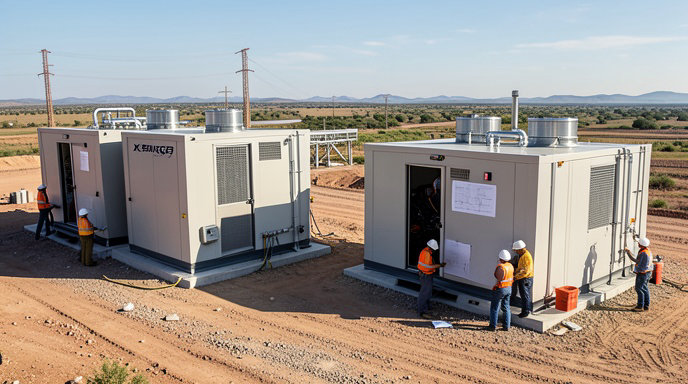
The planned facility is expected to use four Xe-100 reactors, X-energy’s flagship advanced reactor design. Each unit is designed to produce approximately 80 megawatts of electricity, giving the four-unit plant a combined capacity of about 320 megawatts.
The reactors are intended to be built at Dow’s Seadrift site, a large industrial complex on the Texas Gulf Coast. Locating the plant next to an existing manufacturing operation could provide several advantages, including an established industrial workforce, existing electrical infrastructure and a nearby customer for both power and process heat.
Unlike conventional nuclear plants, which are typically built around very large reactors, the Xe-100 is designed as a modular system. X-energy’s long-term strategy is to manufacture major reactor components in a factory and assemble them at the project site. The company says that approach could improve construction quality, reduce on-site labor and make project schedules more predictable.
The design behind the Xe-100
The Xe-100 is a high-temperature gas-cooled reactor. It uses helium rather than water as its primary coolant and is designed to operate at temperatures substantially higher than those of conventional light-water reactors.
High operating temperatures can improve thermal efficiency and make the reactor useful for industrial applications beyond electricity generation. Chemical plants, refineries and other heavy industries require large quantities of high-temperature heat, most of which is still supplied by burning natural gas or other fossil fuels.
The reactor uses spherical TRISO fuel particles. Each particle contains a uranium fuel kernel surrounded by multiple layers of ceramic and carbon-based materials intended to contain radioactive materials under extreme conditions.
X-energy describes TRISO fuel as exceptionally robust because each fuel particle functions as its own containment barrier. The company’s design also relies on passive safety features, meaning the reactor is intended to move toward a safe condition through natural physical processes rather than depending entirely on powered equipment or immediate operator action.
Those features do not eliminate nuclear risks, but they are intended to reduce the likelihood and potential consequences of severe accidents. The NRC’s review focuses on whether the technology’s safety claims are supported by engineering analyses, testing and evidence.
Why the project matters for low-carbon power
The Seadrift project is being watched closely because it combines several trends reshaping the U.S. energy market: rising electricity demand, industrial decarbonization and renewed interest in nuclear power.
Nuclear plants can generate electricity around the clock without directly producing carbon dioxide during operation. That makes them attractive to industrial customers that need steady power and cannot rely solely on variable wind and solar generation.
For Dow, an advanced reactor could provide a source of firm electricity and high-temperature heat at a site where energy availability and reliability are central to production. For the Texas power market, the project could add dependable generation in a region experiencing rapid growth in manufacturing, data centers and other electricity-intensive industries.
The plant’s climate impact will depend on more than the reactor itself. Construction materials, uranium mining and enrichment, fuel manufacturing and backup power arrangements will all affect the project’s full life-cycle emissions. Even so, nuclear power generally produces substantially lower operational emissions than coal- or gas-fired generation.
A construction permit is not an operating license
The reported NRC approval represents an important milestone, but it should not be confused with permission to begin commercial operation.
A construction permit allows the developer to build a nuclear facility under approved plans and conditions. Before the reactors can load fuel and produce electricity for customers, X-energy will need to satisfy additional NRC requirements and obtain an operating license or equivalent combined authorization.
The agency will also continue to oversee construction, quality assurance, inspections, testing and the resolution of any design changes. If construction differs materially from the approved plans, the company may need further regulatory reviews.
That distinction matters because nuclear projects can face long delays between regulatory approval and commercial operation. Design revisions, supply-chain problems, financing constraints, workforce shortages and local infrastructure work can all affect the schedule.
The fuel challenge
One of the most important challenges is the supply of TRISO fuel. Advanced reactors require fuel with specifications that differ from those used in most current U.S. commercial reactors.
X-energy has been developing its own TRISO fuel production capability through its subsidiary, TRISO-X. A dependable domestic fuel supply is central to the company’s plans, particularly because the United States has limited existing capacity to manufacture advanced reactor fuel at commercial scale.
Building that supply chain will require new production facilities, regulatory approvals, specialized materials and long-term customer commitments. Any delay in fuel availability could affect the Texas project even if reactor construction proceeds as planned.
Costs and construction risks
Small modular reactors are often promoted as a way to reduce nuclear construction costs through standardization and factory production. But those savings are not guaranteed, especially for a first-of-a-kind commercial deployment.
The Seadrift plant will be among the earliest projects to use the Xe-100 design at commercial scale. First-of-a-kind projects routinely face engineering changes, additional testing and higher costs than later units. The economic case will depend on X-energy’s ability to repeat the design, maintain a stable supply chain and control construction risks across all four reactors.
Financing will also be critical. Nuclear projects require significant capital before they begin generating revenue, and investors may demand firm government support, long-term power contracts or other protections against schedule and cost overruns.
Public funding and federal incentives could play a role in making the project viable. However, the exact financial structure, customer commitments and final construction budget will determine whether the plant can compete with natural gas, renewables paired with storage and other sources of firm power.
Texas adds opportunity and complexity
Texas is an attractive location for advanced nuclear development because it has large industrial energy users, a rapidly expanding electricity market and a regulatory environment that has historically supported private-sector energy investment.
The state’s independent power market also creates a strong need for dependable generation. Extreme weather events and periods of high demand have highlighted the importance of grid resilience, while new manufacturing facilities and data centers are driving additional load growth.
At the same time, a coastal industrial site brings its own challenges. X-energy and Dow will need to account for flooding, hurricanes, storm surge, water availability and the long-term effects of climate conditions. The plant must also be integrated with local transmission infrastructure without compromising the reliability of the surrounding grid.
Community engagement will be another key test. Nuclear projects require public confidence, clear emergency planning and transparent communication about radioactive materials, security and waste management. The company and regulators will need to demonstrate that local concerns are being addressed throughout construction and licensing.
The road to commercial operation
If the project stays on schedule, the next phase will involve detailed engineering, site preparation, procurement and construction. X-energy will also need to coordinate the reactor project with Dow’s existing operations, environmental requirements and power-market arrangements.
The company has previously targeted the end of this decade for initial deployment, although first-of-a-kind nuclear projects frequently experience schedule changes. The timing will depend on regulatory reviews, financing, construction progress and the readiness of the TRISO fuel supply chain.
The project’s success could have consequences well beyond Seadrift. A functioning four-unit Xe-100 plant would provide a reference design for future deployments in the United States and potentially overseas. It could also help establish whether advanced reactors can be delivered more quickly and economically than traditional large-scale nuclear plants.
A test for the advanced nuclear industry
X-energy’s reported construction permit is a major vote of confidence in advanced nuclear technology, but it is not yet proof that the industry has solved its biggest commercial problems.
The company must now demonstrate that its reactor can move from an approved design to a completed plant while controlling cost, schedule and safety performance. It must also show that advanced fuel can be manufactured reliably and that industrial customers are willing to sign long-term agreements for nuclear power and heat.
If X-energy succeeds, the Seadrift project could become a model for supplying clean, firm energy to heavy industry. If construction proves too expensive or slow, it could reinforce concerns that advanced reactors remain technologically promising but commercially immature.
For now, the NRC’s reported authorization gives X-energy a crucial opening. The more difficult phase—turning regulatory approval into four operating reactors in Texas—has only just begun.

Get All The Latest Updates Delivered Straight To Your Inbox For Free!