
Bezos Questions Tax Burden on Nurses: A Call for Change
TL;DR
- Jeff Bezos used a “nurse in Queens” earning $75,000 as an example to argue that lower-income earners should pay zero federal income tax.
- His comments, made in a CNBC interview, reignited debate over tax fairness, with Bezos saying the current burden on essential workers is too high.
- The remarks arrive amid broader discussions about tax reform, wealth inequality, and whether policy should focus more on relief for working-class households.
Bezos Calls Out the Burden on Lower Earners
Jeff Bezos has sparked a fresh round of debate over U.S. tax policy after arguing that lower-income workers should not pay federal income taxes. In a CNBC interview, the Amazon founder repeatedly pointed to a “nurse in Queens” earning $75,000 a year, saying that someone in that position should not be sending money to Washington each month.
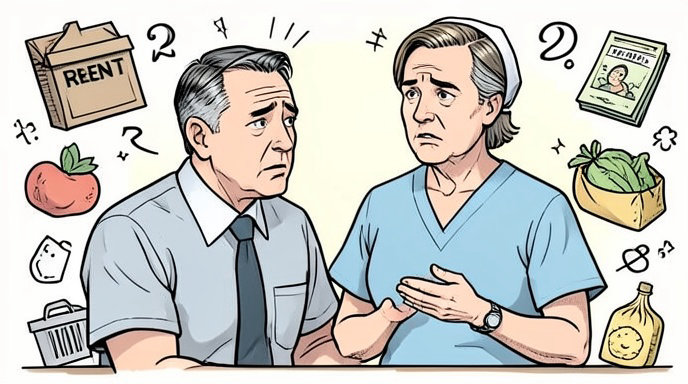
Bezos framed the issue as one of basic fairness, emphasizing that a worker in a high-cost city like New York can still feel squeezed even at a salary that sounds solid on paper. According to his comments, a nurse making $75,000 could be paying more than $1,000 a month in taxes, money that he argued would be better spent on rent, groceries, and other essentials.
What Bezos Said
During the interview, Bezos focused on the idea that the bottom half of U.S. earners contribute very little to total federal income tax revenue compared with the top 1%. He argued that the answer is not to make taxes more progressive in the traditional sense, but to eliminate income taxes altogether for lower earners.
“There’s something very powerful about zero,” he said, underscoring his view that the tax code should be redesigned to ease pressure on working people.
He also extended the argument to mention a New York-based Amazon employee earning around $50,000 a year, calling the tax burden on such workers “absurd.” When the topic of universal basic income came up, Bezos suggested that a better starting point would be stopping taxes on lower-income workers rather than creating a new cash-transfer program.
Why the “Nurse in Queens” Example Resonates
The “nurse in Queens” phrase has quickly become the central symbol of Bezos’s argument because it captures a tension that many Americans recognize: a salary that appears respectable can still feel inadequate in an expensive city.
Queens is one of the most cost-sensitive parts of New York City, where housing, transportation, food, and childcare can eat up a large portion of a household budget. By choosing a nurse as his example, Bezos aimed at a profession widely seen as essential and socially valuable, while also highlighting the reality that even full-time workers can struggle with the cost of living.
The example is simple, but that simplicity is what makes it powerful in the public debate. It frames tax policy not as an abstract numbers game, but as a question of what workers are left with after necessities.
A Broader Debate on Tax Fairness
Bezos’s comments land squarely in the middle of an ongoing national conversation about tax equity. Supporters of lower taxes for working households argue that the current system places too much pressure on people who are already stretched thin, especially in cities with high living costs.
Critics, however, may point out that federal tax policy is only one part of the broader burden workers face. Payroll taxes, state and local taxes, healthcare costs, housing inflation, and student debt all contribute to the financial strain on middle- and lower-income households. That means simply removing federal income tax would not necessarily solve the problem of affordability.
Still, Bezos’s remarks are notable because they come from one of the richest people in the world, giving extra visibility to a debate often led by policymakers and economists rather than tech executives.
Why This Matters for Tech and Business
Bezos’s comments reflect a broader trend among major tech leaders who increasingly weigh in on public policy issues far outside their companies’ day-to-day operations. As one of the most influential figures in technology and commerce, Bezos can shape the conversation simply by choosing which examples and statistics to spotlight.
For the business world, the statement also touches a nerve around compensation, labor costs, and the economic realities faced by workers in high-cost regions. Many employers in tech, retail, logistics, healthcare, and services are grappling with how to recruit and retain talent when wages have to compete with soaring housing and living expenses.
In that sense, Bezos’s remarks may resonate beyond tax policy. They highlight a structural issue that affects everything from employee retention to consumer spending: workers need enough take-home pay to actually live where they work.
What Comes Next
It is not yet clear whether Bezos’s comments will translate into any formal policy push or advocacy campaign, but the statement has already ignited discussion online and in media coverage. The idea of exempting lower earners from federal income taxes will likely continue to draw both support and criticism as lawmakers, economists, and business leaders weigh in.
At minimum, the interview has succeeded in reframing the debate in personal terms. Instead of talking only about brackets, rates, and revenue, Bezos put a human face on the issue: a nurse in Queens trying to make ends meet.
Whether that becomes the basis for serious tax reform remains to be seen. But the question he raised is likely to stick: how much should essential workers really be expected to give back before they can afford to get by?

Get All The Latest Updates Delivered Straight To Your Inbox For Free!