
Elon Musk's Legal Battle with OpenAI: A Unanimous Verdict
TL;DR
- A California jury found Sam Altman not liable on all claims in Elon Musk’s lawsuit against OpenAI, marking a major legal win for the company.
- The case centered on Musk’s allegation that OpenAI abandoned its founding nonprofit mission and misled him about its shift toward commercialization.
- The verdict removes a major distraction for OpenAI, while Musk’s legal push against the company’s restructuring now faces a steep uphill battle.
Musk’s Legal Gamble Ends in a Defeat
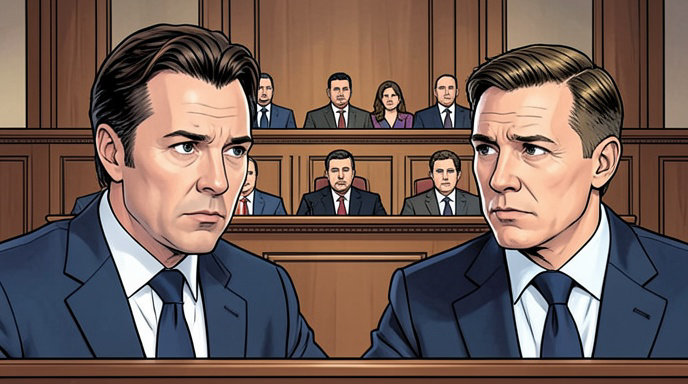
Elon Musk’s high-profile lawsuit against OpenAI has ended with a decisive setback. A California jury found OpenAI CEO Sam Altman not liable on all claims, delivering a unanimous verdict that undercuts Musk’s central argument: that he was misled and mistreated as OpenAI evolved from a nonprofit research lab into a more commercially driven AI powerhouse.
The decision marks a major moment in the long-running feud between Musk and the company he helped launch. It also closes a dramatic chapter in one of the most closely watched legal and business disputes in the tech world, a case that became as much about the future of artificial intelligence as it was about the history of OpenAI itself.
What Musk Alleged
Musk’s lawsuit argued that OpenAI violated its original mission by prioritizing profits over safety and public benefit. He claimed he had been effectively deceived into contributing tens of millions of dollars to a nonprofit venture that later shifted toward a hybrid structure designed to attract outside capital and compete in the race to build advanced AI systems.
At the center of the case was the question of whether OpenAI’s transformation betrayed promises made to Musk and other early supporters. Musk sought billions in damages and pushed for sweeping remedies, including the removal of Altman and OpenAI President Greg Brockman.
OpenAI, meanwhile, maintained that Musk’s claims were unfounded and that he was trying to rewrite the company’s history after becoming a competitor with his own AI startup, xAI.
Why the Jury’s Verdict Matters
The jury’s finding that Altman was not liable on all claims is important for more than just the personalities involved. It gives OpenAI a strong legal and reputational victory at a time when the company is under intense scrutiny over its structure, governance, and safety commitments.
For Musk, the loss is a serious blow. His case had been one of the most direct legal challenges to OpenAI’s evolution into a commercial AI leader. The verdict weakens his claim that the company’s shift away from its nonprofit roots was improper or fraudulent.
It also suggests that the jury was unconvinced by the argument that Musk was harmed in a way the law recognizes, especially given the time elapsed between OpenAI’s restructuring and the filing of the lawsuit.
A Trial About More Than Money
The trial was never just about damages. It became a referendum on the founding mythology of OpenAI, Musk’s role in shaping that story, and whether the company stayed true to its original ideals.
Testimony and closing arguments highlighted sharp disagreements over who wanted what in OpenAI’s early days. OpenAI’s lawyers argued that Musk himself once supported ambitious commercial paths and that his lawsuit was driven by competitive interests after launching xAI.
That framing appears to have resonated. Rather than seeing Musk as a betrayed co-founder fighting for principle, the case was increasingly presented as a business dispute between rivals with conflicting visions and interests.
The Time-Bar Issue Loomed Large
One of the most damaging elements for Musk was the timing of the suit. OpenAI argued that Musk waited too long to bring his claims, and that any alleged mistreatment tied to the company’s commercial pivot had occurred years earlier.
That argument appears to have played a central role in the outcome. If the jury accepted, even in part, that Musk’s claims were filed too late, it would have made it much harder for him to win meaningful relief, regardless of how he framed the broader ethical dispute.
In practical terms, the case illustrates a recurring legal reality in Silicon Valley: even the most dramatic grievance can fail if it is not brought within the required window.
What This Means for OpenAI
For OpenAI, the verdict is a major relief. The company has spent the past several years navigating rapid growth, governance controversies, and pressure from rivals, regulators, and former allies. Winning this case removes one of the most visible legal threats hanging over its leadership.
It also helps reinforce Altman’s position at the center of the company’s future. A ruling against him could have complicated OpenAI’s plans, invited more scrutiny of its leadership, and fueled further arguments that the company had strayed from its mission.
Instead, the verdict gives OpenAI momentum. It can now point to the jury’s decision as validation, at least legally, of its position that the company’s transformation was not a betrayal of its founding obligations.
The Musk-Altman Rift Continues
Even with the lawsuit effectively defeated, the feud between Musk and Altman is far from over. Their relationship has become one of the defining rivalries in AI, blending old co-founder tension, competitive strategy, and deep philosophical disagreement over the direction of the industry.
Musk has long argued that powerful AI should be developed with extreme caution and transparency. OpenAI says it is pursuing responsible development while also requiring significant capital to remain competitive. The trial exposed just how irreconcilable those positions have become.
With xAI now in the mix, the dispute also has a clear competitive dimension. Musk is not merely criticizing OpenAI from the sidelines; he is building a rival company that wants to shape the AI future on his terms.
The Bigger Picture for AI Governance
This verdict may not end the broader debate over OpenAI’s structure, but it does narrow the legal path for critics who want to challenge its evolution in court. The case showed that moral arguments about AI safety and nonprofit obligations do not automatically translate into legal victories.
That matters because OpenAI is not alone. The entire AI sector is under growing pressure to justify how it balances research, safety, product deployment, and commercial survival. Investors, regulators, and the public are all asking whether the rush to build ever-more powerful systems is outpacing the institutions meant to control them.
Musk’s defeat will likely embolden companies that believe aggressive commercialization is legally defensible, even when it draws criticism from former insiders.
What Happens Next
Musk can still pursue other avenues, depending on the remaining legal posture of the broader dispute, but this verdict is a major setback. The most ambitious version of his case has now been rejected, and his effort to portray OpenAI’s leadership as legally culpable has failed to persuade the jury.
OpenAI, on the other hand, can now focus on its business and product agenda with one less courtroom distraction. But the public battle over whether the company has stayed true to its origins is likely to continue in commentary, policy circles, and the competitive marketplace.
For now, though, the headline is clear: Elon Musk came to court alleging betrayal, and Sam Altman’s defense prevailed.

Get All The Latest Updates Delivered Straight To Your Inbox For Free!