
Finnish Phone Maker HMD Teams Up with Indian AI Chatbot for Local Market Expansion
TL;DR
- HMD is bundling Sarvam AI’s Indus chatbot on new devices to better serve India’s multilingual market.
- The move pairs hardware with localized AI, aiming at users who want voice and text assistance in Indian languages.
- The partnership could boost HMD’s relevance in India while giving Sarvam a major distribution channel and real-world consumer test.
HMD Bets on Localized AI for India
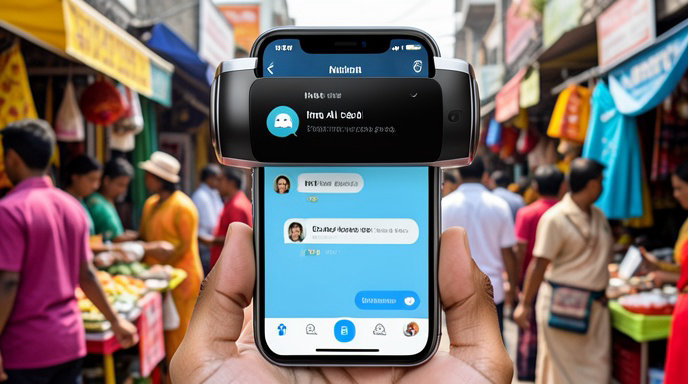
Finnish phone maker HMD is making a fresh push into India by preloading Sarvam AI’s Indus chatbot on select new smartphones and feature-phone initiatives, a move that reflects how quickly consumer tech is shifting toward localized AI experiences.
Rather than offering a generic global assistant, HMD is leaning into India-specific needs: language diversity, lower-cost devices, and practical everyday use cases. The strategy is designed to make AI feel less like a premium add-on and more like a built-in utility for millions of users.
Why India’s Market Is Different
India is one of the world’s most attractive and challenging markets for consumer tech. Price sensitivity is high, device replacement cycles can be long, and language preferences vary widely across states and regions.
That creates a strong case for localized software. While many AI products are optimized primarily for English-speaking users, Sarvam’s Indus chatbot is built to support 22 Indic languages, including Hindi, Bengali, Tamil, Telugu, and Marathi. For many users, that can make the difference between a novelty and something genuinely useful.
The HMD-Sarvam partnership appears aimed at addressing exactly that gap.
Sarvam’s Bigger Ambition
For Sarvam, the deal is about more than placement on a phone. It is a chance to push its AI into the hands of mainstream consumers and prove that India-focused models can compete with global platforms on relevance, usability, and scale.
Sarvam has positioned Indus as a chat-first experience tailored for Indian users, with both typed and spoken interaction. The company’s wider AI effort centers on its 105-billion-parameter model, which it says is optimized for Indian languages and cultural context.
That local specialization could become a meaningful differentiator in a crowded market dominated by global AI brands.
A Hardware-Software Play
The partnership also highlights a broader shift in the smartphone industry. Hardware makers increasingly want to bundle services that make their devices feel more useful out of the box. For HMD, AI could become part of that value proposition, especially in a market where consumers may not pay for standalone AI subscriptions.
Preinstalling Sarvam’s chatbot gives HMD a way to test whether AI features can drive engagement, brand loyalty, and possibly device sales. It also helps the company stand out in a competitive Indian handset market where margins are tight and differentiation is difficult.
From Smartphones to Feature Phones
HMD’s India strategy is not limited to smartphones. The company has also signaled plans to bring AI capabilities to its feature-phone lineup, including assistants that can handle simple tasks such as calls, alarms, and quick questions through voice commands.
That matters because feature phones still have relevance in many markets, particularly among first-time users, older adults, and consumers who want affordability and simplicity. If AI can be made lightweight enough to run on these devices, it could open a much wider adoption path than smartphones alone.
The Bigger Picture for Local AI
This partnership arrives at a time when localized AI is gaining momentum across India. Developers, investors, and device makers are increasingly aware that language coverage, cultural nuance, and regional distribution can matter as much as raw model size.
HMD’s decision to bundle an Indian AI chatbot suggests that consumer AI may not be won only by the biggest models, but by the most context-aware ones. If users respond positively, the move could encourage other handset brands to follow with their own localized assistant partnerships.
What to Watch Next
The key question now is whether consumers actually use the chatbot enough to justify the integration. Preloading software is one thing; building habit and trust is another.
If Sarvam’s Indus can show strong engagement, HMD may have found a low-cost way to add meaningful intelligence to its devices. If not, the feature could remain more of a positioning tool than a must-have capability.
Either way, the partnership is an important sign of where the market is heading: AI that is not just powerful, but local, practical, and built into the devices people already use.

Get All The Latest Updates Delivered Straight To Your Inbox For Free!