
Apple Embraces AI: Poke Becomes First AI Agent on Messages for Business Platform
TL;DR
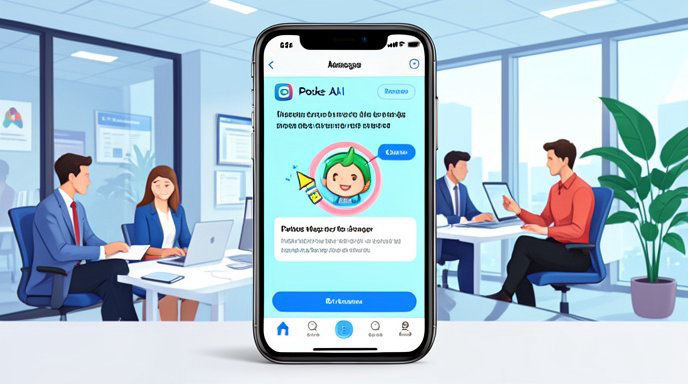
- Poke is an AI agent that works through familiar messaging channels, including iMessage and SMS, making agentic AI available without a separate app install.
- The startup has launched with task automation features for planning, reminders, email, calendars, health, smart home control, and more, positioning messaging as the interface for everyday AI help.
- Reports in the current search results do not show an official Apple announcement that Poke is an approved “first AI agent” on Messages for Business, so that claim is not independently verified here.
Apple’s messaging ecosystem may be opening the door to a new class of AI assistants, but the evidence currently available points to Poke as a messaging-first AI agent rather than a confirmed, Apple-announced milestone. Poke’s appeal is straightforward: it lets people interact with an AI assistant through text, avoiding the friction of app downloads and complex setup.
Poke’s pitch: AI where people already chat
Poke, built by The Interaction Company of California, was publicly launched in March 2026 and is designed to live inside messaging platforms such as iMessage and SMS, with Telegram support as well. The service aims to make agentic AI feel as simple as sending a message, so users can ask it to handle everyday tasks in plain language.
The startup’s early capabilities include calendar planning, reminders, email alerts, health tracking, smart home controls, photo editing, and quick updates such as weather and sports scores. It also offers prebuilt “recipes” that connect with services such as Gmail, Google Calendar, Outlook, Notion, Linear, Strava, Withings, Oura, Fitbit, Philips Hue, and Sonos.
Why messaging matters for AI agents
Poke’s core idea is that the most useful AI may not need a standalone app at all. Instead, it can live in the same conversation threads people already use every day, reducing onboarding friction and making automation feel more natural.
That strategy also reflects a broader shift in consumer AI products: instead of asking people to learn new interfaces, developers are pushing assistants into channels with built-in familiarity and high usage frequency. Poke’s messaging-first model is meant to make task execution feel immediate, whether the user wants help drafting replies, scheduling meetings, or checking on daily routines.
How Poke works
According to the available reports, users can get started by visiting Poke.com, selecting “Get Started,” and entering a phone number. The assistant then operates through text messaging rather than a dedicated app, and Poke uses a messaging layer called Linq to function inside chat apps like iMessage.
The company also appears to use multiple AI models depending on the task, including models from major providers and open-source systems, which suggests a model-agnostic approach focused on flexibility and performance. That design choice could help Poke route different requests to different systems depending on what works best for the job.
The Apple angle: promising, but not fully confirmed
The user’s prompt frames Poke as the first AI agent on Apple’s Messages for Business platform, but the search results provided here do not contain a direct Apple statement or product documentation confirming that specific approval. What they do show is that Poke works through iMessage and SMS and is being discussed as a messaging-native assistant.
If Apple has approved Poke for Messages for Business, that would be notable because it would signal a meaningful expansion of how brands can deploy conversational automation inside Apple’s messaging environment. Based on the current evidence, however, that claim should be treated cautiously until confirmed by Apple or another primary source.
Why this matters for the broader AI market
Poke’s launch underscores a growing competition around “agentic AI,” where systems do more than answer questions and instead take actions on a user’s behalf. By placing that capability inside text messaging, Poke is betting that accessibility and convenience will matter as much as raw model performance.
The startup’s positioning also highlights a practical truth about consumer AI adoption: people are more likely to use tools that fit naturally into existing habits. For Poke, that means turning the humble message thread into a command center for planning, coordination, and automation.
What to watch next
- Whether Apple formally confirms Poke’s status on Messages for Business.
- Whether Poke expands support for additional messaging channels and regions.
- How quickly users adopt messaging-based AI agents compared with standalone AI apps.
- Whether competitors respond with similar no-app, text-first assistant products.
For now, Poke stands out less as a flashy AI chatbot and more as a strong bet on interface design: if AI is going to become truly useful, it may need to speak the language people already use every day.

Get All The Latest Updates Delivered Straight To Your Inbox For Free!