
Meta's Tent Revolution: How Tents are Transforming Data Centers
TL;DR
- Meta is reportedly using weatherproof tent structures to deploy AI hardware and GPU clusters faster than with conventional data centers.
- The approach is part of a broader effort to cut construction costs, reduce lead times, and bring AI capacity online in months instead of years.
- Meta says the tent-based model is a temporary, modular bridge for rapid expansion, not a replacement for all permanent infrastructure.
Why Meta Is Turning to Tents
Meta is redesigning parts of its data center strategy to reduce spending and accelerate construction as it races to expand AI infrastructure. The company has said its new facilities will be cheaper and faster to build than previous designs, and it is shifting toward a more phased, modular approach with lower initial capital outlay.
That strategy matters because AI demand is forcing Meta to scale compute far more quickly than traditional construction timelines allow. Reports describe the company deploying weatherproof, hurricane-proof tent structures to house GPU clusters and networking gear while permanent facilities catch up.
What the “Tent Data Center” Model Looks Like
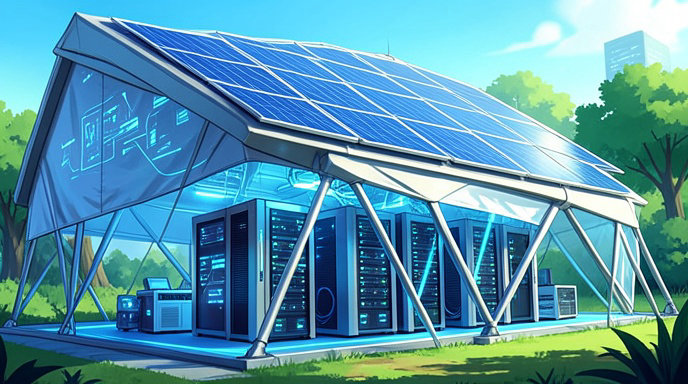
The tent concept is not a literal camping setup but a hardened temporary enclosure built with industrial materials, including puncture-resistant, waterproof fabric over an aluminum frame. These structures are designed to support racks of servers, cooling systems, fire suppression, security, and networking equipment.
According to reporting on Meta’s AI buildout, the company is using these structures to bring capacity online in months rather than years. Meta CEO Mark Zuckerberg has reportedly described the idea as building “weatherproof tents” to accelerate GPU cluster deployment instead of waiting for concrete buildings to finish.
The Cost-Cutting Logic
Meta’s push toward tents reflects both speed and spending pressure. The company previously indicated that it was lowering its capital expenditure outlook and reworking data center plans to support both AI and non-AI workloads more efficiently. Meta also said its new architecture would allow it to start with less initial capacity and then increase capacity later as demand becomes clearer.
This suggests the tents are part of a broader financial strategy: reduce upfront construction costs, avoid locking into oversized campuses too early, and preserve flexibility while AI demand remains hard to forecast. In that sense, the tents are less about novelty and more about capital efficiency.
Where Meta Is Deploying This Strategy
Recent reporting points to early tented deployments tied to Meta’s rapid AI expansion efforts, including work associated with the company’s Prometheus buildout. One report identifies a first confirmed location in New Albany, Ohio, where Meta is reportedly developing a large GPU cluster.
Meta’s broader infrastructure plans remain massive. The company is also pursuing large-scale permanent AI campuses, including a major project in Louisiana that underscores how aggressively it is expanding compute capacity alongside these faster-deployable structures.
Why This Matters for the Tech Industry
Meta’s tent strategy highlights a major shift in data center economics. As AI workloads drive unprecedented power and compute demand, companies are increasingly willing to trade architectural convention for deployment speed and flexibility.
If the model works, it could influence how hyperscalers think about future infrastructure: build the smallest viable shell first, populate it quickly with AI hardware, and expand in phases as demand becomes clearer. That approach may also reshape the competitive landscape, since the ability to launch compute faster can translate directly into faster AI development cycles.
The Limits of the Tent Approach
Meta has not publicly disclosed full engineering specifications for these structures, and reporting suggests the company is still keeping details limited. That leaves open important questions about durability, long-term operating costs, and how much savings come from the tent design itself versus from simply building less infrastructure at once.
The clearest takeaway is that Meta appears to view tents as a bridge strategy rather than a permanent end state. Traditional facilities still matter, especially for the largest and most power-hungry AI campuses, but tents give Meta a way to move now instead of waiting for years-long construction cycles to finish.
What Comes Next for Meta
Meta’s latest data center moves suggest a dual-track strategy: ultra-fast temporary infrastructure for immediate AI needs, and massive permanent campuses for the long term. That combination could become a template for the next phase of cloud and AI infrastructure, especially if other companies decide that speed matters as much as structural permanence.
For now, the tent revolution is best understood as Meta’s answer to a simple problem: AI is moving faster than concrete can be poured.

Get All The Latest Updates Delivered Straight To Your Inbox For Free!