
Blue Origin Faces Challenges as New Glenn Rocket's Future Remains Uncertain
TL;DR
- On May 28, 2026, a Blue Origin New Glenn rocket exploded during a static fire test at Launch Complex 36 in Florida, destroying the vehicle and severely damaging the launch infrastructure.
- Despite the catastrophic setback, Blue Origin CEO Dave Limp has declared that the company plans to resume New Glenn flights by the end of 2026, citing that critical tank systems survived the blast intact.
- The incident, likely caused by a cryogenic leak that froze a hydraulic line, has raised significant concerns regarding safety protocols and accountability in the rapidly evolving commercial space sector, particularly as NASA weighs its Artemis program timeline.
Blue Origin Faces Challenges as New Glenn Rocket's Future Remains Uncertain
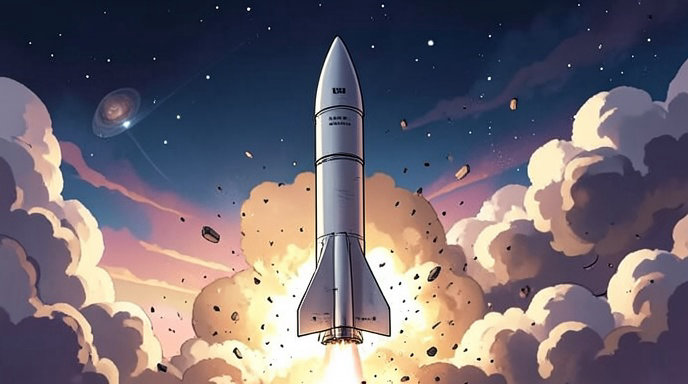
The commercial space landscape was shaken on Thursday night, May 28, 2026, when a massive fireball erupted from Launch Complex 36 at Cape Canaveral Space Force Station. The source of the inferno was a New Glenn rocket, the third first-stage booster of the fleet, named "No, It's Necessary." The vehicle was undergoing a routine static fire test—a critical procedure where engines are ignited while the rocket remains anchored to the ground—to prepare for its upcoming orbital mission.
The explosion was instantaneous and devastating. It completely destroyed the first stage along with the attached and fueled second stage, creating a blast believed to be the most powerful rocket explosion since the Soviet N1 rocket failure in 1969. The inferno did not stop at the vehicle; it severely damaged Blue Origin's only operational launch site for the New Glenn, including the main support gantry and nearby infrastructure. While the explosion was terrifying, emergency responders and Space Launch Delta 45 confirmed that no injuries or fatalities occurred, and all personnel on site were accounted for and safe.
The Root Cause: A Cryogenic Leak
In the days following the disaster, Blue Origin and the U.S. Federal Aviation Administration (FAA) worked to identify the root cause of the anomaly. Preliminary investigations pointed to a catastrophic mechanical failure within the rocket's propulsion system. The FAA's mishap report identified the direct cause as a cryogenic leak that froze a hydraulic line. This freeze-up led to a thrust anomaly during the second-stage engine burn sequence, triggering the explosion.
The incident forced the company to halt all operations at the pad pending a full assessment. The damage assessment revealed that the explosion had likely destroyed at least one of the lightning protection towers at LC-36 and compromised the transporter-erector. While the initial image of the blast was one of total destruction, a closer look at the aftermath by Blue Origin executives revealed a surprising element of resilience within the hardware.
Optimism Amidst the Ash: The 2026 Recovery Plan
Despite the severity of the explosion, Blue Origin has maintained a surprisingly optimistic outlook regarding the future of the New Glenn program. In a post on social media platform X, CEO Dave Limp stated that the damage was not as severe as initially feared. Crucially, Limp noted that the propellant tanks at the launch pad made it through the blast in good shape, and the nearby processing hangar remained intact.
The main support gantry, while damaged, was deemed repairable in place, saving the company from a multi-year reconstruction project. Leveraging this assessment, Limp closed his statement with a definitive timeline: "We will fly again before the end of this year." He signed the post with the company's Latin motto, Gradatim Ferociter, meaning "step by step, ferociously," signaling a commitment to rapid recovery despite the setback. This timeline suggests that Blue Origin believes it can clear the pad, repair the gantry, and certify the vehicle for flight within six months.
Safety and Accountability in the Commercial Space Race
The explosion has inevitably raised questions about safety and accountability in the commercial space industry, particularly as the sector faces increasing regulatory scrutiny. The incident occurred just as Jeff Bezos's space initiative was attempting to catch up with Elon Musk's SpaceX, which is preparing for a potential IPO. The loss of the rocket and the damage to the launch site represent a significant hurdle for Blue Origin's bid to become a primary partner for NASA's Artemis program.
NASA officials are now closely monitoring the situation, as the New Glenn is a key component of their strategy to return astronauts to the moon. The grounding of the New Glenn, combined with the necessary repairs to LC-36, could force NASA to alter its expectations for upcoming Artemis missions. Furthermore, the incident highlights the risks inherent in developing next-generation launch vehicles, where complex cryogenic systems and high-pressure hydraulics must function flawlessly under extreme conditions.
As Blue Origin moves forward with its nine corrective actions to prevent reoccurrence, the FAA has pledged to verify that these measures are implemented before the next launch. The coming months will be a critical test of whether Blue Origin can translate its optimism into a successful, safe return to flight, proving that the "step by step" approach can overcome even the most ferocious setbacks in space exploration.

Get All The Latest Updates Delivered Straight To Your Inbox For Free!