
Tesla Tests Pedal-Free Cybercab: A Step Towards Robotaxi Revolution
TL;DR
- Tesla has officially begun engineering tests of its first production-intent Cybercab on public roads in Austin, Texas, marking the first time a customer-spec unit (without a steering wheel or pedals) has been validated outside the factory.
- The company has expanded road testing of the fully autonomous vehicle to five U.S. states—California, Texas, New York, Illinois, and Massachusetts—though testing fleets currently include older units with manual controls for safety.
- Mass production of the pedal-free, steering-wheel-free Cybercab is now confirmed to start in April 2026 (Q2), aligning with Elon Musk's vision for a Level 4/5 autonomous robotaxi network.
Tesla Tests Pedal-Free Cybercab: A Step Towards Robotaxi Revolution
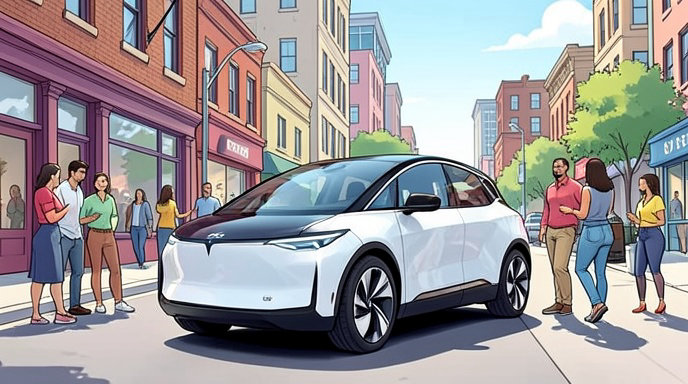
The era of the fully autonomous robotaxi has officially moved from concept to reality. Tesla has announced that it has started engineering tests of its first production Cybercab on public roads in Austin, Texas. This milestone is significant because it marks the first time a customer-specification unit of the purpose-built robotaxi has been validated outside the factory environment.
Unlike the prototype vehicles spotted in previous months that still featured steering wheels and pedals for engineering data, these new test units are true to the final design: they have no steering wheel, no pedals, and no driver control interface. A human safety operator remains aboard the vehicle during these runs, but the car itself is operating in its intended autonomous configuration. This shift confirms that Tesla is no longer just refining test vehicles but is actively validating the actual product that will eventually ferry passengers.
Expanding the Testing Footprint Across Five States
While Austin is the latest hotspot, Tesla’s testing network for the Cybercab has grown rapidly. The company has now expanded public road testing of its fully autonomous vehicle to five U.S. states: California, Texas, New York, Illinois, and Massachusetts.
Recent sightings include a Cybercab driving past Wrigley Field in Chicago, Illinois, and another spotted in Danvers, Massachusetts. These sightings suggest that Tesla is aggressively gathering real-world data across diverse geographies, weather conditions, and traffic densities. However, a nuance exists in the current fleet composition: while the new production units in Austin are pedal-free, the broader testing fleet of approximately ten Cybercabs operating across these states still includes older prototypes equipped with steering wheels and pedals. These manual-control units serve as safety backups during the validation phase, but they are not intended for sale.
Aligning with Musk's Vision for a Level 5 Network
The design of the Cybercab is not merely an aesthetic choice; it is a fundamental requirement for Elon Musk's vision of a comprehensive robotaxi network. By eliminating the steering wheel, pedals, and driver controls, the vehicle is engineered specifically for Level 4 or Level 5 autonomy, where human intervention is not expected during normal operation.
This "steering-wheel-free" architecture aligns with the regulatory definition of a fully autonomous system. Musk has repeatedly stated that the Cybercab is designed to be a two-passenger electric car intended to ferry passengers without any human at the helm. The absence of traditional controls reduces the vehicle's complexity, cost, and physical footprint, making it more efficient for high-density urban transport. As these engineering tests continue, the data gathered will be critical for proving that a vehicle without manual controls can safely navigate complex public streets.
Production Timeline and Market Implications
The road is now clear for mass production. Tesla has confirmed that volume production of the Cybercab is set to begin in April 2026 (Q2 2026). This timeline was reiterated by Musk during the company's latest earnings call in January and has been validated by recent drone footage showing production ramping up at the Giga Texas facility.
The implications for the future of transportation are profound. With a projected price point of around $30,000, the Cybercab aims to make autonomous ride-hailing economically viable for the mass market. If successful, this could disrupt the traditional personal vehicle ownership model, shifting consumers toward a service-based economy where transportation is instantly available, fully autonomous, and optimized for efficiency. As the engineering tests in Austin and the expanded fleet across five states continue to accumulate data, the industry is watching closely to see if Tesla can deliver on its promise of a pedal-free revolution.

Get All The Latest Updates Delivered Straight To Your Inbox For Free!