
Countries Taking Action: The Growing Trend of Banning Social Media for Kids
TL;DR
- Australia became the first country to enforce a nationwide under-16 social media ban, requiring major platforms to block or remove underage accounts starting in December 2025.
- The push is being driven by concerns about cyberbullying, addictive design, harmful content, and teen mental health, with governments focusing on platform responsibility rather than punishing parents or children.
- Australia’s move is already influencing debate elsewhere, with Denmark and the U.K. exploring similar age-based restrictions or alternatives such as time limits.
Australia sets the global template
Australia has become the first nation to strictly prohibit social media access for users under 16, making it the most aggressive large-scale policy action yet in the debate over children’s online safety. The law took effect in December 2025 and applies to major services including Facebook, Instagram, TikTok, YouTube, Snapchat, X, Reddit, Threads, Twitch, and Kick.
The framework does not place penalties on children or their parents. Instead, it requires platforms to take “reasonable measures” to keep underage users off their services, with fines reaching A$49.5 million for serious noncompliance. Reporting from Australia shows companies such as Meta began deactivating teen accounts in advance of enforcement.
Why governments are moving toward bans
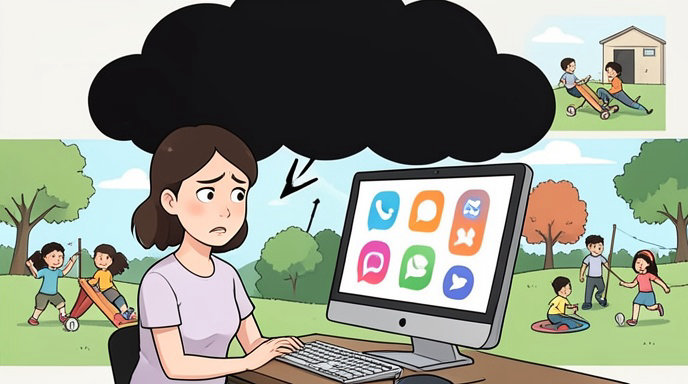
Supporters of these laws argue that social media can expose children to cyberbullying, sexual exploitation, violent content, eating-disorder material, and other harmful material at a scale that existing moderation tools have struggled to contain. Australian officials have also pointed to platform features designed to maximize screen time, saying those products can worsen mental health and wellbeing for young users.
The concern is not limited to content alone. Lawmakers and child-safety advocates say algorithmic feeds, notifications, and infinite-scroll design can create compulsive usage patterns that are difficult for children and teens to manage. In Australia, a government-commissioned study cited by the BBC found that 96% of children aged 10 to 15 used social media, and seven in ten encountered harmful material online.
What makes Australia’s law different
Australia’s policy stands out because it sets the minimum age at 16, which is higher than most prior age-related rules around online services. It is also unusual in how broad it is: officials have targeted ten of the largest platforms first, but have indicated the list can expand as the industry evolves.
The law also relies on the companies themselves to verify and enforce age limits. Platforms are being pushed toward age-check systems such as behavioral inference, facial analysis, identity documents, or linked financial information, though those methods have raised privacy and accuracy concerns. That enforcement approach reflects a broader global trend: governments want platforms to carry the burden of compliance rather than leaving age verification to families.
Tech companies and free-speech critics push back
The policy has drawn backlash from major tech companies and free-speech advocates, who argue that blanket bans may be blunt instruments that punish legitimate teen use along with harmful use. Critics also say age verification can introduce new privacy risks and may be easier to evade than policymakers expect.
Even supporters acknowledge the rollout will be difficult. Australian officials have said the ban is intended as a “world-leading” test case, but they also recognize that defining which services count as social media, and how to enforce age restrictions consistently, will remain contentious. The fact that Australia has already had to expand the list to include YouTube underscores how quickly the policy can become a moving target.
Other countries are watching closely
Australia’s move is already shaping debate abroad. Brookings reports that Denmark plans to ban social media for users under 15, while regulators in the U.K. have signaled interest in age-restricted bans or alternative measures such as time limits. That suggests Australia may be the start of a broader international shift rather than an isolated policy experiment.
For now, the global conversation is moving from whether children should have unrestricted access to social platforms to how governments should intervene, what age threshold makes sense, and whether the answer should be an outright ban or a more targeted set of restrictions. The debate is likely to intensify as more countries decide whether to follow Australia’s lead or choose less sweeping rules.
The bigger question: protection or overreach?
At the center of the policy debate is a basic tradeoff. Proponents say children need stronger guardrails because the digital environment has outpaced traditional safety tools, and because social platforms are optimized for engagement rather than wellbeing. Opponents counter that broad age bans may be overinclusive, hard to enforce, and potentially shift children toward less regulated corners of the internet.
What is clear is that Australia has transformed the issue from a policy discussion into an active regulatory model. If the law proves workable, it could give other governments a blueprint for tougher intervention. If it fails, it may strengthen the case for narrower rules focused on design changes, parental controls, and safer defaults instead of outright prohibition.

Get All The Latest Updates Delivered Straight To Your Inbox For Free!