
Trump's Revised AI Executive Order: Industry Pushback Leads to Voluntary Oversight
TL;DR
- President Trump’s revised AI executive order shifts from mandatory prerelease review toward a voluntary framework for advanced model testing before public release.
- The change reportedly followed industry concerns that stricter oversight could slow innovation and weaken U.S. competitiveness in AI.
- The order fits a broader Trump administration pattern of lighter-touch federal AI policy, including efforts to centralize oversight and limit state-level regulation.
Trump’s revised AI oversight plan puts voluntariness at the center
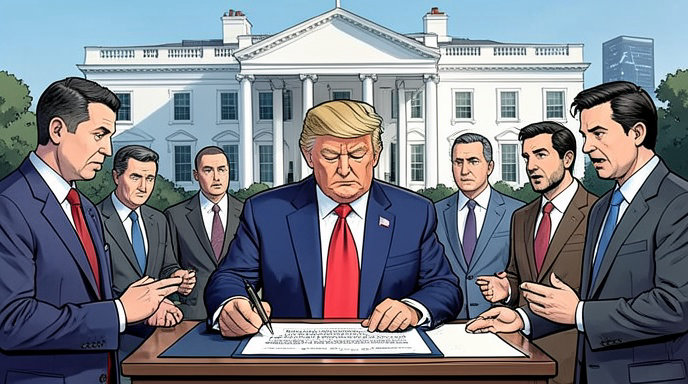
President Trump’s latest AI executive order is being reshaped to accommodate industry objections, with the key change being that prerelease government review of advanced AI models would be voluntary rather than mandatory. The revised approach marks a significant shift from more aggressive oversight models that would have required closer federal scrutiny before systems reached the public.
The draft order reportedly focuses on the government working with leading AI companies to evaluate high-end models in advance of deployment, while stopping short of forcing every developer into the process. That compromise suggests the White House is trying to balance safety concerns with the industry’s preference for flexibility.
Why the White House pulled back
According to reporting, the administration delayed the signing after objections surfaced from AI companies and other stakeholders worried that a tougher framework could create friction for U.S. firms competing globally. Trump himself reportedly said he wanted to avoid actions that might hinder America’s edge in AI.
The voluntary structure appears designed to reduce regulatory burden while still giving federal officials a window into the capabilities of the most advanced models. In practice, that would make the government a partner in evaluation rather than a gatekeeper with a formal approval role.
What the order would do
The draft reported by multiple outlets describes two main policy tracks: cybersecurity and model testing. On the testing side, agencies would be tasked with defining which systems qualify for the voluntary framework and setting up a process for federal access to unreleased models in cooperation with major AI firms.
The order also appears intended to formalize federal coordination around advanced AI risk, but without imposing a strict licensing or preapproval regime. That distinction matters because it signals oversight through consultation, not command-and-control regulation.
Industry pushback and the innovation argument
The strongest argument from industry has been that rigid prerelease review could slow product launches, increase compliance costs, and discourage U.S. companies from moving quickly in a competitive global market. By making participation voluntary, the administration is effectively trying to preserve experimentation and speed while still encouraging risk review.
That framing aligns with a broader deregulatory approach to AI policy associated with the Trump administration. Earlier Trump-era AI policy already emphasized removing barriers to innovation and reducing the role of federal oversight compared with the Biden administration’s more interventionist stance.
How this fits into Trump’s broader AI strategy
The revised oversight concept does not exist in isolation. Trump’s administration has also pursued a broader national framework that centralizes AI policy at the federal level and seeks to limit conflicting state rules. The White House has described that approach as a “minimally burdensome” governance framework.
That larger strategy includes efforts to challenge state AI laws, use federal authority to pressure states, and create more uniform national rules. In that context, a voluntary prerelease review system looks less like a standalone safety measure and more like part of a broader effort to shape the regulatory landscape in favor of federal primacy and industry latitude.
What to watch next
The main question now is whether a voluntary system can meaningfully improve safety without becoming too easy for companies to bypass. If participation remains limited, the government may gain visibility into only a subset of frontier systems.
Another open issue is how the order will interact with other federal actions on AI and with state-level laws that remain in place. Even as the administration pushes for a national framework, the practical reach of federal oversight may depend heavily on how agencies define “advanced” models and how much industry actually opts in.

Get All The Latest Updates Delivered Straight To Your Inbox For Free!