
Uber's Data Revolution: 500 Modified Ioniq 5s Hit the Road for AV Labs
TL;DR
- Uber is launching 500 modified Hyundai Ioniq 5s as part of its new AV Labs effort to gather high-fidelity driving data for autonomous vehicle partners.
- The vehicles are outfitted with a dense sensor stack — including 14 cameras, 8 solid-state lidar units, and 9 radars — and will feed data into Nvidia’s Drive Thor platform.
- Uber says the fleet could generate 2 million miles of data per month, helping partners like Waymo, Avride, WeRide, and others improve and scale robotaxi systems.
Uber’s new bet on data, not just rides
Uber is putting a fresh emphasis on the less glamorous side of autonomy: data collection. Rather than deploying these Hyundai Ioniq 5s as consumer-facing robotaxis, the company says the vehicles will operate as sensor-packed data-gathering machines for its AV Labs division.
That shift matters because Uber is no longer trying to build a single self-driving stack on its own. Instead, it is positioning itself as a central platform for autonomous vehicle development, supplying large-scale real-world driving data to a growing list of partners.
What Uber is actually deploying
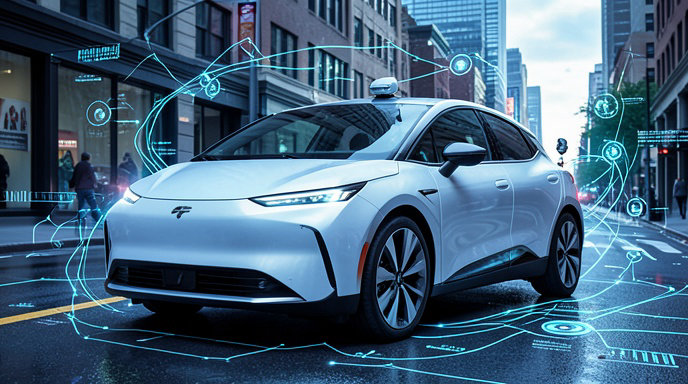
The fleet centers on the Hyundai Ioniq 5, retrofitted with a substantial sensor package designed to capture detailed road scenes from multiple angles. TechCrunch reports that the cars will carry 14 cameras, eight solid-state lidar sensors, and nine radars, with the retrofit work handled by Roush Performance.
Uber says all of that sensor output will be routed through Nvidia’s Drive Thor autonomous vehicle computer. The company also indicated that it may continue adjusting the sensor configuration as partner needs evolve, suggesting the fleet is intended to be a flexible data platform rather than a fixed hardware program.
Why Uber wants 2 million miles a month
Uber’s stated goal is to build what it describes as a geographically diverse dataset for autonomous driving training. The company says the fleet could eventually produce 2 million miles per month of high-fidelity data, giving partners a much larger and more varied stream of real-world examples to train and validate self-driving systems.
That kind of scale is valuable because autonomy systems depend heavily on exposure to many different road layouts, traffic patterns, weather conditions, and driving behaviors. Uber’s pitch is that a broad data network can help robotaxi developers improve faster than they could by operating in isolated test regions alone.
AV Labs and Uber’s new role in autonomy
The program is part of AV Labs, Uber’s new autonomous-vehicle division, which the company launched to collect sensor data and share it with its roster of AV partners. TechCrunch says Uber already works with 30-plus autonomous vehicle technology partners, and names companies including Avride, Waymo, and WeRide among those that could benefit from the dataset.
This marks a strategic pivot. Uber is not just a ride-hailing app hosting robotaxi fleets; it is trying to become an infrastructure layer for autonomy, supplying the data that helps other companies build, train, and deploy self-driving vehicles.
How this fits with Uber’s broader robotaxi strategy
Uber has already been expanding its autonomous vehicle relationships in the market. Separate reports show the company working with Motional on an Ioniq 5-based robotaxi service in Las Vegas, with plans for more advanced driverless operations over time. Other coverage also points to Uber’s autonomous vehicle efforts in Dallas with Avride.
Taken together, the reports suggest Uber is pursuing a two-track strategy: offering autonomous rides where partner fleets are ready, while simultaneously building its own data pipeline to support the next generation of AV development.
Why the Ioniq 5 keeps showing up
The Hyundai Ioniq 5 has become one of the most visible EV platforms in autonomy programs because it is already being used in multiple robotaxi efforts. Hyundai and Motional have long promoted the Ioniq 5-based robotaxi as a Level 4-capable vehicle designed for autonomous operation.
In other words, Uber’s choice is not accidental. The model already has a track record in self-driving development, and it offers a useful foundation for sensor-heavy modifications aimed at data collection rather than passenger service.
What to watch next
Uber says 50 of the modified vehicles should be on the road by the summer, with the full 500-car rollout planned for this year. If the company reaches its data targets, AV Labs could become one of the most important shared-data pipelines in the autonomous vehicle industry.
The bigger question is whether this approach will create a durable advantage for Uber and its partners. If the fleet delivers the promised scale and variety of real-world driving data, AV Labs could become a key force multiplier for robotaxi development across the industry.

Get All The Latest Updates Delivered Straight To Your Inbox For Free!