
American Autonomous Ground Vehicles Make Their Debut in Ukraine
TL;DR
- Forterra has successfully deployed over 100 autonomous ground vehicles (AGVs) in Ukraine, marking a historic first for American-made military robotics on the Eastern front.
- This milestone demonstrates the critical shift toward using advanced robotics for frontline logistics, casualty evacuation, and combat support, reducing soldier exposure to lethal drone zones.
- The deployment signals a major evolution in future warfare strategies, with projections suggesting that AGVs could eventually replace up to one-third of frontline personnel roles in high-intensity combat.
A Historic Milestone for American Robotics
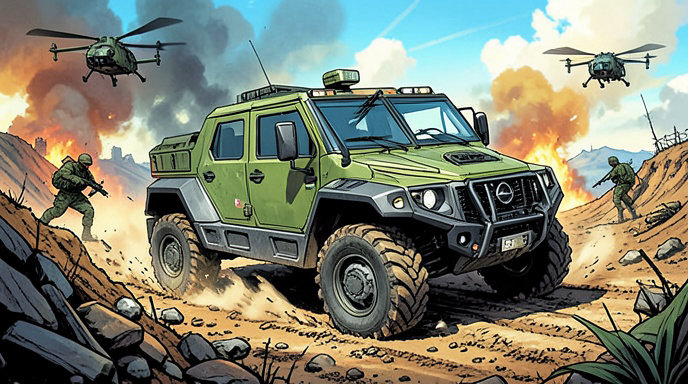
In a groundbreaking development for modern military technology, Forterra has officially deployed more than 100 autonomous ground vehicles (AGVs) across the Ukrainian front line. This operation represents the first significant deployment of American-made autonomous mission systems in a high-intensity combat zone, marking a definitive shift in how the United States and its allies approach the integration of robotics into warfare.
The deployment is not merely a field test; it is a fully operational integration of AGVs designed to handle the most dangerous aspects of the battlefield. From hauling ammunition to evacuating wounded troops under fire, these vehicles are now active participants in the conflict, proving that the technology is ready for real-world, large-scale production and usage.
Transforming Frontline Logistics and Survival
The primary impact of Forterra's AGVs lies in their ability to transform frontline logistics while drastically improving soldier survival rates. In the current conflict, unmanned aerial systems (UAS) and drones have made traditional supply runs perilous. Forterra's autonomous vehicles are designed to navigate these "drone kill zones" without exposing human soldiers to the risk of ambush or aerial strikes.
Key operational capabilities include:
- **Autonomous Supply Delivery:** AGVs are delivering critical supplies to frontline positions, ensuring that troops have the ammunition and food they need without the delay and danger of manual convoys.
- **Casualty Evacuation:** The vehicles are being used to evacuate wounded soldiers from the battlefield, a mission that requires careful planning and speed under fire.
- **Mine Laying and Combat Support:** Beyond logistics, these robots are assisting in laying mines and engaging enemy personnel using mounted turrets, effectively replacing soldiers in high-risk tactical roles.
The Strategic Shift Toward Robot-Driven Warfare
The deployment of over 100 AGVs in Ukraine signals a profound strategic shift in future warfare. Military analysts and commanders are increasingly viewing robotics not as a supplementary tool, but as a core component of combat strategy. The success of Forterra's vehicles suggests that the era of human-soldier dominance in frontline logistics is ending.
Commanders in Ukraine have already outlined ambitious goals to field 50,000 unmanned ground vehicles by the end of 2026, with some estimates suggesting that the total number of AGVs needed to fully replace frontline positions could reach 150,000 to 200,000 annually. The Forterra deployment is the first concrete step toward this vision, demonstrating that AGVs can eventually replace up to one-third of soldiers along the front line by taking over the most dangerous logistics and combat tasks.
Forterra's $92 Million Marine Corps Contract and Future Outlook
The success of this deployment in Ukraine has already bolstered Forterra's position in the global defense market. The company recently secured a $92 million contract with the U.S. Marine Corps to deliver autonomous technology for the ROUE-F Block 2 initiative. This contract, characterized as the military's inaugural large-scale production contract for AGVs, underscores the confidence that the U.S. defense establishment has in Forterra's technology.
As the deployment continues, the implications for future warfare are clear: the battlefield is becoming increasingly automated. With AGVs capable of performing patrols, holding positions, and engaging enemy forces without human intervention, the nature of combat is evolving rapidly. Forterra's debut in Ukraine is not just a milestone for one company; it is a defining moment for the future of American military technology and the global landscape of modern warfare.

Get All The Latest Updates Delivered Straight To Your Inbox For Free!