
Antares Secures $470M for Revolutionary Military Nuclear Reactors
TL;DR
- Antares has raised $470 million in a Series C round to develop small nuclear reactors for U.S. military bases, with funding led by Paradigm and Caffeinated Capital.
- The company is among the finalists in the Pentagon’s Advanced Nuclear Power for Installations program, which could bring reactors to Air Force sites in Colorado and Montana and potentially other military installations by 2028.
- The raise reflects growing investor interest in advanced nuclear power as a strategic energy source, but the technology is still unproven at commercial scale and no microreactor is yet operating in the U.S.
Antares Secures $470M for Revolutionary Military Nuclear Reactors
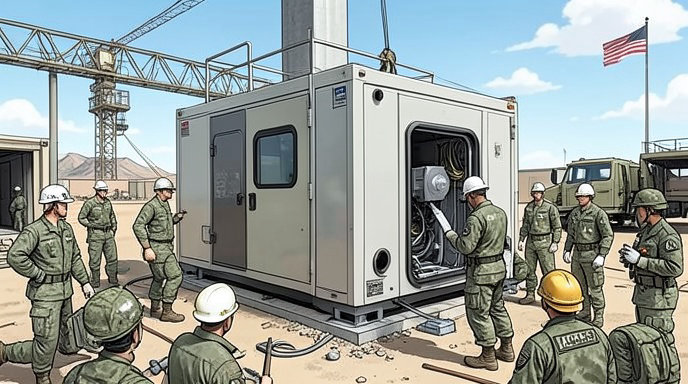
Antares has landed a major vote of confidence from investors, raising $470 million to build small nuclear reactors for U.S. military bases. The round combines $370 million in equity and $100 million in debt, and was led by Paradigm and Caffeinated Capital with participation from Industrious Ventures, Point72 Ventures, and Shine Capital.
The funding arrives at a moment when advanced nuclear startups are drawing attention from both investors and policymakers. In Antares’ case, the pitch is especially compelling: compact reactors that could provide reliable power for military installations while reducing dependence on fuel convoys, grid vulnerabilities, and other logistics that can complicate base operations.
Why the Pentagon is interested
Antares is one of three finalists in the Pentagon’s Advanced Nuclear Power for Installations program, which is testing small modular reactors at Air Force bases in Colorado and Montana. The broader idea is straightforward: if a base can generate its own electricity on-site, it becomes less exposed to outages, cyber threats, supply disruptions, and the operational risks tied to conventional fuel delivery.
That energy independence has clear national security implications. Military planners have long viewed resilient power as a force multiplier, and on-site nuclear generation could help bases maintain operations during grid failures or contested scenarios.
Where Antares stands technically
The company says it aims to bring its first electricity-producing reactor online next year, with military deployments planned for 2028. Antares also reported a key technical milestone in June 2026, when it became the first participant in a Department of Energy reactor program to demonstrate a self-sustaining fission reaction.
Still, there is a gap between achieving criticality and delivering useful electrical power. Reports note that Antares has not yet produced electricity from a reactor system, and the technology remains unproven at commercial scale. That makes the new funding significant, but not definitive proof that military deployment is imminent.
The business and policy backdrop
The raise reflects a broader surge of interest in advanced nuclear technology, driven in part by rising electricity demand from AI data centers and the need for new power sources that can run reliably around the clock. For investors, defense-backed nuclear projects offer a rare combination of strategic importance, long-term demand, and potential public-sector support.
Antares’ funding structure also suggests a capital-intensive path ahead. The company says the new money will help move it from technical milestones toward deployment, with its reactors intended to operate autonomously for years without refueling. That autonomy is central to the military use case, since fewer refueling events mean fewer supply-chain vulnerabilities.
What this could mean for military energy
If Antares succeeds, the impact could extend beyond a single base or contract. Small modular reactors could reshape how the military thinks about power generation, especially for installations that need uninterrupted electricity for critical operations, communications, and defense systems.
The potential upside is substantial, but so are the challenges. Nuclear deployment at military sites must clear regulatory, technical, and operational hurdles, and public confidence will depend on safety, security, and reliability. For now, Antares’ $470 million raise signals that investors believe the opportunity is real even if the technology still has to prove itself in the field.
The road ahead
The next major milestones will be whether Antares can turn its reactor testing into actual electricity generation and whether the Pentagon program advances toward real-world installation. If the company hits its timeline, 2027 could bring the first electricity-producing demonstration, followed by military deployment efforts in 2028.
For now, Antares has done what many nuclear startups struggle to do: pair a technically ambitious platform with a major financing round and a clear defense market. The question is whether it can move from promise to power fast enough to meet both investor expectations and military demand.

Get All The Latest Updates Delivered Straight To Your Inbox For Free!