
Apple's Legal Battle: Implications for OpenAI's Hardware Ambitions
TL;DR
- **Apple sued OpenAI on July 10, 2026**, alleging the AI firm stole trade secrets and poached employees to accelerate its plans to build a consumer hardware device rivaling the iPhone.
- **The lawsuit threatens OpenAI's hardware ambitions** before any court ruling, with experts predicting Apple will likely secure preliminary relief blocking OpenAI from using the stolen intellectual property.
- **Legal and strategic fallout could delay OpenAI's IPO**, as the company now faces a costly legal battle and significant uncertainty regarding its ability to enter the hardware market.
A Dramatic Escalation in Tech Tensions
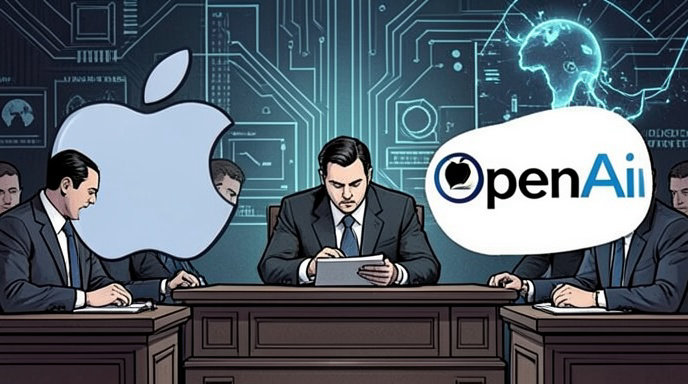
On Friday, July 10, 2026, Apple filed a blockbuster lawsuit against OpenAI and two former employees, alleging the artificial intelligence company misappropriated Apple's trade secrets to fuel its entry into the consumer hardware market. The complaint accuses OpenAI of orchestrating a systematic effort to acquire confidential product designs, engineering presentations, and supply chain information by coaxing former Apple employees to hand over tightly held materials. This legal action represents a dramatic rupture in the previously simmering partnership between the iPhone maker and the ChatGPT creator, shifting the relationship from collaboration to direct litigation.
Apple is seeking damages and a court order to block OpenAI from possessing or using the alleged trade secrets, which reportedly cover product architecture, battery systems, circuit boards, and unreleased product plans. The lawsuit was filed in the U.S. District Court for the Northern District of California and names OpenAI's commercial and nonprofit entities, its hardware division "io Products," and specific individuals including Chief Hardware Officer Tang Yew Tan and former Apple engineer Chang Liu.
The Core Allegations: Poaching and Secret Files
The lawsuit details six "wildest claims," including accusations that OpenAI spied on hardware prototypes and tricked a trusted partner into performing a proprietary product design technique. Apple argues that while the company was free to hire Apple engineers, it was not free to ask them to bring Apple's files and hardware along with them. The filing claims that former engineer Chang Liu downloaded dozens of files containing technical specifications, with one compilation allegedly containing more than 1,000 pages of technical materials.
Specific allegations include:
- Systematic Acquisition: OpenAI allegedly used former employees, secret files, and physical parts to develop new hardware, leveraging supplier relationships to accelerate its push.
- Exit Interview Manipulation: The complaint includes claims involving instructions for getting through an Apple exit interview, suggesting a calculated effort to bypass standard confidentiality protocols.
- Hardware Focus: The stolen information was not used to improve ChatGPT software but was specifically intended to build physical products that could compete with Apple's hardware business.
Immediate Threats to OpenAI's Hardware Roadmap
The immediate impact of the lawsuit is already visible, with experts arguing that the damage to OpenAI's device ambitions is showing up well before any court ruling. Bloomberg Intelligence suggests that Apple is likely to secure "targeted preliminary relief tied to OpenAI's device effort," which could effectively halt or severely delay the development of an iPhone rival. YouTube analysis of the situation notes that the lawsuit threatens to disrupt OpenAI's device ambitions long before the case is resolved, potentially forcing the company to scrap its current hardware roadmap.
The lawsuit specifically targets OpenAI's hardware company, io Products, and its leadership, indicating that the company's entire hardware division is under legal scrutiny. If Apple secures the requested court order, OpenAI could be blocked from using critical product architecture and manufacturing equipment details, leaving its hardware team unable to proceed with current designs.
Strategic Dilemmas and IPO Prospects
Beyond the immediate hardware setbacks, the lawsuit introduces significant uncertainty regarding OpenAI's future prospects for going public. The legal battle is expected to be costly and complex, potentially draining resources that would otherwise be allocated to product development or market expansion. Experts weigh in that the legal challenges and strategic decisions OpenAI may face as they navigate this unexpected obstacle could force a reevaluation of their timeline for an IPO.
OpenAI's leadership, including CEO Sam Altman, now faces a critical strategic dilemma:
- Pivot or Pause: The company may need to pause its hardware ambitions entirely or pivot to a software-only strategy to mitigate legal risks.
- IPO Delay: The uncertainty surrounding the lawsuit and the potential for a hardware ban could delay an IPO, as investors typically prefer clarity on a company's product roadmap and legal standing before committing capital.
- Reputational Risk: The allegations of trade secret theft could damage OpenAI's reputation among potential partners and investors, complicating future business negotiations.
The situation marks a major shift in the AI landscape, where the race for hardware dominance has triggered a high-stakes legal confrontation that could redefine the boundaries of competition between tech giants and AI startups.

Get All The Latest Updates Delivered Straight To Your Inbox For Free!