
India's Legal Showdown with Jack Dorsey's Bitchat Amid Protests
TL;DR
- India’s cybercrime authorities have ordered GitHub to remove repositories tied to Bitchat, Jack Dorsey’s Bluetooth-based messaging app, citing public-order and security concerns during protest unrest.
- The government says Bitchat’s decentralized design can make lawful interception and attribution difficult, and could help coordinate unlawful assemblies or evade internet shutdowns.
- The move raises fresh questions about digital privacy, free speech, and platform regulation in India, especially as offline messaging tools gain attention during connectivity disruptions.
India targets Bitchat as protests intensify
India’s Indian Cyber Crime Coordination Centre (I4C), under the Ministry of Home Affairs, has directed GitHub to remove or disable access to repositories associated with Bitchat, the Bluetooth mesh messaging app co-founded by Jack Dorsey. The order reportedly gave GitHub a short compliance window and covered three repositories, including the main project and an Android version.
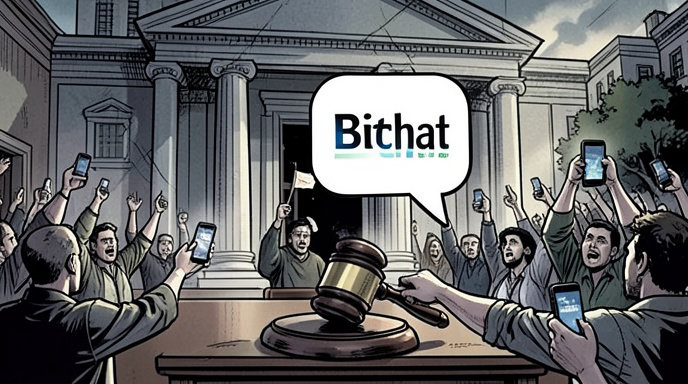
The action comes amid protest activity in New Delhi, where demonstrators have reportedly turned to Bluetooth-based messaging tools after mobile internet restrictions were imposed in parts of the city. That timing has turned Bitchat from a niche privacy-oriented app into the center of a broader debate over state control, encrypted communication, and public-order enforcement.
What the government is arguing
According to the order cited by local reports, I4C says Bitchat is a decentralized peer-to-peer messaging platform that works over Bluetooth mesh networks without relying on mobile networks, internet connectivity, or centralized servers. Authorities argue that this architecture makes it harder for law enforcement to intercept messages, identify users, or investigate misuse.
The government’s stated concern is that such tools could be used to organize unlawful assemblies, spread misinformation, coordinate violent protests, support radicalization, or facilitate other activities it describes as harmful to India’s sovereignty, security, and public order. The order reportedly invokes Section 79(3)(b) of the Information Technology Act and Rule 3(1)(d) of the IT Rules, 2021 as the legal basis for directing the takedown.
Why Bitchat matters beyond one app
Bitchat is notable because it represents a class of communication tools designed to work even when traditional infrastructure is unavailable or restricted. In practical terms, that makes it attractive in emergencies, censorship-heavy environments, or during internet shutdowns.
That same resilience is also what makes it controversial. A messaging system that does not depend on centralized servers can be harder for authorities to monitor, moderate, or block in real time. In India, where internet shutdowns and protest-related restrictions have repeatedly drawn scrutiny, that tension is especially acute.
The legal and civil-liberties stakes
The immediate legal issue is whether the government’s takedown demand is a proportionate response to perceived public-order risks. Supporters of the move are likely to argue that the state has a duty to prevent coordination of violence and unlawful assemblies, particularly when online tools are used to bypass restrictions.
Critics, however, may see the action as part of a wider pattern in which privacy-preserving technologies are treated with suspicion because they limit state visibility. That raises a familiar question in digital rights debates: when a tool is designed to protect user privacy and resilience, at what point does regulation become a de facto restriction on lawful speech and association?
Why the timing matters
The fact that the order surfaced during protest activity in Delhi has intensified attention on the case. Reports say demonstrators were already using Bluetooth-based apps to stay in contact after mobile internet services were suspended, making Bitchat an especially sensitive target for officials.
That context suggests the dispute is not just about one app, but about the infrastructure of protest itself. If offline messaging tools become a fallback whenever networks are throttled or shut down, they may increasingly sit at the center of India’s public-order strategy and its ongoing debate over how much communication the state can or should control.
What to watch next
The key next step is whether GitHub complies fully, partially, or challenges the order in any way. Also important is whether the government broadens its scrutiny from Bitchat’s repositories to similar Bluetooth or offline messaging projects.
For the broader tech sector, the case is likely to be read as another signal that privacy-first, decentralized, or censorship-resistant communication tools will face close regulatory scrutiny in India when they become visible during unrest.

Get All The Latest Updates Delivered Straight To Your Inbox For Free!