
Sam Altman Sparks Debate Over Space Data Centers' Viability
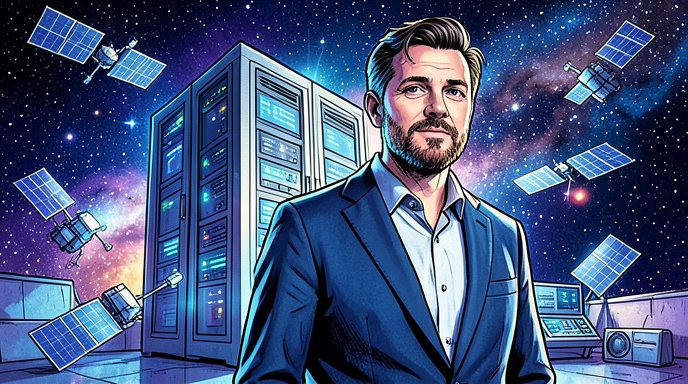
TL;DR
- OpenAI CEO Sam Altman declared Elon Musk’s proposal for space-based data centers “ridiculous” for now, citing insurmountable launch costs and the inability to repair broken GPUs in orbit.
- Altman firmly stated that orbital data centers will not matter at scale this decade, directly contradicting Musk’s claim that the infrastructure could be viable within 2–3 years.
- Independent experts and researchers reinforce Altman’s skepticism, warning that space data centers could have a carbon footprint up to an order of magnitude higher than terrestrial equivalents due to launch emissions and debris risks.
Sam Altman Sparks Debate Over Space Data Centers' Viability
OpenAI CEO Sam Altman has publicly dismissed the concept of placing AI data centers in orbit, labeling the idea “ridiculous” under current economic and technological conditions. Speaking at the Express Adda event hosted by The Indian Express in New Delhi, Altman directly challenged the vision championed by SpaceX CEO Elon Musk, who has prioritized orbital data infrastructure as a solution to AI’s growing energy demands. While Altman acknowledged that the concept could “make sense someday,” he argued that the current landscape simply does not support the financial model required for such a massive undertaking.
The Math Doesn't Add Up
The primary barrier Altman identifies is the prohibitive cost of launching hardware into space compared to terrestrial power generation. He noted that even with potential discounts, the cost of getting a payload into orbit remains “massive,” making the economics of space data centers unviable for the near future. According to Altman, a rough calculation of launch costs relative to the cost of power available on Earth reveals a stark gap that cannot be bridged today. Industry analysis supports this view, suggesting that orbital data centers would only become economically viable if launch costs fall below $200 per kilogram—a threshold representing a sevenfold reduction from current levels that is not expected until the mid-2030s.
The Maintenance Nightmare
Beyond cost, Altman highlighted a critical operational hurdle: the impossibility of repairing hardware in orbit. He pointed out that GPUs, which are essential for AI training, still break frequently, and the logistics of fixing a broken chip in space remain an “overwhelming obstacle”. Unlike terrestrial data centers where technicians can instantly swap out faulty components, space-based facilities would face near-impossible challenges in maintenance. This technical limitation underscores why Altman believes the technology is not yet ready, regardless of the theoretical benefits of unlimited power or fewer physical constraints in space.
Musk vs. Altman: A Timeline Clash
The debate highlights a sharp divergence in timelines between two of the tech industry’s most prominent figures. Elon Musk has predicted that space-based data centers could be viable within just 2 to 3 years, arguing that AI’s energy demands will eventually necessitate an orbital solution. In stark contrast, Altman dismissed this timeline, stating that orbital data centers are “not something that’s going to matter at scale this decade”. This disagreement places Musk’s aggressive expansion plans against Altman’s cautious, data-driven skepticism, with Jeff Bezos estimating a much longer 20–30 year window for feasibility.
Expert Skepticism and Environmental Risks
Altman’s comments align with broader skepticism among experts regarding the long-term sustainability of space data centers. Researchers have warned that the carbon footprint of in-orbit systems could exceed that of terrestrial data centers by up to an order of magnitude, primarily due to the embodied emissions from launch and re-entry. Furthermore, deploying thousands of satellites for data centers could clutter Earth’s orbit, increasing the risk of collisions and debris that threaten communications, weather, and navigation services. Environmental concerns also include the potential injection of harmful metal pollutants into the upper atmosphere from falling satellites, an impact scientists are still trying to fully understand.
Investor Hype Versus Reality
The tension between Altman’s public statements and the prevailing expert opinion raises questions about the messaging aimed at investors. While Musk’s vision paints a future of limitless, regulation-free computing in space, Altman’s assessment suggests that such facilities are a “fantasy” for the current decade. By grounding his critique in the “very rough math” of launch costs and hardware failure rates, Altman is effectively countering the narrative that space is a viable workaround for AI’s current energy-hungry training needs. His stance serves as a reminder that while space is great for many applications, orbital data centers remain a distant prospect rather than an immediate solution.

Get All The Latest Updates Delivered Straight To Your Inbox For Free!