
The Future of Entertainment: How AI is Shaping Universal Streaming Apps
TL;DR
- AI is pushing streaming platforms beyond simple libraries into personalized entertainment hubs with smarter discovery, deeper interactivity, and more flexible monetization models.
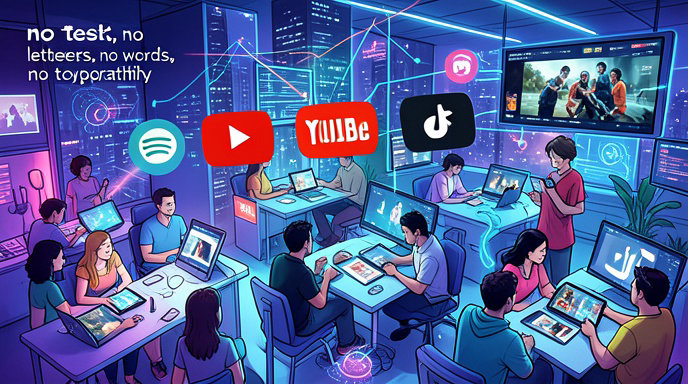
- Services such as Netflix, Spotify, YouTube, and TikTok are converging around a unified user experience where video, audio, social features, and creator content increasingly overlap.
- The winners are likely to be platforms with strong metadata, recommendation systems, ad-tech, and creator tools, while services that stay static may struggle with subscription fatigue and rising competition.
Streaming is no longer just about playback
Streaming has already transformed entertainment by making content on demand, but the next phase is about turning that convenience into a full experience layer. Industry commentary and recent analysis point to a shift away from isolated apps and toward platforms that can surface the right content, in the right format, at the right moment.
That change is being driven by AI. Instead of treating recommendations as a side feature, major platforms are increasingly using machine learning to shape what users see, how they interact, and even how content is monetized.
AI is turning discovery into the product
One of the clearest changes is in content discovery. Rather than relying mainly on genre menus or basic “because you watched” suggestions, AI is moving toward highly personalized interfaces that adapt to user behavior, viewing history, and likely intent in real time.
That matters because the hardest part of streaming today is not access, but choice. As catalogs grow larger and users face subscription fatigue, platforms need to reduce friction and make discovery feel effortless.
For companies like Netflix and YouTube, that means recommendation engines are becoming central to retention. For Spotify, it means the same logic that powers music discovery can increasingly extend to podcasts, video, and creator-led formats.
The line between video, audio, and social content is blurring
The bigger story is convergence. Streaming services are no longer competing only with each other; they are borrowing features from social platforms, and social platforms are absorbing more premium media behavior.
YouTube and TikTok already blend short-form video, creator ecosystems, and algorithmic feeds into one continuous interface. Netflix has been experimenting with more interactive discovery and broader content formats, while Spotify has expanded beyond music into podcasts, video, and creator tools. The result is a user experience that feels less like opening a single-purpose app and more like entering a personalized media environment.
This convergence also changes expectations. Users now want clipping, sharing, live participation, and creator-driven discovery built into the product, not added later as extras.
Why AI matters as much for monetization as for recommendations
AI’s influence is not limited to what people watch or listen to. It is also becoming a key part of ad targeting, pricing, and licensing strategy.
With ad-supported tiers growing in importance, platforms need more precise targeting to make lower-cost plans profitable. AI helps by matching audiences with content and ads more efficiently, while also giving companies better data on engagement patterns.
At the same time, streaming companies are under pressure to rethink pricing. Analysts cited in recent coverage argue that the era of forcing consumers into large bundles is weakening, and that more modular or flexible subscription models may be necessary.
Metadata and infrastructure are becoming strategic assets
Behind the scenes, the competition is increasingly about data quality. Reelgood’s 2026 analysis argues that metadata quality is becoming a dividing line between platforms that are AI-ready and those that are only experimenting with AI.
That is because AI systems are only as effective as the data feeding them. Rich metadata improves search, recommendations, monetization, and catalog management. The same report also notes that Netflix’s shift to a knowledge graph architecture reflects how leading platforms are reworking their data layers to be more AI-native.
In practical terms, the future of streaming may depend less on who has the most content and more on who can organize content smartest.
Creators, interactivity, and the social layer
AI is also strengthening the role of creators. Recent coverage suggests that younger audiences increasingly trust and follow online personalities, which is pushing platforms to integrate creator-led content more deeply into their ecosystems.
That includes collaborations with influencers, more interactive live features, and better tools for social sharing. The logic is straightforward: content that feels participatory is more sticky than content that feels passive.
This is one reason the boundaries between entertainment apps are fading. A user may discover music through a short video, follow a creator into a podcast, then watch related clips on a streaming service, all within a single attention loop.
Accessibility is improving too
AI’s impact is not only commercial. It is also making content more accessible. Recent commentary notes improvements in automated captioning and language translation, which expand the reach of streaming content across languages and audiences.
That accessibility layer is especially important as platforms globalize. The same AI tools that help personalize entertainment can also make it more inclusive, removing barriers for viewers who rely on subtitles, translations, or audio descriptions.
What universal streaming apps could look like next
The likely end state is a universal streaming app: one interface that blends video, audio, live content, creator media, and social discovery into a single personalized feed. Instead of separate apps for watching, listening, and browsing, users may increasingly expect one AI-driven hub that adapts to context and mood.
That vision is still evolving, but the direction is clear. Platforms that can combine strong AI, flexible pricing, creator ecosystems, and clean data infrastructure are best positioned to become the entertainment hubs of the future.
Those that cannot may remain useful, but increasingly feel like legacy services in a market that now rewards integration, speed, and personalization.

Get All The Latest Updates Delivered Straight To Your Inbox For Free!