
US Government Hacked Again: National Security at Risk?
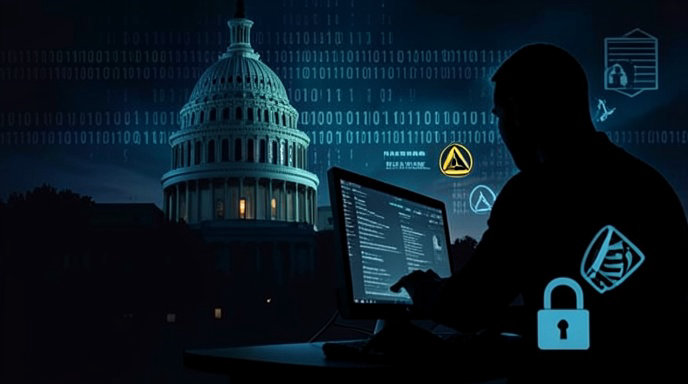
TL;DR
- A massive cyberattack suspected to be linked to foreign state actors has compromised sensitive data across multiple U.S. federal agencies, including the Department of Homeland Security, Treasury, and Commerce.
- A prominent Senate Democrat has raised urgent alarms that the breach threatens national security, as sensitive intelligence-sharing networks and personal information of approximately 4 million federal employees may have been exposed.
- The U.S. government has declared the incident a "major national security matter," triggering emergency directives for agencies to disconnect compromised servers and investigate ongoing vulnerabilities in government cybersecurity measures.
US Government Hacked Again: National Security at Risk?
A New Wave of Cyber-Espionage
The United States federal government is once again grappling with a devastating cybersecurity breach that experts are calling one of the most significant threats to national security in recent history. The attack, which has penetrated deep into the Department of Homeland Security's intelligence-sharing networks, has exposed sensitive government data and raised alarming questions about the resilience of the nation's digital infrastructure.
Unlike previous isolated incidents, this breach appears to be a coordinated, state-sponsored campaign. The malware, which has been undetected for months, has successfully infiltrated critical systems, allowing unauthorized actors to access intelligence reports, personnel records, and strategic communications. The scope of the intrusion suggests that the attackers had extensive access to key parts of the executive branch, potentially jeopardizing the safety of ongoing operations and the confidentiality of classified information.
Senate Democrats Raise Alarms on National Security
The political fallout from the breach has been swift and severe. A prominent Senate Democrat has publicly raised urgent alarms, stating that the compromise of Homeland Security's intelligence-sharing network represents a critical vulnerability in the nation's defense posture. In a scathing statement, the Senator warned that sensitive information regarding counter-terrorism efforts, border security, and domestic intelligence may have been compromised.
"The fact that our intelligence-sharing networks are so vulnerable is a direct threat to national security," the Senator declared. "We are seeing a pattern of ongoing negligence in government cybersecurity measures that leaves the United States exposed to foreign adversaries. If sensitive data has been stolen, the consequences could be catastrophic for our ability to protect the American people."
The Senator's comments underscore a growing bipartisan concern that the U.S. government has failed to adequately modernize its cybersecurity defenses, leaving it susceptible to sophisticated attacks by foreign powers. The breach has sparked a heated debate in Washington over the need for immediate legislative action to strengthen federal cybersecurity protocols and hold agencies accountable for their security failures.
The Scale of the Breach and Human Impact
The magnitude of this cyberattack is staggering, with reports indicating that the breach affects approximately 4 million current and former federal employees. The attackers successfully accessed personnel records, including names, social security numbers, and employment details, creating a massive risk of identity theft and fraud for a significant portion of the U.S. workforce.
Beyond the personal data, the intrusion has compromised critical government agencies. The Department of Homeland Security, the Treasury Department, the Commerce Department, the National Institutes of Health, and even the Pentagon have all been confirmed as victims of the attack. The Department of Energy and the Postal Service are also believed to be affected, highlighting the widespread nature of the breach.
Experts note that the attackers exploited a widely used piece of server software, which served as the conduit for the intrusion. This supply chain attack allowed the hackers to slip malware into software updates, bypassing traditional security measures and gaining access to the most sensitive parts of the government network. The fact that the breach remained undetected for months suggests that the attackers were highly sophisticated and capable of evading even the most advanced cybersecurity defenses.
Emergency Directives and Government Response
In response to the breach, the U.S. government has declared the incident a "major national security matter," triggering a series of emergency directives. The Department of Homeland Security's cybersecurity arm has issued an urgent warning to federal agencies, ordering them to immediately disconnect or power down any machines running the compromised software.
The directive, which is only the fifth such emergency action issued since the agency's creation in 2015, underscores the severity of the threat. Agencies are being instructed to scour their networks for malware, disconnect potentially compromised servers, and conduct a thorough investigation to identify the extent of the intrusion.
The FBI has confirmed that it is leading the investigation into the incident, working to identify the perpetrators and determine the full scope of the damage. While the government has not yet made an official attribution, cybersecurity experts and sources strongly point to Russian state-backed hackers as the likely culprits. The attack bears all the hallmarks of a sophisticated, manual supply chain operation by a nation-state, with many experts believing it was orchestrated by the infamous hacking collective known as Cozy Bear (APT29).
The Path Forward: Strengthening Cybersecurity Defenses
As the investigation continues, the U.S. government faces the urgent task of strengthening its cybersecurity defenses to prevent future breaches. The incident has highlighted the critical need for a comprehensive overhaul of federal cybersecurity protocols, including the implementation of more robust supply chain security measures, enhanced monitoring systems, and regular security audits.
The breach has also sparked a call for increased investment in cybersecurity research and development, as well as the recruitment of top-tier cybersecurity professionals to work within the government. The Senator's warnings have resonated with many in the cybersecurity community, who agree that the U.S. must take immediate action to address the vulnerabilities that allowed this attack to succeed.
As the nation grapples with the aftermath of this cyberattack, the question remains: Will the U.S. government be able to learn from this mistake and implement the necessary changes to protect its national security? The answer to this question will determine the future of the nation's cybersecurity landscape and its ability to defend against the growing threat of cyber-espionage.

Get All The Latest Updates Delivered Straight To Your Inbox For Free!