
US Takes a Stand: Sanctions on Chinese AI Models for IP Theft Looming
TL;DR
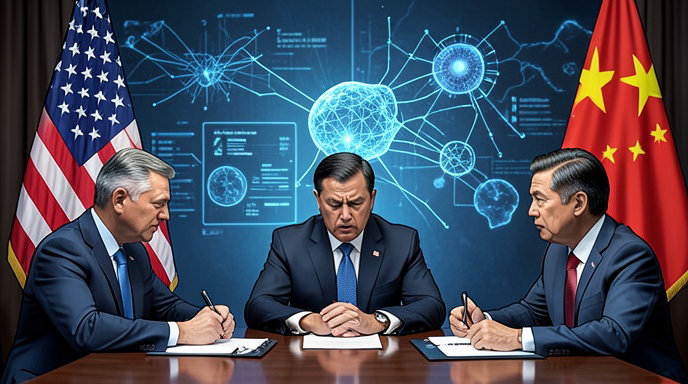
- **Treasury Secretary Scott Bessent threatened sanctions** on Chinese AI developers if evidence confirms they trained models using stolen U.S. intellectual property, specifically targeting "distillation" techniques that extract functionality from American frontier models.
- The administration is **scrutinizing open-source Chinese AI models** for unauthorized use of U.S. weights, training outputs, or proprietary fine-tuning that undermines American commercial positions.
- This move aligns with broader **Trump administration efforts to curb China's AI advancements**, including the bipartisan "Deterring American AI Model Theft Act of 2026" and recent trade blacklists targeting 80 entities for national security risks.
US Takes a Stand: Sanctions on Chinese AI Models for IP Theft Looming
U.S. Treasury Secretary Scott Bessent has declared that the Trump administration is prepared to impose sanctions on China if it confirms that Chinese artificial intelligence developers have trained their models on stolen American intellectual property. Speaking in an interview with CNBC on Tuesday, Bessent stated the government is actively scrutinizing open-source AI models for violations, emphasizing that while the administration supports open source, it strictly opposes IP theft. He explicitly warned that if overseas models are found stealing from U.S. companies, the government has the "ability to sanction them because of this theft".
The Mechanics of Alleged "AI Distillation"
The specific concern articulated by the Treasury Department is that Chinese AI companies may be utilizing "distillation," a process that trains smaller models using outputs from more advanced ones to extract functionalities. According to Bessent, this involves Chinese firms potentially using weights, training outputs, or proprietary fine-tuning derived from American frontier models. By incorporating years of American research investment into a competing product released freely, these companies effectively undercut the commercial position of the U.S. firms whose work was absorbed without authorization. The administration views this as an industrial-scale campaign to exploit American ingenuity and know-how.
Legislative and Regulatory Backing
Bessent's threat coincides with significant legislative momentum in Washington. The House Foreign Affairs Committee recently passed the Deterring American AI Model Theft Act of 2026, which establishes a legal framework for the U.S. government to identify entities extracting "key technical features" from U.S. AI models and impose sanctions on them. This bill received a unanimous, bipartisan endorsement, signaling strong political support for curbing AI theft. Additionally, the Commerce Department has already added dozens of entities, including 80 from China, to a trade blacklist to disrupt Beijing's advanced computing capabilities, citing activities contrary to U.S. national security.
Uncertainty on Evidence Thresholds and Timeline
While the threat of sanctions is clear, the administration has not yet specified the exact evidence threshold required to trigger penalties. Bessent did not clarify which agency would make the determination of theft or what timeline a decision would follow. The scrutiny is currently focused on open-source models, with reports indicating the administration is examining whether Chinese models were developed through improper use of U.S. systems. On Monday, Axios reported that the administration is considering a wholesale ban on Chinese open-source models, though this claim has been disputed by other sources.
Future Diplomatic Engagement on AI Standards
Despite the hardline stance on sanctions, Bessent also announced that the United States and China will initiate conversations focused on "optimal practices" for artificial intelligence and the establishment of regulatory frameworks. During an interview while accompanying President Trump in Beijing, Bessent stated the goal is to create a protocol ensuring that non-state entities do not gain unauthorized access to these models. This suggests the administration is pursuing a dual strategy: enforcing strict penalties for confirmed theft while simultaneously engaging in diplomatic dialogue to set global AI standards.

Get All The Latest Updates Delivered Straight To Your Inbox For Free!