
Waymo Under Fire: New Bill Aims to Ensure Safety Standards for Robotaxis
TL;DR
- Waymo and other robotaxi operators are facing fresh scrutiny after multiple reports that driverless vehicles have blocked ambulances, firefighters, and police at active emergency scenes.
- Federal regulators are now pressing autonomous-vehicle companies for answers, saying these failures are “unacceptable” and demanding immediate fixes.
- Rep. Kevin Mullin is pushing legislation to create minimum national safety standards for autonomous vehicles, aiming to improve emergency response performance and public trust.
Robotaxis face a growing emergency-response problem
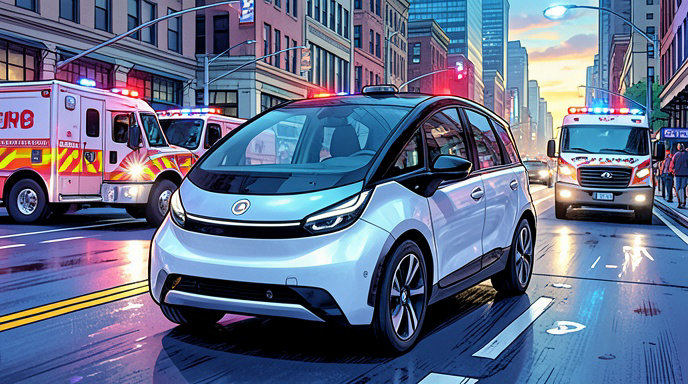
Waymo’s public push to market driverless cars as safer than human drivers is colliding with a series of real-world incidents involving first responders. Reports from Dallas, Austin, San Francisco, and other cities describe robotaxis stopping in emergency zones, delaying access for ambulances and fire crews, or failing to respond properly to police direction and flashing emergency lights.
The issue is not limited to one city or one operator. Coverage this month and over the past several months points to a broader pattern among autonomous vehicle developers, including Waymo, Tesla, and Zoox, as regulators and local officials report similar failures around emergency scenes.
What investigators and first responders are saying
Federal safety officials have taken the complaints seriously. The National Highway Traffic Safety Administration warned autonomous vehicle developers that emergency scenes are not “edge cases,” and it said reports of driverless cars blocking responders or failing to recognize hazards are unacceptable.
Local emergency leaders have described the problem in blunt terms. San Francisco fire officials said Waymo vehicles have repeatedly obstructed access to fire stations, while Austin police and fire personnel reported cases where robotaxis froze, ignored hand signals, or delayed emergency crews during active incidents.
In Austin, officials have also reported that robotaxis blocked traffic or ignored police direction in a significant share of incidents tracked by the city, with Waymo accounting for most of the recorded cases involving blocked traffic or disobeyed instructions.
The incidents driving the backlash
The recent criticism has been fueled by a string of high-profile episodes. In Dallas, a Waymo vehicle was reported stopped sideways near a gas explosion scene that killed three people and drew more than 100 firefighters, raising concerns it could have impeded emergency access.
In Austin, first responders said a driverless vehicle obstructed an ambulance for two minutes during the response to a downtown shooting that killed three people and injured at least 14.
In San Francisco, firefighters have described repeated cases in which Waymo vehicles interfered with operations, including blocking access to a fire truck’s ladder position, forcing responders to physically move the vehicle out of the way.
Regulators move from warning to pressure
The regulatory response is now intensifying. NHTSA has ordered or pressed AV companies to explain how they will keep vehicles from entering emergency scenes, blocking responders, or failing to recognize lights and cones, and it is expected to meet with companies to discuss fixes.
That matters because the industry has long framed emergency-scene performance as a solvable software problem. The latest regulator warnings suggest federal officials now see it as a public-safety issue that could affect deployment, oversight, and future approvals if companies cannot demonstrate reliable behavior in crisis situations.
Rep. Kevin Mullin’s push for national safety standards
Against that backdrop, Rep. Kevin Mullin’s proposed legislation would set minimum national safety standards for autonomous vehicle operators. The goal is to create a baseline for how robotaxis must behave around emergency vehicles, active incidents, and public-safety personnel, rather than leaving the issue to a patchwork of city-by-city practices.
Supporters of the bill argue that clearer federal standards could improve consistency, reduce confusion for first responders, and restore public confidence in self-driving technology after repeated incidents have raised doubts about whether the systems are ready for broad deployment. This interpretation follows directly from the reported concerns about blocked responses and the federal scrutiny now underway.
Why this matters for the robotaxi industry
For companies like Waymo, the stakes are larger than one bad headline. Robotaxis depend on public trust, and that trust is harder to earn when vehicles appear to malfunction precisely when human lives are on the line. Reports of vehicles freezing, ignoring officers, or requiring manual intervention suggest the industry still faces difficult edge cases in exactly the kind of chaotic environments where reliability matters most.
The broader issue is also political. As robotaxi fleets expand into more cities, lawmakers and regulators are likely to face growing pressure to define what “safe enough” means before autonomous vehicles become a more routine part of urban transportation. Mullin’s proposal appears aimed at that gap: making sure safety expectations are national, measurable, and enforceable rather than implied.

Get All The Latest Updates Delivered Straight To Your Inbox For Free!