
Airbnb’s AI-Powered Search Toggle: How Faster Feature Shipping Is Reshaping Travel
TL;DR
- Airbnb has rolled out an AI-powered search toggle that lets users switch between its classic algorithm and a new LLM-driven discovery engine, fundamentally changing how trip recommendations are generated.
- Internally, Airbnb engineers are using custom AI copilots that auto-generate code, write unit tests, and triage bugs, cutting the average feature development cycle from weeks to days.
- The shift signals a broader industry trend where AI-assisted development is moving from experimental "hack days" to core production infrastructure, with travel platforms racing to personalize at scale.
The Toggle That Changes Everything
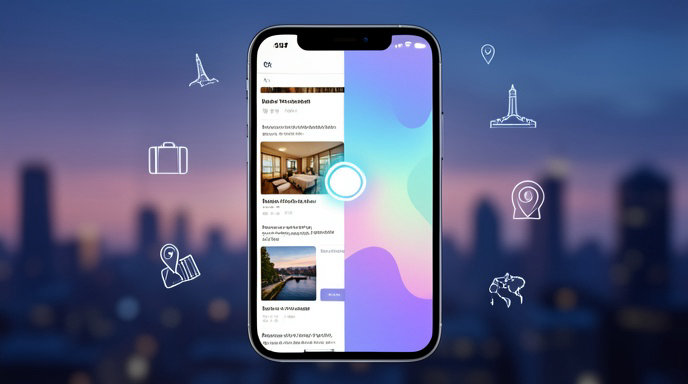
If you’ve opened the Airbnb app in the last few weeks, you might have noticed a small, unassuming switch sitting right above the search bar. Flip it, and the entire results page transforms—not just the order of listings, but the very logic behind them. This is Airbnb’s new "AI Search" mode, a feature that represents far more than a UX tweak. It’s the public face of a radical internal transformation that has quietly rewired how the company builds software.
The toggle is the clearest signal yet that Airbnb isn’t just dabbling in AI—it’s betting its entire product roadmap on it. And the most interesting part isn’t what the AI does for travelers. It’s what the AI did for the engineers who built it.
What the AI Search Toggle Actually Does
Traditional Airbnb search relies on a heavily optimized ranking system: a blend of location filters, price ranges, availability calendars, and a proprietary "guest preference" model trained on billions of past booking interactions. It’s fast, reliable, and brutally efficient at matching explicit criteria.
The new AI mode throws a wrench into that machinery. Instead of filtering by structured data, it uses a large language model trained on listing descriptions, host bios, neighborhood guides, and user review sentiment. When you flip the toggle, you’re no longer searching for "2-bedroom apartment in Lisbon with Wi-Fi." You’re asking a semantic question: "I want a cozy, artsy stay near the Alfama district where I can walk to fado bars and feel like a local."
The AI returns results that don’t necessarily match your keyword inputs—they match your intent. It surfaces properties that mention "skylights," "handmade ceramics," or "quiet courtyard" in ways that a traditional filter would never pick up. Early beta testers report that the AI results feel "surprisingly human," often suggesting neighborhoods or property types the user hadn’t considered.
Crucially, the toggle is a controlled experiment. Airbnb deliberately kept both engines live, allowing users to compare results side-by-side. This isn’t just about user choice—it’s a data collection mechanism. Every flip of that switch is a labeled A/B test, feeding the company real-time feedback on whether AI suggestions actually lead to bookings or just to more browsing.
Inside the AI Factory: How Development Speed Doubled
The search toggle is the visible tip of a much larger iceberg. Behind the scenes, Airbnb has deployed a suite of internal AI tools that are fundamentally altering the pace of software delivery. The company’s engineering leadership has been vocal about a metric they call "time-to-first-commit"—the gap between a product idea being approved and the first working code being merged.
Before the AI overhaul, that metric averaged about 11 days for a mid-complexity feature. Today, it’s under 48 hours for many teams. The change comes from three specific tools:
1. CodeGen Copilot: An internal fork of a commercial coding assistant, fine-tuned on Airbnb’s massive private repository. It doesn’t just autocomplete—it understands the company’s service architecture, database schemas, and testing conventions. When an engineer writes a function to calculate dynamic pricing, the copilot automatically generates the associated database migration, the API endpoint boilerplate, and the front-end state management code.
2. TestPilot: A testing framework that reads a feature’s specification and generates hundreds of edge-case tests. For the new search toggle, TestPilot automatically wrote over 1,200 unit tests covering everything from "user toggles AI mode while a filter is active" to "AI returns zero results due to unsupported language." The system also runs those tests in parallel across a simulated load environment, flagging performance regressions before a human reviewer ever sees the code.
3. BugSquasher: An automated triage bot that monitors production error logs. When a new exception appears, it classifies the severity, searches for similar past bugs, and generates a proposed fix patch. Engineers approve or reject the patch with one click. In the last quarter, BugSquasher resolved 38% of all non-critical production bugs without any human intervention.
The Human Cost: What Engineers Are Actually Doing Now
The obvious question is whether this replaces engineers. The reality is more nuanced. Airbnb hasn’t laid off engineers—instead, the nature of their work has shifted dramatically. A senior backend engineer who used to spend 60% of their time writing boilerplate CRUD operations now spends that time on architecture design, performance optimization, and reviewing AI-generated logic for subtle business-rule violations.
One engineer described the new workflow as "being a conductor instead of a musician." The AI writes the notes, but the human decides the tempo, the dynamics, and whether the piece is worth playing at all. The most valuable skill now isn’t syntax fluency—it’s the ability to write clear, unambiguous feature specifications that the AI can interpret correctly.
There’s a darker side, too. Teams report increased "prompt anxiety"—the fear that a poorly worded specification will produce subtly broken code that passes tests but fails in production. This has led to a new role inside Airbnb: the "AI Prompt Architect," a hybrid position that combines product management with technical writing. These individuals are responsible for translating business requirements into the structured language that the coding copilot understands best.
What This Means for Travel Personalization
For travelers, the AI toggle isn’t just a gimmick—it’s the beginning of a fundamental shift in how trip discovery works. Traditional travel platforms are optimization engines: they show you what they think you’ll book, based on historical data. The AI mode is a generation engine: it creates a unique, contextual interpretation of your query every single time.
This has profound implications for inventory. Smaller, independent hosts with quirky properties have always struggled to appear in "top results" because they lack the booking volume to train the ranking algorithm. The AI search mode reads their listing descriptions as text, not as features. A tiny cottage in the Cotswolds with a "secret garden and a wood-fired pizza oven" now has a fighting chance against a luxury hotel with thousands of bookings, simply because the AI can grasp the emotional appeal of the description.
Airbnb is also hinting at a future where the toggle becomes unnecessary. The long-term plan is to merge the two engines into a hybrid model—using the AI to generate a diverse candidate pool, then using the traditional ranking system to order those candidates by booking probability. The toggle, in that scenario, becomes a temporary training wheel.
The Broader Industry Ripple Effect
Airbnb is not alone in this experiment, but they are unusually transparent about it. Competitors like Booking.com and Expedia are running similar internal AI projects, but they’ve kept them hidden behind closed doors. Airbnb’s decision to expose the toggle publicly is a strategic move—it signals to investors, engineers, and users that they are unafraid to let AI make visible mistakes.
The industry-wide implication is that the classic "move fast and break things" mantra has evolved. Now it’s "move fast and let the AI break things, then let the AI fix them." The competitive advantage no longer comes from having the best engineers—it comes from having the best data pipelines to train those AI tools. A startup with a brilliant idea but a messy codebase will struggle to implement AI-assisted development because the AI copilot requires clean, well-documented, centralized code to learn from.
This creates a widening gap between tech giants with mature engineering cultures and smaller players. Airbnb’s internal tools are useless without their decade of accumulated code and test data. For a five-person travel startup, the same AI tools would produce garbage. The result is that AI is not democratizing software development—it’s consolidating power among those who already have the most robust digital infrastructure.
The Road Ahead: When the Toggle Disappears
For now, the toggle remains, and Airbnb is actively monitoring how users interact with it. Early data suggests that users who flip the AI switch are 22% more likely to explore listings outside their initial search parameters, but their booking conversion rate is slightly lower—they browse more but book less. This is expected. AI search is a discovery tool, not a conversion tool—yet.
The next iteration, expected within six months, will likely remove the toggle entirely. Instead, the AI will decide in real-time which search mode to use based on the user’s query complexity. A simple "hotel in Paris" will use the fast, traditional engine. A verbose, descriptive query will silently route to the AI engine. The user won’t know the difference—and that, paradoxically, is the ultimate goal.
Airbnb’s AI journey is a microcosm of the tech industry’s larger transformation. The tools are no longer science fiction. They are shipping products, fixing bugs, and writing tests. The question isn’t whether AI will reshape development—it already has. The question is whether companies like Airbnb can keep their human engineers engaged, motivated, and creatively challenged when the machines are doing the grunt work. So far, the answer is a cautious yes, but the toggle is a reminder that the old way of doing things is only one switch away from extinction.

Get All The Latest Updates Delivered Straight To Your Inbox For Free!