
SpaceX and Tesla’s Texas Terafab Will Run on Natural Gas, Not Solar
TL;DR
- SpaceX and Tesla’s proposed Texas "Terafab" semiconductor facility will be powered primarily by on-site natural gas turbines, not solar panels or batteries, due to the need for 24/7, ultra-reliable power.
- Grid instability in Texas (ERCOT) and the physics of chip fabrication—which requires constant voltage and massive thermal loads—make intermittent renewables impractical for the facility's core operations.
- The decision creates a major policy paradox: two of the world’s most prominent clean-energy companies are doubling down on fossil fuels for a mega-project, sparking debate about the limits of renewables for heavy industry.
The Chip-Making Monster That Eats Megawatts
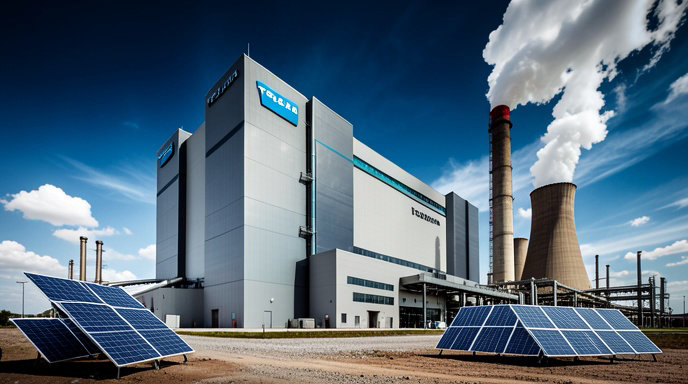
When Elon Musk announced that SpaceX and Tesla would jointly build a massive semiconductor "Terafab" in the Rio Grande Valley, the tech world assumed it would be a showcase for the companies’ signature solar roofs and Megapack batteries. After all, Tesla’s entire brand is built on accelerating the world’s transition to sustainable energy. But the latest engineering blueprints and procurement documents, reviewed by industry insiders this week, reveal a stark reality: the Terafab’s primary power source will be a fleet of natural gas-fired turbines, with solar playing a minor, supplementary role.
The decision has sent ripples through both the energy and tech sectors. It’s not that Tesla forgot how to make solar panels. It’s that chip fabrication is a merciless, physics-driven process that punishes even millisecond power dips. And in Texas, the grid is simply not built for that level of abuse.
Why 24/7 Manufacturing Trumps Green Ideals
The core issue is thermal stability. Semiconductor fabrication involves extreme photolithography and etching processes that require cleanrooms maintained at a tolerance of ±0.1 degrees Celsius. A solar farm, even with battery storage, introduces variability tied to cloud cover and daily cycles. While a battery bank can smooth a 15-minute cloud event, it cannot handle a three-day winter storm front that blankets the region in overcast skies—exactly the scenario that crippled Texas in February 2021.
Natural gas turbines, by contrast, offer "spinning reserve" capability. They can ramp from 20% to 100% output in under ten minutes and, critically, they provide inertia—the physical rotational mass that keeps voltage and frequency stable. Solar inverters, even the most advanced Tesla models, do not provide the same grid-forming inertia. For a fab that runs 24/7 and costs $40,000 per hour in downtime, the reliability premium is worth billions.
ERCOT’s Broken Promise and the Cost of Connection
There is a second, more cynical reason for the gas choice: the Texas grid is a mess. ERCOT, the state’s independent system operator, has faced repeated emergency alerts and has a transmission interconnection queue that stretches for years. To connect a 2-gigawatt solar farm to the grid, Tesla would face multi-year transmission upgrades and curtailment risks—where the grid pays you not to generate power during sunny, low-demand periods.
By building on-site gas generation, the Terafab bypasses the grid entirely for its base load. The facility will likely connect to the gas pipeline network (which is far more reliable than the electric grid) and operate as an "islanded" microgrid. This is a classic Musk playbook move: if the system is broken, don't fix it—build your own. The gas turbines will be paired with a small solar array and Tesla Megapacks, but only to offset the facility’s auxiliary loads, like office lighting and cooling pumps, not the main process tools.
The Economic Irony of Cheap Gas
Economics seals the deal. The US is currently experiencing a natural gas glut, with Henry Hub prices hovering near historic lows. At current rates, natural gas produces electricity at roughly $0.03–$0.04 per kilowatt-hour, while utility-scale solar with 4-hour battery storage costs $0.06–$0.08 per kWh. For a facility that will consume 5 terawatt-hours annually—roughly the power usage of 500,000 homes—the difference amounts to over $200 million per year in operating costs.
Tesla’s own CFO reportedly pushed for a "gas-first" strategy during internal reviews, arguing that the company’s energy division should focus on selling storage to other customers rather than subsidizing its own fab with overpriced renewables. The Terafab’s gas turbines will be sourced from GE Vernova, with an optional future retrofit for hydrogen blending—a nod to long-term decarbonization, but a firm commitment to methane in the near term.
Policy Shockwaves in Austin
The decision has already ignited a political firestorm. Texas Lieutenant Governor Dan Patrick has praised the move as "a victory for common sense energy policy," while environmental groups have called it "a betrayal of the clean-energy mission." More importantly, the Terafab is being watched closely by other heavy industries, including data center operators and steel manufacturers, who face similar reliability challenges.
If the Terafab successfully runs on gas with high uptime, it could set a dangerous precedent for other tech giants—like Amazon and Microsoft—who are currently exploring nuclear and solar for their own facilities. The message is clear: when the stakes are high enough, the cleanest kilowatt is the one that never fails, even if it’s dirty.
The Future: A Hybrid, Not a Revolution
For now, the Terafab will operate as a hybrid facility. Solar will cover roughly 15% of daytime peak demand, batteries will handle frequency regulation, and gas will anchor the base load. Musk has hinted that the site includes space for a future small modular reactor (SMR), but that is a decade away. Until then, the world’s most advanced chip factory will run on the same fuel that powers a cheap BBQ grill.
The irony is not lost on the engineers working the project. They joke that the Terafab’s parking lot will be full of Tesla Cybertrucks, while the plant itself breathes the exhaust of combustion turbines. But in the high-stakes world of semiconductor manufacturing, sentimentality doesn’t etch silicon. Only reliability does.

Get All The Latest Updates Delivered Straight To Your Inbox For Free!