
How T-Mobile Cut a Cable to Block Chinese Hackers and Stop a Massive Breach
TL;DR
- T-Mobile detected a Chinese state-sponsored hacking group, linked to Salt Typhoon, attempting lateral movement inside its network in late 2024 and severed a compromised wireline connection to instantly isolate the threat.
- The carrier's rapid response prevented the attackers from accessing customer data or voice systems, a stark contrast to breaches at AT&T, Verizon and other carriers that went undetected for months.
- The incident highlights a new era of telecom security where early detection, aggressive network segmentation, and willingness to physically disconnect infrastructure are critical to defending US communications against nation-state threats.
A Close Call That Could Have Been Catastrophic
In the second half of 2024, a wave of sophisticated cyberattacks swept through the American telecom industry. A Chinese state-sponsored group known as Salt Typhoon, also tracked as Earth Estries and UNC2286, successfully breached at least eight major US carriers, gaining the ability to intercept calls, texts, and law enforcement wiretap systems. While rivals were deeply compromised, T-Mobile emerged as the outlier that got out in front of the attack. According to details later shared by the company, its security teams spotted the intruders early, watched their movements, and then made a drastic, decisive move: they cut the cable.
The Infiltration Attempt: How the Hackers Got In
The attackers did not target T-Mobile's wireless core directly. Instead, they attempted to pivot from a compromised wireline provider's network that was connected to T-Mobile's systems. This is a common tactic for advanced persistent threat groups - compromise a trusted third-party or interconnected carrier to use its legitimate connection as a backdoor.
T-Mobile's security operations center detected suspicious activity originating from that wireline connection. Rather than a brute-force attack, the hackers used stealthy techniques to try to move laterally, probing for access to network management systems and routers. The activity matched the known tactics, techniques, and procedures of Salt Typhoon, which had been systematically targeting telecom backbone infrastructure for over a year.
Inside T-Mobile's Rapid Response Playbook
What set T-Mobile apart was not just detection, but speed and severity of its response. The company's Chief Security Officer later explained that the team had spent the previous years overhauling its security architecture following previous incidents, implementing a zero-trust model and enhanced monitoring on all external connections.
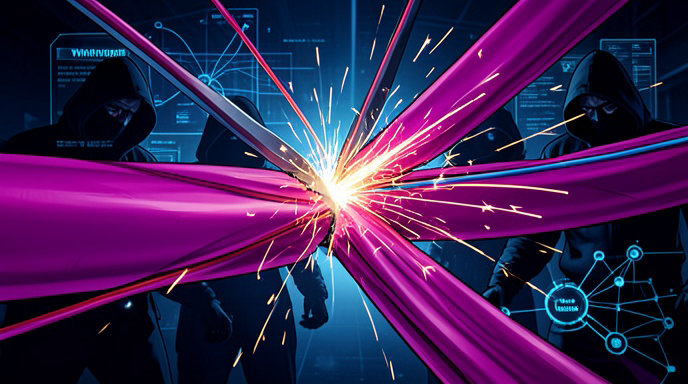
Once the anomalous lateral movement was confirmed, T-Mobile executed a two-part containment strategy. First, its security team actively ejected the threat actors from the environment, blocking their command-and-control channels and invalidating their access. Second, and most dramatically, engineers physically severed the compromised network link to the third-party wireline provider. By cutting that cable, they instantly air-gapped the attack vector, ensuring there was no path back in even if the attackers still had a foothold on the partner's side.
The company then kept the connection offline while it conducted a full forensic review, rebuilt and hardened the interconnection point, and verified no persistence mechanisms had been left behind.
Why T-Mobile Succeeded Where Others Failed
The difference between T-Mobile's near-miss and the massive breaches at other carriers came down to dwell time. At other telecoms, Salt Typhoon actors reportedly remained undetected inside networks for many months, allowing them to map systems, steal call metadata for high-value targets, and access sensitive lawful intercept platforms.
T-Mobile, by contrast, caught the intrusion within days of the initial probe, before any attacker could reach customer-facing systems, voice networks, or data stores. The company confirmed that no customer data, call records, or communications were accessed or exfiltrated, and no other T-Mobile systems were impacted. Federal investigators later acknowledged T-Mobile's early reporting and quick isolation helped provide valuable intelligence on the broader Salt Typhoon campaign.
What This Reveals About the Future of Carrier Security
This incident is a wake-up call for the entire US telecom sector. It proves that perimeter defense is no longer enough when carriers are interconnected by design. Nation-state actors are no longer just hacking individual companies; they are exploiting the trust relationships between them.
For T-Mobile, the decision to literally cut a cable underscores a new security philosophy: uptime is secondary to integrity. In an era of state-sponsored cyber warfare, the ability to aggressively segment and even physically disconnect parts of the network is becoming a core defensive capability.
For the industry and regulators, the message is clear. The Salt Typhoon campaign showed that Chinese-backed groups view US communications infrastructure as a primary espionage target. Carriers will need to adopt similar zero-trust architectures, share threat intelligence in real time, and be prepared to make disruptive, decisive moves to stop intrusions before they become national security crises.

Get All The Latest Updates Delivered Straight To Your Inbox For Free!