
ShinyHunters Claims FBI Breach Exposes Agents Data in Major Counterintelligence Threat
TL;DR
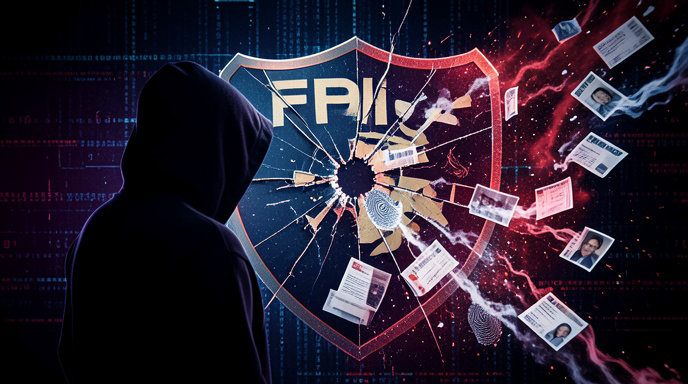
- ShinyHunters claims to have breached FBI systems and stolen personal data belonging to current agents, former staff, and job applicants, posting samples as proof on dark web forums.
- The alleged haul includes names, dates of birth, Social Security numbers, contact details, employment records, and security clearance-related information that experts say is ideal for extortion and identity theft.
- U.S. officials have not publicly confirmed a breach, but former intelligence officials warn that if verified, the leak poses a severe counterintelligence threat, exposing agents and their families to targeting by foreign adversaries and criminal groups.
How The Claim Surfaced
The allegations first emerged this week when accounts linked to ShinyHunters, the notorious extortion collective behind a string of high-profile corporate breaches, began advertising what they described as internal FBI data.
In posts on Telegram and dark web leak sites, the actors claimed to have gained access to FBI applicant and personnel management systems. To back the claim, they published redacted screenshots and sample spreadsheets showing what appears to be names, email addresses, phone numbers, and internal applicant tracking fields.
Cybersecurity researchers tracking the group say the samples began circulating on September 21-22, 2026, and quickly spread across threat-intel channels. ShinyHunters has a history of exaggerating access, but analysts note the formatting and detail in the samples look consistent with government HR and vetting workflows, raising serious concern.
The FBI has not confirmed an intrusion. In a brief response to press inquiries, the bureau said it is aware of the claims and is assessing the matter, declining further comment — a standard posture that leaves open whether an investigation is underway.
What Data Was Allegedly Stolen
According to the hackers' posts and researchers who reviewed the samples, the compromised data could be sweeping in scope.
The alleged dataset is said to include full names, dates of birth, home addresses, personal and work emails, phone numbers, Social Security numbers, emergency contacts, employment history, and FBI applicant status and background investigation notes.
Most alarming, researchers say, are references to security clearance levels, field office assignments, and family member details. One sample reviewed by threat analysts reportedly contained thousands of rows tied to both special agent applicants who never joined the bureau and current personnel.
ShinyHunters has not yet published the full database publicly, instead threatening to leak or sell it unless a ransom is paid. The group claims to hold millions of records, though that figure remains unverified and independent experts urge caution until the data can be fully authenticated.
How The Attack May Have Unfolded
No official attack vector has been confirmed, but cybersecurity experts point to several likely scenarios.
ShinyHunters in recent years has shifted away from direct network hacking toward social engineering, credential theft, and third-party compromise. The group was central to the 2025 wave of Salesforce-related data thefts, where attackers tricked employees into authorizing malicious third-party apps and then siphoned connected databases.
Investigators speculate a similar playbook could be at work here: compromise of a contractor, vendor portal, or applicant management platform used by the FBI, rather than a direct breach of the bureau's classified core networks. The FBI, like other federal agencies, relies on a sprawling ecosystem of outside systems for hiring, background checks, and human resources — all prime targets.
Other possibilities include stolen credentials from a privileged user, exploitation of an unpatched VPN or web-facing portal, or data aggregated from multiple prior breaches and falsely marketed as a fresh FBI hack. Researchers are now cross-referencing the samples against known combo lists and past government leaks to rule out a repackaged dump.
Why Experts Call This A Counterintelligence Nightmare
Even if only partially true, former FBI and intelligence officials say the breach would be devastating.
Unlike a corporate customer list, a roster of agents and applicants is a goldmine for foreign intelligence services. Adversaries like Russia, China, Iran, and North Korea actively seek exactly this kind of personally identifiable information to identify, track, blackmail, or recruit U.S. personnel.
Experts warn the risks break down into three tiers. First is direct extortion and doxxing of agents and their families, including threats to publish home addresses and children's information. Second is long-term identity theft and financial fraud using Social Security numbers and dates of birth that cannot easily be changed. Third, and most serious, is counterintelligence targeting — using personal vulnerabilities, debts, relationships, or clearance status to coerce cooperation.
For applicants who never became agents, the danger is often overlooked. Those individuals may now work in the private sector, state police, or sensitive corporate roles, unaware their FBI application data could expose them as former U.S. government aspirants.
The Extortion Playbook
ShinyHunters' motive appears to be classic double extortion with a national security twist.
The group typically demands a multi-million-dollar ransom in cryptocurrency to suppress publication, while simultaneously shopping the data to other criminals. In this case, analysts say the actors may also be seeking notoriety and leverage, knowing any FBI-linked leak will generate massive press attention.
Security firms warn that even failed ransom negotiations can be dangerous. Partial leaks released as proof can be scraped, copied, and resold indefinitely on dark web markets, meaning victims face exposure regardless of whether anyone pays.
Families are particularly vulnerable to follow-on phishing, with attackers able to craft highly convincing messages impersonating FBI recruiters, benefits administrators, or investigators using the stolen contact details.
What Happens Next
The immediate focus is verification. Federal incident response teams, along with private firms like Mandiant, CrowdStrike, and Hudson Rock that track ShinyHunters, are working to authenticate the samples, identify the source system, and determine if live FBI networks were accessed.
If confirmed, the FBI would be expected to notify affected individuals under federal breach notification rules, reset credentials, isolate compromised systems, and brief Congress and intelligence oversight committees. A damage assessment involving the Department of Justice and the Office of the Director of National Intelligence would likely follow.
For now, cybersecurity officials urge anyone who has applied to or worked for the FBI to be on high alert: enable multi-factor authentication on all accounts, freeze credit reports, watch for spear-phishing calls and emails referencing application details, and report suspicious contacts to the FBI's Internet Crime Complaint Center.
Whether this proves to be one of the most damaging U.S. law enforcement breaches in history or an inflated claim built on third-party data, experts agree on one point: the era of law enforcement agencies as untouchable targets is over, and personnel data has become the new front line in cyber warfare.

Get All The Latest Updates Delivered Straight To Your Inbox For Free!