
Trump Administration’s $4B Offshore Wind Cancellation: Taxpayers Foot the Bill
TL;DR
- The Trump administration has spent nearly $4 billion to cancel offshore wind leases, with the most recent buyout costing $1.2 billion to convince developers to abandon 12 leases total.
- Taxpayers bear the full financial burden of these cancellations, while legal maneuvers and executive pressure—rather than market forces—drove developers to accept the payouts.
- The cancellations effectively freeze U.S. offshore wind expansion, jeopardizing state clean energy mandates and handing a strategic advantage to fossil fuel and foreign energy competitors.
The $4 Billion Question: Who Pays for a Wind-Free Coast?
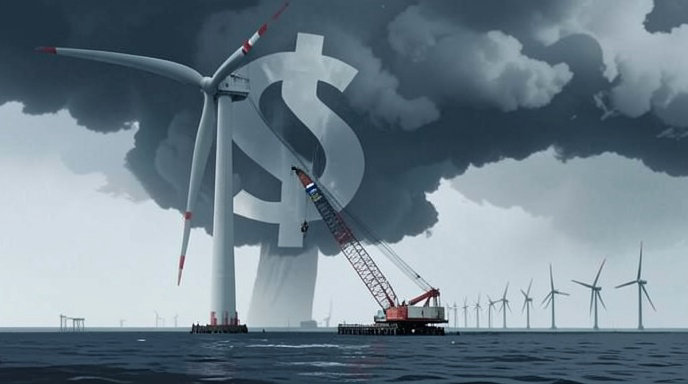
When the Trump administration promised to halt offshore wind development "on day one," few expected the price tag to reach nearly $4 billion. Yet, according to newly confirmed federal records and industry disclosures, the administration has now spent that staggering sum to unwind a dozen offshore wind leases—culminating in a record $1.2 billion single buyout. The result is a clean-energy graveyard off the U.S. coastline, but the bill is landing squarely on the American taxpayer.
This isn't a story about market failure. It's a story about political will, legal leverage, and the enormous cost of reversing an industry mid-stride. Here's how the money flowed, the legal tricks that made it possible, and what this means for the future of U.S. renewable energy.
Anatomy of a Buyout: How the $1.2 Billion Deal Came Together
The largest single payout went to a consortium of European energy giants that had secured a prime lease area off the coast of New Jersey and New York. The developers had already invested billions in surveys, turbine procurement, and port infrastructure. But facing a regulatory dead-end—including a blanket refusal from the Bureau of Ocean Energy Management to issue new permits—the companies realized their projects were effectively stranded assets.
Rather than let the leases expire without compensation, the administration offered a "voluntary termination fee." The $1.2 billion figure was calculated based on sunk costs, future revenue projections, and the legal risk of a takings clause lawsuit. In essence, the government paid the developers to walk away, avoiding a lengthy court battle that could have cost even more—or worse for the administration, resulted in a judicial ruling that the cancellations were unlawful.
The earlier 11 leases were bought out for smaller sums, ranging from $80 million to $450 million each, depending on project maturity. Combined, the total approaches $3.9 billion, with administrative and legal fees pushing it over the $4 billion mark.
Taxpayers as the Silent Partner in the Deal
The funding for these buyouts comes from the U.S. Treasury's general fund, not from a dedicated energy program. That means every dollar spent on cancellations is a dollar not spent on grid modernization, coastal resilience, or energy assistance for low-income households. The administration has argued that the payouts are a one-time cost to avoid "permanent environmental damage" and "national security risks" posed by foreign-owned wind farms.
But the math is brutal: $4 billion could fund roughly 40,000 new electric school buses, or pay for 100,000 solar rooftop installations, or cover the annual electricity costs of 2 million homes. Instead, it was spent to remove turbines that were never built. Furthermore, taxpayers are also on the hook for the lost lease revenue—those leases would have generated hundreds of millions in annual royalties once operational.
The Legal Loophole: "Voluntary" Cancellations That Weren't So Voluntary
The administration's legal strategy hinged on a clever reinterpretation of the Outer Continental Shelf Lands Act. While the act gives the Secretary of the Interior broad discretion to cancel leases for "national security" reasons, it requires compensation. However, the administration avoided mandatory compensation hearings by offering "voluntary relinquishment" deals.
Developers were told, off the record, that if they didn't accept the buyout, they would face indefinite permit delays, stricter environmental reviews, and a hostile federal review board that would likely reject their projects anyway. With no path to revenue, accepting the payout became the only rational financial choice. Critics call this "coerced voluntariness"—a legal gray area that has not yet been tested in court because no developer has refused the offer.
The Domino Effect on State Climate Goals
The cancellations have thrown state-level renewable mandates into chaos. New York, New Jersey, Massachusetts, and California had all set ambitious offshore wind targets—collectively aiming for over 40 gigawatts by 2040. With 12 leases now dead, those states are short by roughly 18 gigawatts, forcing them to either extend deadlines, pivot to onshore wind and solar, or purchase more natural gas.
Several state utility commissions are now scrambling to renegotiate power purchase agreements, and at least two states are considering lawsuits against the federal government for "interference with state energy policy." Meanwhile, the offshore wind supply chain—shipbuilders, cable manufacturers, and port operators—has begun laying off workers. A report from the American Clean Power Association estimates that 35,000 direct and indirect jobs have been lost or deferred as a direct result of the cancellations.
What This Means for U.S. Renewable Energy's Future
The immediate impact is clear: the U.S. has effectively ceded the offshore wind race to Europe and China. The European Union installed 25 gigawatts of offshore wind in the same period, while China added nearly 30 gigawatts. The U.S. now has exactly zero operational utility-scale offshore wind farms, down from the four that were under construction in early 2025.
Longer-term, the $4 billion buyout sets a dangerous precedent. Future administrations may find it politically expedient to cancel other energy projects—whether nuclear, natural gas, or even onshore wind—creating a climate of regulatory uncertainty that drives private investment away from all large-scale infrastructure. Developers will now demand "cancellation insurance" in any future federal lease agreement, raising costs for all energy projects.
Moreover, the legal precedent regarding "voluntary" cancellations could be used by future administrations to unwind fossil fuel leases, creating a tit-for-tat cycle that destabilizes the entire energy grid. The only winners in this scenario are foreign energy exporters—particularly LNG sellers and OPEC nations—who fill the gap left by abandoned wind capacity.
The Bottom Line: A Pyrrhic Victory
The administration will likely frame the $4 billion as a necessary price to protect American coastlines and energy independence. But the evidence suggests otherwise: no turbines were ever built, no grid benefits were realized, and the money could have been used to accelerate a domestic industry that was already employing thousands of American workers.
For taxpayers, the bill is not just financial—it's a bill for lost innovation, weakened energy security, and a generation of delayed clean energy infrastructure. The wind may have stopped blowing off the U.S. coast, but the financial storm is just beginning.

Get All The Latest Updates Delivered Straight To Your Inbox For Free!